
The first thing that strikes you is the silence.
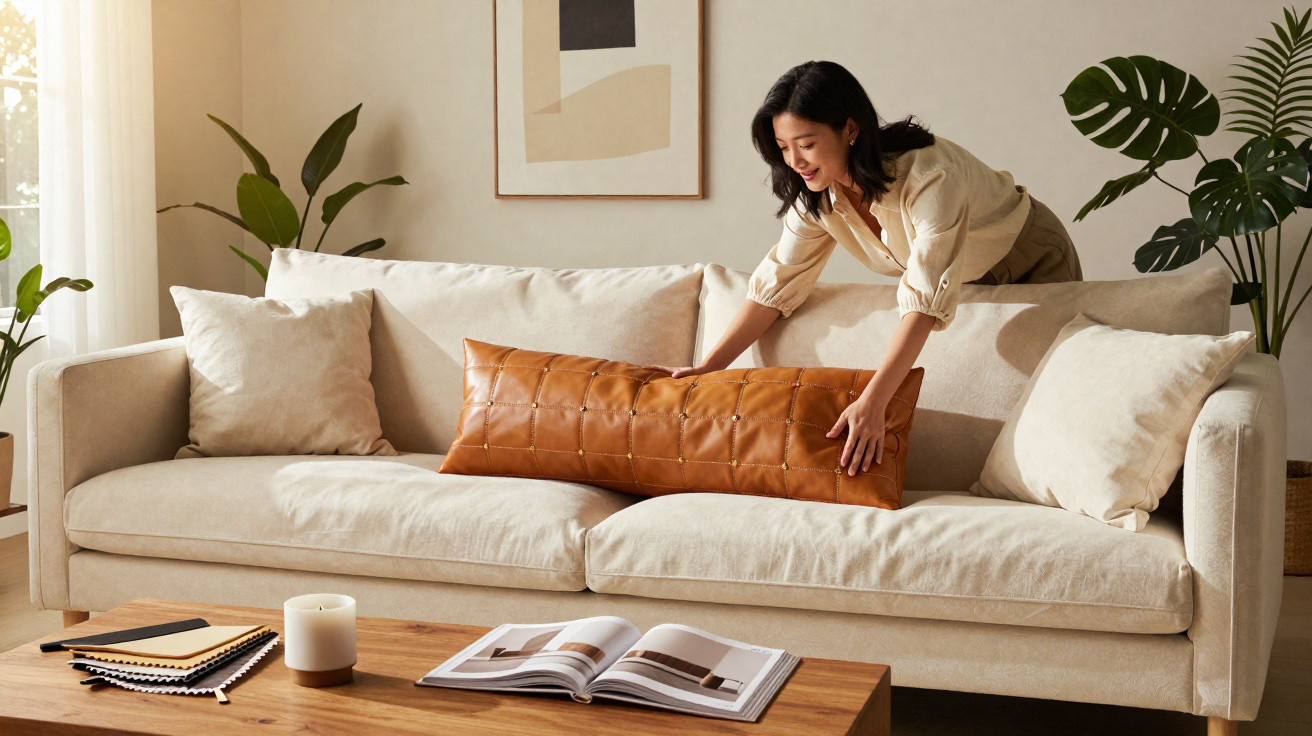
Not the gentle hush of a Sunday afternoon, but the odd, reverberating stillness of a living room without books, blankets or family photographs - no sign of life beyond a beige sofa that seems too precious for anyone to use.
A candle is positioned exactly in the middle of a stone coffee table.
Beside it sits one empty ceramic bowl, more like a styling accessory than something meant to be used.
Your friend smiles broadly: “Isn’t it so calming? It’s my wellness room.”
You agree, yet part of you longs for the clutter.
This is the face of the new “comfortocalypse”.
From cosy chaos to curated emptiness: the new living room shock
Browse any polished interior-design Instagram feed today and the pattern is unmistakable: living rooms reduced to their bare essentials.
White walls, low beige sofas, a plant that appears to be part of a paid promotion, and very little beyond that.
Designers have labelled it hyper-minimalist wellness.
They promote “visual detox” and “emotional clarity”, as though your pile of old DVDs or your child’s Lego models were somehow harmful.
The former vision of a living room as a relaxed, generous nest is quietly giving way to something more akin to an exclusive meditation clinic.
The change is apparent as soon as you walk in.
It is tidy, certainly.
But does it feel lived in?
Go back ten years and the scene looked very different.
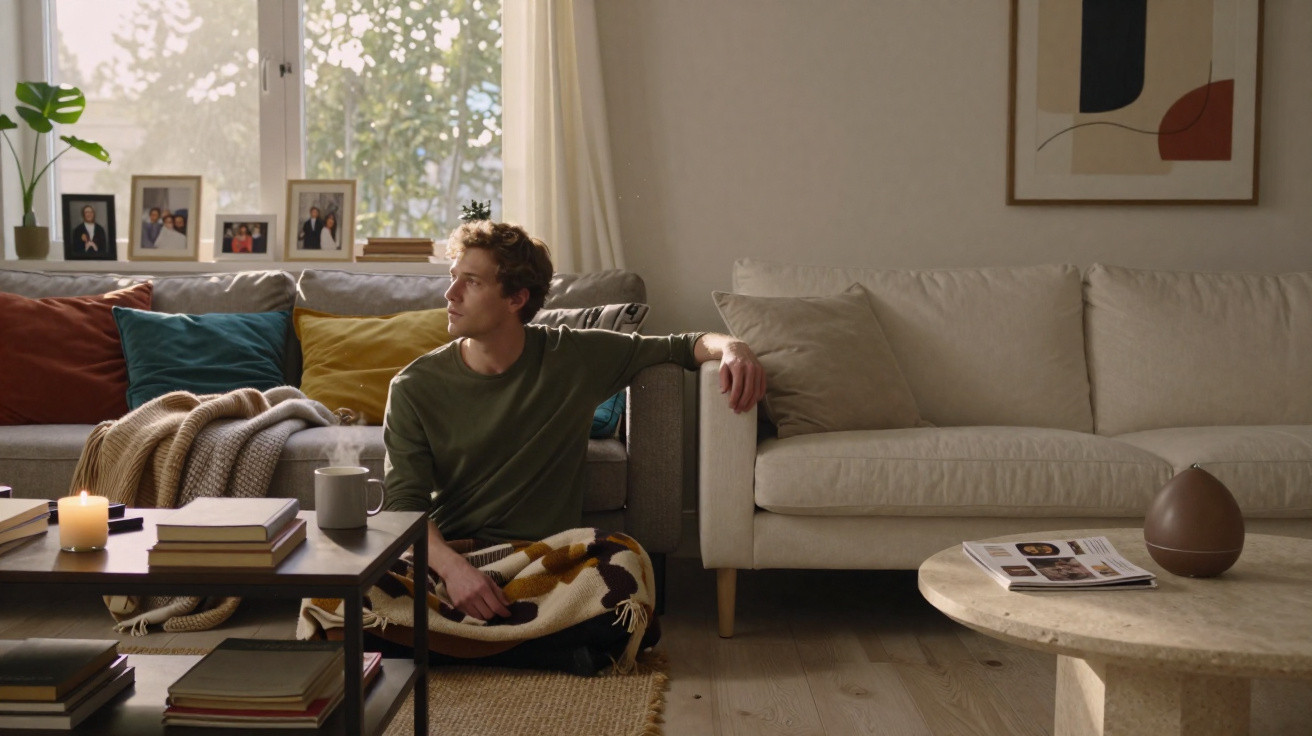
Picture the Pinterest style of the 2010s: fairy lights, gallery walls, piles of coffee-table books and knitted throws tumbling from generously padded sofas.
Now imagine the “after” image of that room following a fashionable studio redesign.
The family photographs have disappeared.
Bright cushions have become “greige” blocks.
The inherited wooden sideboard from your grandmother has been replaced by a white, handle-free fitted unit that would not look out of place in a luxury clinic.
Interior brands are fuelling the trend with names that resemble meditation apps: “Cloud Sofa”, “Stillness Rug”, “Serenity Palette”.
On TikTok, #minimalistlivingroom has attracted millions of views, featuring immaculate rooms that could instantly be hired for a product shoot.
It may be aspirational, but it is also oddly impersonal.
The thinking behind this comfortocalypse is appealing.
Fewer possessions mean less dust, less cleaning and less visual distraction.
There is genuine research supporting its attraction: studies have associated cluttered homes with increased stress and mental load, particularly for women.
Designers have taken that evidence and turned it into a solution sold through bare shelves and concealed storage.
Yet there is a complication missing from the mood boards: objects are also how our brains form attachments to a place.
There is the old lamp with its slightly wonky shade, a heap of partly read magazines, and the mug you instinctively choose every morning.
Remove them and you are not merely clearing clutter; you are taking away reminders of identity and memory.
This new version of “calm” can often bring a quiet sense of emotional discomfort with it.
How to resist the comfortocalypse without drowning in clutter
A useful approach is to see your living room as a dimmer switch rather than an on/off control.
Rather than jumping overnight from full cosy chaos to an empty wellness box, begin with one small area.
Choose a single spot, perhaps around the sofa or by the reading chair.
Clear it out, then return only the things you genuinely use or care about.
One throw rather than five.
Three cushions rather than nine.
One tray for remotes and miscellaneous items, instead of allowing them to spread across the coffee table.
You are not creating a magazine photograph; you are making a room for real evenings.
A place where socks are kicked off and occasionally never quite reach the laundry basket.
After an all-out minimalist renovation, people tend to admit the same mistake: “I don’t recognize my own home anymore.”
They fought clutter and unintentionally banished their own character.
Most of us know that feeling: looking around and realising you cleaned so thoroughly that you erased yourself.
You packed away the mismatched frames, the children’s drawings and the strange little souvenirs from that chaotic holiday - and the room now photographs beautifully but feels like a waiting area when you sit there alone at night.
Allow yourself some visual softness.
A stack of books on the coffee table is not a defeat.
A toy basket in the corner does not undermine your “aesthetic”.
Honestly, no one manages to live in permanent showroom mode every day, with not even a stray sock to be seen.
“Clients tell me they want ‘calm’, then show me Instagram pictures of completely empty rooms,” says London-based interior designer Maya Ortega.
“I always ask them: where does your life go? Where do your hobbies go? Where do your bad days go? Wellness isn’t about pretending you don’t exist.”
- Keep one “memory surface”
Set aside a sideboard, shelf or console for framed photographs, travel finds and sentimental possessions to remain visible rather than being shamefully hidden in boxes. - Contain your “soft clutter”
Use a basket for blankets, a tray for remotes and one box for chargers and cables, so the room feels contained rather than chaotic. - Pick one striking comfort object
Choose a cheerful lamp, patterned armchair or bold rug to interrupt the beige monotony and remind you that this is a home, not a spa reception. - Make storage a pause button, not a delete key
Rotate books, artwork and cushions with the seasons instead of persuading yourself that you must own almost nothing. - Create your own wellness measure
Focus less on how the room looks in photographs and more on one straightforward question: “Do I exhale deeper when I sit down here?”
What we really lose when the living room goes “wellness-only”
Beneath this design movement lies a quiet sadness that few people openly acknowledge.
When the cosy living room disappears, it takes something else with it: our freedom to display our disorder, history and unfinished stories.
A room that makes space for a little chaos often makes room for emotion too.
You can cry on a sagging sofa covered in cushions in a way that simply does not work on a sculptural, cream-coloured showpiece made for photo shoots.
You can also host an impromptu games night when the coffee table already carries the marks of countless snack bowls.
The hyper-minimalist “wellness” living room is frequently marketed as progress, refinement and emotional hygiene.
But the homes many of us remember most clearly are rarely flawless.
They are the rooms where a throw never remained neatly folded, the bookcase served as a family timeline, and comfort came not from clean lines but from proof that life had happened there.
That is the real issue beneath the comfortocalypse: not only what our living rooms look like, but how much of ourselves we are prepared to remove in pursuit of calm.
| Key point | Detail | Value for the reader |
|---|---|---|
| Balance, not extremes | Take a “dimmer switch” approach to decluttering rather than embracing total minimalism | Lowers stress without sacrificing warmth or personality |
| Keep visible memories | Allocate a memory surface and rotate meaningful possessions | Maintains emotional connection while preserving visual order |
| Redefine wellness at home | Assess your living room by how it feels, rather than how it photographs | Builds a truly restorative room suited to everyday life |
FAQ:
- Question 1 Why do these ultra-minimalist “wellness” living rooms feel so cold to some people?
- Question 2 Can I love minimalist design and still keep my stuff visible?
- Question 3 How do I declutter a cosy living room without losing its soul?
- Question 4 What objects should never disappear in the comfortocalypse?
- Question 5 How do I push back against design trends when everyone online seems to live in beige perfection?
Comments
No comments yet. Be the first to comment!
Leave a Comment