
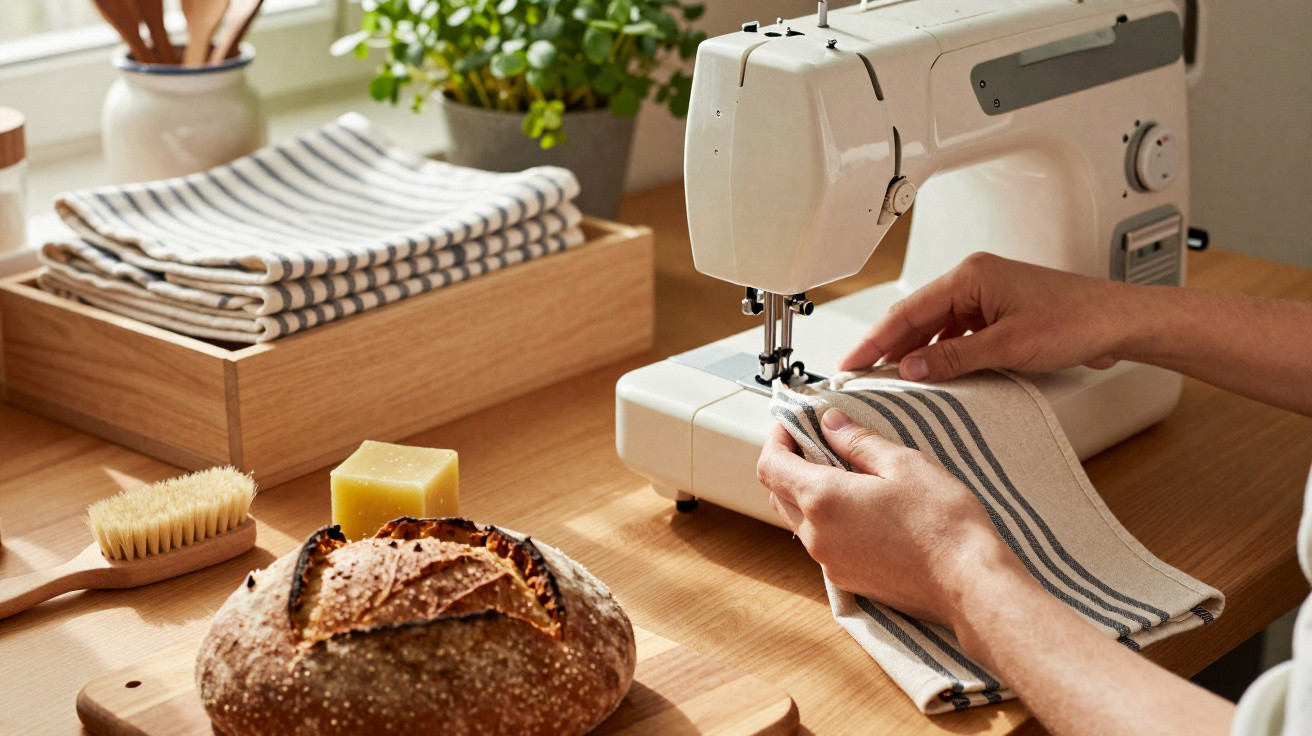
Anyone who once stocked their kitchen with hard-wearing linen could hardly have imagined that the same old tea towel would become a fashionable accessory decades later. With just a few seams, it can be turned into a reusable bread bag that looks stylish, cuts down on plastic and keeps bread fresh for longer.
Grandma’s striped tea towels: the overlooked treasure in the drawer
Many homes still have them tucked away: slightly faded, striped kitchen towels passed down through the family. Their edges may be a little worn, yet the fabric is remarkably good quality. They are often made from linen, or an older linen-and-cotton blend – densely woven, pleasantly textured, durable and softened beautifully by years of use.
These towels are exceptionally long-lasting. They can be washed at high temperatures, dry fairly quickly and instantly bring a country-kitchen feel with their traditional red or blue stripes. That look fits perfectly with the current preference for natural, pared-back interiors and more mindful consumption.
Reusing old kitchen towels saves waste and money while preserving a piece of family history.
Rather than leaving them to gather dust in a drawer, they can be given a new purpose: as fabric for a bread bag that replaces bakery bags and plastic wrapping. Many environmental bodies and initiatives already advise keeping existing natural textiles in use for as long as possible instead of constantly buying new items.
The kitchen’s new favourite: a bread bag made from an old tea towel
Images of simple, elongated bread bags made from striped kitchen towels are appearing increasingly often on social media. They may look nostalgic, but they are highly practical: place the bread inside, pull the bag closed and hang it on a hook – done. No more rustling paper or crackling plastic on the worktop.
There is another appealing benefit: making one yourself saves real money. Handmade linen bread bags can easily cost €15 to €20 each in the shops. An existing towel and a little sewing thread create the same effect for virtually nothing.
How to make a bread bag, even as a sewing beginner
You do not need to be a trained seamstress or a quilting expert. A straight stitch on a sewing machine – or, if necessary, sewn by hand – is enough. The basic method involves three straightforward steps:
- Cut carefully: Begin by removing genuinely worn sections, such as frayed corners. Keep the attractive striped borders wherever possible, as they give the bag its distinctive appearance.
- Create strong seams: A so-called French seam makes the bag especially durable: sew wrong sides together first, turn it inside out, then sew a second time. This encloses the raw edges, preventing fraying.
- Add a closure at the top: Sew a small folded channel along the upper edge to form a drawstring opening. Thread cotton cord or a fabric ribbon through it so the bag can be pulled shut quickly.
The size depends on the types of bread you usually buy. A classic baguette needs a long, narrow bag. If you tend to choose round loaves, cut the fabric a little wider and shorter.
Why linen keeps bread fresher for longer
Linen and older linen-and-cotton blends are not merely visually appealing. Their properties are ideal for storing bread. The close-woven yet breathable fabric regulates moisture: it protects the crust while allowing the crumb enough air without letting it dry out.
Unlike plastic, a fabric bag creates less condensation. This noticeably reduces the risk of mould and slows down drying. Many users say that baguettes and bread rolls remain pleasant for considerably longer in this type of bag than when left loose on the worktop or in an open paper bag.
Breathable natural fibres create a better microclimate around bread – neither damp nor bone dry.
Linen offers another advantage: it is considered relatively unattractive to certain common kitchen insects. Keeping the bags clean and airing them regularly provides bread with a reasonably secure home.
Extra tip: a beeswax-coated bread bag
Anyone wanting to extend freshness a little further can treat the inside fabric of the bag with a layer of pure beeswax. The result is similar to the familiar wax food wraps: the fabric remains flexible but becomes slightly water-repellent, giving the bread even greater protection against drying out.
Apply grated or melted wax sparingly to clean, dry fabric and allow it to soak in. This produces a flexible, breathable covering. After use, lukewarm water and mild detergent are sufficient, then leave the bag to air-dry.
Care, hygiene and everyday tips
Before using the new bread bag for the first time, it is worth giving it a thorough wash. This removes old residues and allows the fibres to settle again. A quick iron afterwards smooths the weave and makes sewing easier if the fabric still needs cutting.
Using the bread bag day to day is very simple:
- Let bread cool completely after buying it.
- Put the loaf or baguette into the bag and pull the cord closed.
- Hang the bag from a hook or rail so that air can circulate.
- Air it out regularly in between uses, especially after storing moister baked goods.
A standard wash every few days or weeks, depending on use, is normally enough. If it becomes heavily soiled, the bag can go in the machine on a hotter wash too, provided the fabric can tolerate it.
What else can be sewn from striped tea towels
Offcuts almost always remain after cutting the fabric. The characteristic striped side borders in particular are ideal for further small projects that support a low-waste household.
| Offcut | Possible use |
|---|---|
| Narrow strips | Small scented sachets filled with dried lavender flowers for the wardrobe |
| Square pieces | Reusable bowl covers to replace cling film |
| Medium rectangles | Bags for pasta, rice or pulses from a packaging-free shop |
In this way, one old kitchen towel can become several practical everyday helpers. Very little ends up in the bin, while the kitchen cupboard looks far tidier because so many single-use packages are no longer needed.
Why the effort is worthwhile
Of course, you could simply buy a bread bag and continue using paper bags. Yet anyone who sets aside a few hours gains several benefits at once: a keepsake from the family kitchen becomes a modern, useful item. It may seem like a small gesture, but over months and years it saves a great many bags and pieces of plastic film.
This kind of sewing project is particularly well suited to doing together with children. It teaches younger people that supposedly outdated textiles can be transformed into something new with genuine value. Perhaps the hand-sewn bag will eventually become an heirloom itself.
A bread bag made from old linen can also appeal to people with sensitive skin. The material has already been washed dozens of times, so many manufacturing residues will long since have been rinsed away. Its fibres feel soft and sit close to food in everyday use – a clear advantage over newly treated fabrics of unknown origin.
Once you start, it quickly becomes clear that old kitchen towels are good for far more than drying up. A little sewing thread, blunt scissors and a willingness to experiment can turn an unremarkable stack in a drawer into a small, practical sustainability project that might even become a talking point at the bakery counter.


Comments
No comments yet. Be the first to comment!
Leave a Comment