
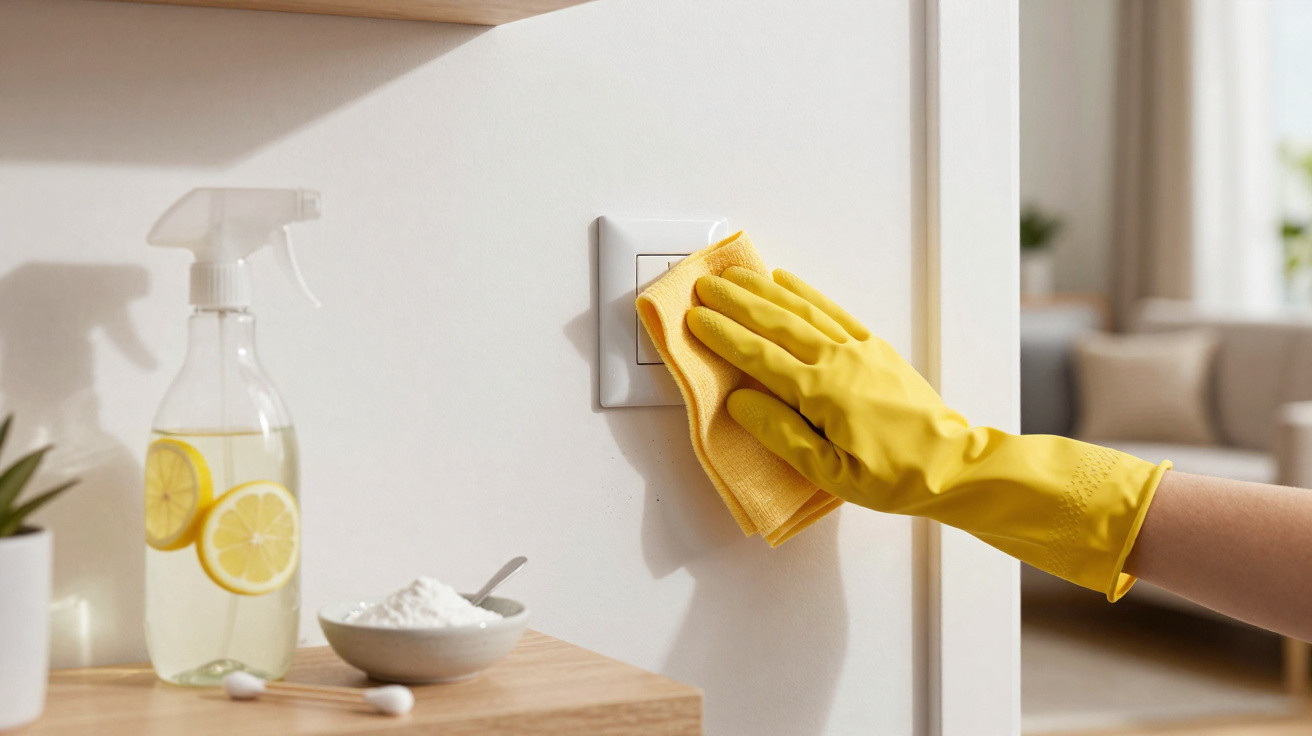
Light switches may seem innocuous, yet they attract grease, dust and bacteria. Stubborn marks build up over time, particularly in kitchens, hallways and children’s bedrooms. A few simple household remedies can turn a yellowed, greasy switch into a clean-looking feature remarkably quickly – without using specialist cleaners.
Why light switches become unattractive so quickly
Every touch leaves a trace: natural skin oils, dirt particles, make-up, cooking vapours and cigarette smoke. In the kitchen, a fine layer of grease and steam is added to the mix. Over time, the plastic becomes discoloured, tiny grooves look grey, and the whole area appears older than it really is.
“Light switches are among the most frequently touched surfaces in the home – and among the least frequently cleaned.”
There is also a hygiene aspect. Wherever hands go, germs follow. Door handles, smartphones, keyboards and light switches all provide ideal collection points for bacteria and viruses. Cleaning them regularly improves not only their appearance but household hygiene too.
Safety first: how to clean electrical fittings correctly
Before trying any of the methods below, one point comes first: safety. Moisture and electricity do not mix.
- Turn off the fuse or relevant circuit at the consumer unit.
- Use a cloth that is only lightly damp, never dripping wet.
- Never spray cleaning products directly onto the switch.
- Allow everything to dry thoroughly before turning the power back on.
For added peace of mind, wear thin household gloves. They also prevent cleaning products from coming into contact with your skin.
1. White vinegar for grease and fingerprints
White vinegar is one of the most versatile products in the cleaning cupboard. It breaks down grease, removes light limescale marks and has a disinfecting effect, making it ideal for everyday use on light switches.
Here is how to use it:
- Pour a little warm water into a small bowl.
- Add one to two tablespoons of vinegar.
- Dip in a cotton cloth and wring it out thoroughly until it is only slightly damp.
- Gently wipe the switch face and surrounding frame.
- Wipe over with a dry cloth.
If you wish, add a few drops of lemon juice to the water. This leaves a fresh scent and can help with mild discolouration.
2. Bicarbonate of soda or baking powder for yellowed switches
In smoking households or sun-filled rooms, plastic can gradually take on a yellowish tint. This is where a classic powder cleaner can help: bicarbonate of soda (or pure soda crystals). Ordinary baking powder will also work in a pinch.
Instructions:
- Mix several teaspoons of bicarbonate of soda with a small amount of water to make a thick paste.
- Apply it to the discoloured areas with a soft cloth or an old toothbrush.
- Leave it to work for a few minutes.
- Remove it with a lightly damp cloth.
- Rub dry thoroughly.
For a particularly heavy grease film, mix a little traditional soft soap or soap flakes into the paste. This can also brighten more stubborn yellowed edges. Harsh cream cleaners, however, are not a good choice, as they may scratch the plastic.
3. Traditional soap: gentle everyday cleaning
Solid fat-based soap, such as traditional household soap or soft soap, works surprisingly well on plastic surfaces. It cleans effectively without leaving the switch dull or brittle.
Use the method as follows:
- Dissolve a few soap shavings in warm water until the water becomes slightly cloudy.
- Dip in a cloth and wring it out until it feels almost dry.
- Wipe the switch and frame thoroughly.
- Follow with a separate cloth lightly dampened with clean water only.
- Dry the area with a soft cloth.
This approach is especially suitable for family homes, where children frequently press switches and a mild cleaner is preferred.
4. Alcohol cleaner for hygiene-sensitive areas
In bathrooms, guest toilets or beside the kitchen door, an alcohol-based cleaner can be useful. It removes fingerprints, dissolves grease and reduces germs in one go.
For practical use:
- Dilute cleaning alcohol, at around 70 per cent, with a little water if it is very high-strength.
- Moisten a cloth with only a small amount of liquid.
- Briefly wipe the switch surface, remembering the corners.
- Leave it to dry – alcohol evaporates very quickly.
“Alcohol cleaner quickly restores shine to light switches and leaves hardly any residue.”
The cleaner should never be allowed to sit in flammable puddles on the surface. Always use it sparingly. Anyone with sensitive skin should ideally wear gloves.
5. Solvent for paint splashes – use with care
After decorating, paint splatters often remain on switch frames. Once the drops have dried on, water rarely gets very far. A mild solvent, such as standard white spirit mixed with vinegar, can help here.
Proceed as follows:
- Combine equal parts white spirit and vinegar in a small container.
- Moisten a cotton bud or small cloth with the mixture.
- Dab only the paint marks carefully; do not rub over a large area.
- Leave it to work for around 30 minutes.
- Wipe afterwards with a damp cloth.
Important: this mixture is suitable only for hard, durable paints, such as synthetic-resin or epoxy paint. For ordinary emulsion paint, a little warm soapy water and a plastic scraper are usually enough.
6. Cotton buds for grooves, edges and corners
Even the best cleaner is of little use if it cannot reach the problem areas. Numerous small gaps around a switch trap dust and grime.
A simple bathroom item can help here: the cotton bud. Use it like this:
- Dip a cotton bud into vinegar water, soapy solution or alcohol cleaner.
- Wipe away any excess liquid.
- Run it through the grooves around the button, along the corners and inside narrow gaps.
- Replace used buds immediately so that dirt is not smeared around.
Anyone with many switches in the house will quickly notice the difference after this detailed finishing step. The entire surface looks calmer and better cared for.
7. Clean removable frames easily in a water bath
On many modern switches, the frames and rocker covers can be unclipped. These parts contain no live components and can be cleaned separately. Even so, switch off the power first and briefly operate the switch to ensure that nothing remains live.
Then proceed as follows:
- Carefully lever off the frame and rocker, or release them according to the manufacturer’s instructions.
- Place them in a bowl of warm water with a little detergent or soap.
- Leave them to soak for several hours.
- Rub over them with a soft sponge.
- Rinse thoroughly with clean water and allow them to dry completely.
- Refit them only once everything is fully dry.
If you are unsure whether your own switch can be dismantled, check the manufacturer’s installation instructions or visit its website.
How often should light switches be cleaned?
There is no fixed schedule. It makes sense to include light switches in your normal cleaning routine, for example:
- every two weeks in heavily used areas such as the hallway, kitchen and bathroom
- once a month in bedrooms and home offices
- immediately when paint splashes or heavy dirt become noticeable
If you are already dusting or cleaning doors, simply include the switch as well. This prevents discolouration from becoming permanent in the first place.
Products best avoided
Not every cleaner is suitable for delicate plastic surfaces:
- strong abrasive cleaners: they leave scratches and dull patches
- chlorine cleaners: they can bleach the material or make it brittle
- neat acetone or cellulose thinners: these often attack plastic
If in doubt, always test a new product first on an inconspicuous corner of the frame.
Hygiene, allergies and daily life: why clean switches offer more than a good appearance
Clean light switches do more than improve the look of a room. People with allergies or sensitive skin often react more strongly to house dust, mould spores and bacteria. Smooth surfaces that are cleaned regularly offer these germs less opportunity to cling on.
There is another consideration: in households with young children, switches are often operated with dirty hands after playing in the garden, eating or doing crafts. Consistently using a damp cloth with a little vinegar water or soapy solution can significantly reduce the germ load.
A simple rule of thumb is useful too: anything touched several times each day – switches, door handles and remote controls – should receive brief attention during every larger cleaning session. It takes only a few seconds per item, yet helps to keep the home visibly better maintained over the long term.




Comments
No comments yet. Be the first to comment!
Leave a Comment