
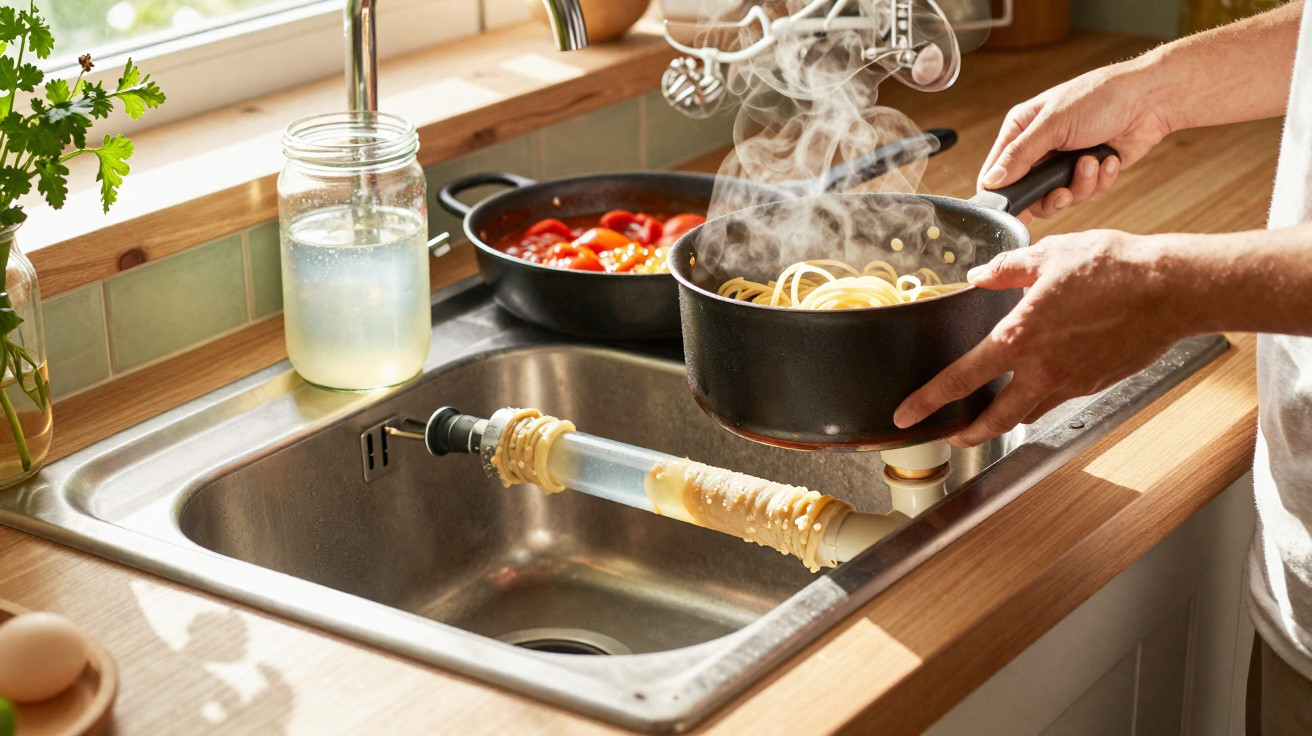
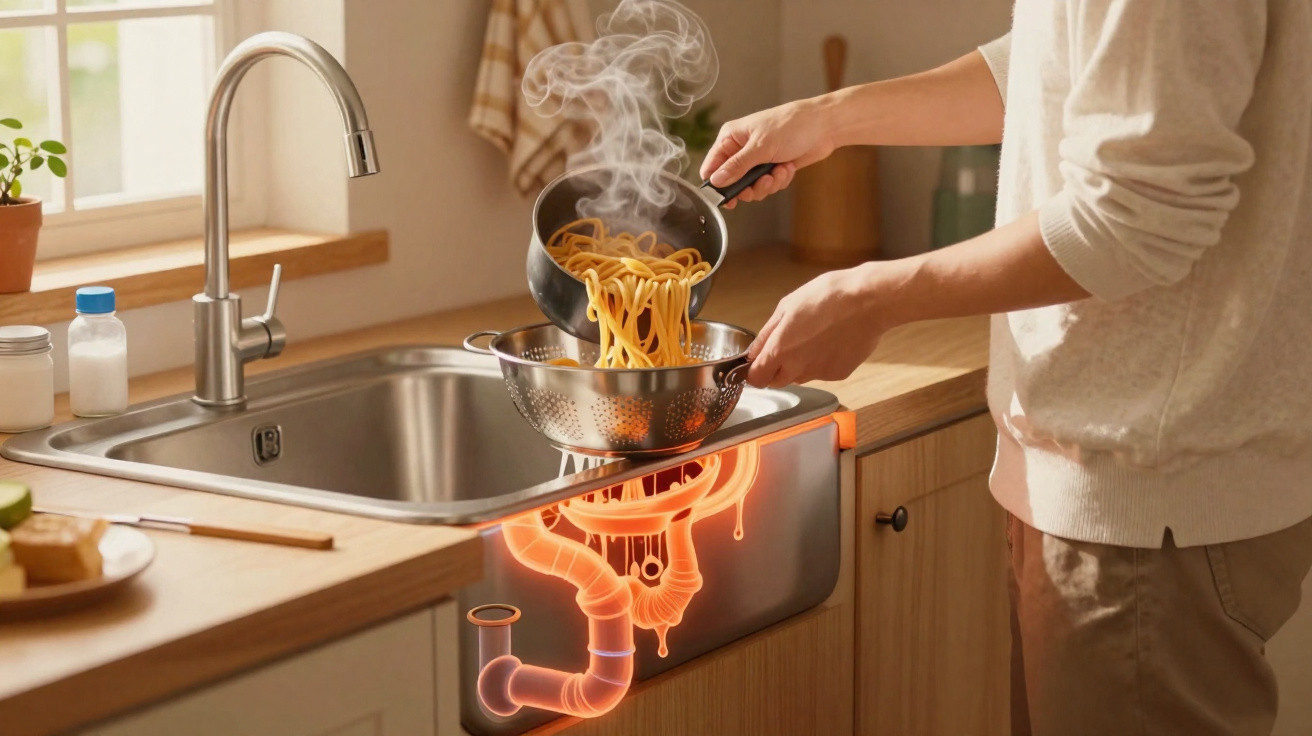
The scene will be familiar: the pan comes off the hob, the lid is placed on at an angle, it is tipped once – and boiling pasta water rushes down the drain. Clean, quick, gone. Yet this everyday routine can gradually damage the kitchen, lead to costly pipe issues and deprive pasta dishes of the special touch professional chefs use as a matter of course.
A heat shock for the kitchen: how pasta water attacks pipes
Pasta water is usually poured straight from the boiling pan into the sink. Its temperature is often just below 100 degrees. Many kitchens simply are not designed to cope with this.
PVC waste pipes, which are standard in modern homes, are particularly vulnerable. This material can start to deform at around 60 to 70 degrees. Boiling water therefore leaves virtually no safety margin.
Regular heat shocks can soften PVC pipes, warp them and eventually cause hairline cracks.
Damage rarely appears overnight. Instead, it generally develops gradually:
- Pipes become slightly distorted, especially around bends and joints
- Seals turn brittle because of repeated temperature changes
- Microcracks form, allowing water to seep unnoticed behind cupboards or into walls
The issue often emerges at the worst possible moment: damp patches on the wall, swollen kitchen units or a musty smell with a cause that is difficult to trace.
Metal pipes and sinks can suffer too
Even older copper or steel plumbing is not entirely safe. In those systems, the weak point is more likely to be the connections. Cold water sits in the pipework, then almost-boiling pasta water suddenly surges through it – this severe temperature shift puts strain on seals and transitions.
The sink itself may also be affected. The following are especially sensitive:
- enamelled sinks, which can develop fine hairline cracks
- composite and engineered sinks, which may become discoloured or patchy
- models for which the manufacturer specifies a maximum temperature of around 80 degrees
The frustrating part is that the consequences are often visible only after a long time. While you continue to pour it away neatly, the heat is quietly working against your kitchen in the background.
The invisible sticky trap: how starch slowly blocks drains
Pasta water is not merely hot water. It looks milky and cloudy because starch from the pasta passes into the water. This ingredient creates the second major problem: blockages.
The starch swells in the heat and makes the water slightly slimy. Once in the drain, the mixture settles on the pipe walls, creating a thin, mildly sticky coating.
The starch in pasta water acts like an invisible adhesive base for everything that subsequently passes through the pipe.
This can trap:
- tiny food scraps and crumbs
- pieces of pasta, grains of rice and vegetable remnants
- soap and washing-up liquid residue
As long as the water is still draining reasonably well, nobody notices. However, the build-up inside continues to grow unnoticed. Over time, a thin film becomes a proper ring of residue that makes the pipe increasingly narrow.
Fat turns the film into a concrete-like plug
Matters become particularly unpleasant when fats are involved: cooking oil, leftover butter or cream sauces. Many people assume boiling water dissolves fat and washes it away. That is briefly true – but it merely shifts the problem further along the pipe.
The fat liquefies in the hot water, travels some distance through the pipework and then reaches a colder section. There, it cools rapidly and solidifies again. This is often at a pipe bend or another area that is already difficult to reach.
Starch plus fat plus cold – over time, this combination creates tough, stubborn plugs in pipes.
Many people instinctively respond by using even more boiling water or harsh chemical drain cleaners. Both put pressure on materials and the environment without addressing the underlying cause: too much heat, too much fat and too much starch in the drain.
A wasted kitchen treasure: what pasta water can do when cooking
For professional chefs, pouring it down the drain is a tragedy in itself. Pasta water is a quiet star in the kitchen.
The starch it contains, which becomes a problem in pipes, acts as a natural thickener in the pan. It helps make sauces creamy, brings ingredients together and takes pasta dishes to another level – without extra cream-laden additions or convenience products.
A small ladleful of pasta water can turn a pale sauce into a silky, emulsified cream sauce.
Anyone wanting to serve pasta as it is served in a restaurant can use pasta water deliberately:
- Add a little to tomato sauce so it clings more effectively to the pasta
- Emulsify it with oil, Parmesan and seasoning to make “Aglio e Olio” or pesto smoother
- Toss dry leftovers from the previous day in a frying pan with a little pasta water to make them moist again
The method is simple: the starch dissolves in the water, moves into the sauce and gives it body and sheen. At the same time, it often removes the need for additional thickeners such as flour or ready-made sauce thickeners.
How much pasta water makes sense
There is no need to set aside an entire pan. Just before draining, scoop out a mug or ladleful and place it beside the hob. When tasting the sauce, add it by the tablespoon as needed until the consistency is right.
There is a practical additional benefit: while the water sits in the ladle, it cools slightly – so if any is left over, it will no longer go into the drain at boiling temperature.
How to dispose of pasta water without harming pipes
Cooking does not need to become more complicated. A few small changes in habit are enough to protect pipework without forcing you to wrestle with heavy pans.
Gentler methods instead of a heat shock
- Empty the pan into a large bowl or second pan, let the water cool, then pour it into the drain only once it is lukewarm
- Run cold water at the same time as draining, so the temperature mixes immediately inside the pipe
- Remove a ladleful of pasta water before draining for later use
If you cook pasta regularly, some of the water can also be used elsewhere – for example, once cooled, to soak heavily soiled frying pans. Its light starch content helps loosen baked-on residue.
Sensible maintenance instead of brute force in the drain
For everyday care, simple and gentle household remedies are enough to stop starch and fat layers from building up significantly in the first place.
- Regularly pour a mixture of lukewarm water (no more than around 50 degrees) and coarse salt into the drain
- Around once a month, sprinkle half a cup of bicarbonate of soda into the drain, add a little white vinegar, leave it to work for 10–15 minutes, then rinse with warm water
In an emergency, the traditional rubber plunger often remains more effective than an “extra dose of boiling water”.
Using a plunger early prevents a small plug from becoming lodged deeper in the pipe. It is important to hold the sink overflow closed briefly so the suction can work properly.
What many people do not know: further uses for pasta water
Once you have pasta water available, it can be put to even wider use. Here are a few examples that are little known in many kitchens:
- Once cooled, use it as the base for dough or a bread starter, as the starch provides structure
- Use it as a gentle washing solution for pans containing baked-on pasta or rice
- Add a small amount to soups and stews to thicken them slightly without altering their flavour
Those who cook vegetarian or vegan food benefit especially: pasta water adds creaminess without relying on cream, cheese or egg. Light vegetable sauces in particular gain more substance this way.
Why pausing briefly at the drain is worthwhile
Once you think about it, the old instinct to pour boiling pasta water into the drain no longer seems particularly sensible. The combination of extreme heat, starch and fat works against the kitchen – while denying dishes the opportunity for better texture.
Instead, anyone who pauses briefly, reserves a little water for the sauce and lets the remainder cool protects their pipes, avoids expensive call-outs from drain cleaning services and elevates their pasta at the same time. It is one small action taken less from habit and more with awareness.


Comments
No comments yet. Be the first to comment!
Leave a Comment