
Your living room may look immaculate: the sofa has been brushed and the diffuser is quietly running-or so you assume. Then a friend walks in, hesitates and smiles: “You’ve got a dog, right?” Most of us have experienced that awkward second when the reality lingers in the air more stubbornly than the smell itself.
I came home with my terrier, slipped off my shoes, and was met by that soft, woolly cloud of “pet” in the room-a blend of warm fur, slightly damp fabric and yesterday’s sofa nap. I opened a window, lit a candle and acted as though I could not detect it, but the air gave me away in small bursts. I began inspecting the familiar culprits-the throw, the basket of blankets, the section of carpet beside the armchair-with my nose close to the surface, like a detective mortified by the investigation. There is a quicker approach.
Why living rooms hold on to “pet” smells even when your pet is clean
Rather than simply drifting around, odour sticks to things. It travels on oils from fur and skin, plus the finest airborne particles, before settling on the places where you relax most. Cushions, wool throws and thick curtains therefore work rather like memory foam for smells. Humidity from showers, cooking steam or rain-soaked walks makes those textiles more receptive, drawing in whatever is in the air. Your pet may not be unclean, but your fabrics are extremely welcoming.
Picture a Saturday when you have cleaned before guests arrive: the vacuum stripes are neat, the coffee is brewing and the room looks ready for a magazine shoot. Then, five minutes before the bell rings, your dog gives an excited shake beside the sofa. One invisible cloud from a wagging tail later, the smell returns like a song you thought you had forgotten. My neighbour Maya was convinced her home smelled “fresh” until she went away for a weekend; when she returned on Monday, she was not greeted by neutral air, but by the dry, woolly embrace of her own living room. Homes reveal themselves when we leave them alone.
There is science behind that impression. Odour molecules are often drawn to fats and fibres, embedding themselves in upholstery, while moving air releases them again every time you sit down, plump a cushion or turn on the ceiling fan. Your sense of smell also adjusts to a constant background within minutes, so visitors spot what you no longer notice. That is the problem: fragrance may disguise the signal temporarily, but the fabric reservoir continues to replenish the room. The cycle does not truly end without a proper reset. Neutralise, don’t perfume.
The clever trick: the vodka + baking soda two-step
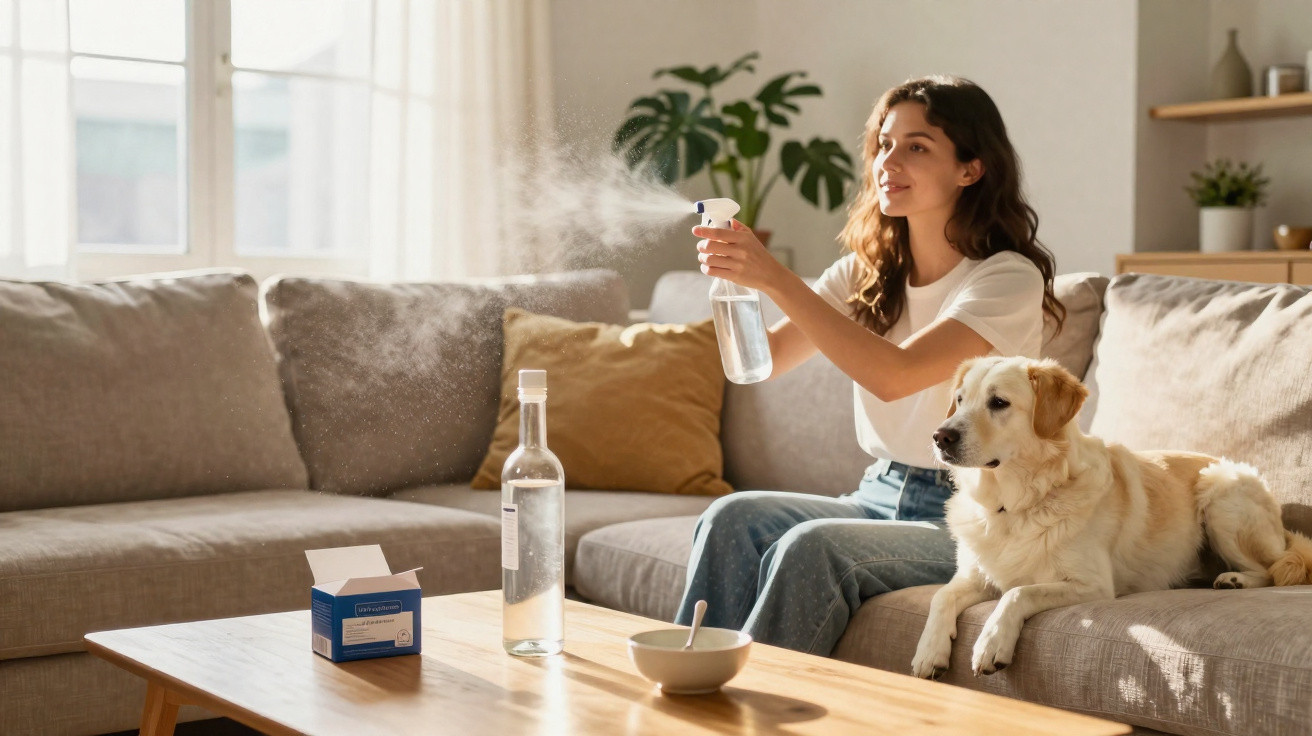
This simple routine changes everything: pour plain, unflavoured vodka into a clean spray bottle-the inexpensive kind is fine, as it is largely ethanol and water-then lightly mist fabric surfaces. Cover the front and back of the sofa, seat cushions, throws and the lower half of curtains, stopping when they are only faintly damp rather than wet. Leave them for 5–10 minutes, then sprinkle a very thin veil of baking soda over seats, armrests and any odour-holding textile. Let it sit for 30–60 minutes before vacuuming thoroughly with an upholstery attachment. The alcohol dries quickly and disrupts odour-causing compounds and microbial activity, while baking soda takes in the remaining acidic and sulphurous notes. Open a window, switch on a fan and let the room reset. 30 minutes, big difference.
The usual mistakes are spraying too heavily or cutting short the waiting time, leaving fabric sodden or baking-soda clumps crusted into seams. Neither is disastrous, but both make the task take longer than necessary. Aim for a fine mist that creates a cool sheen, never a splash. Keep pets away from the area and avoid flames while it dries, and test a hidden section first if your sofa is delicate or contains rayon/acetate blends. Avoid essential oils around cats and small dogs, as many are not pet-friendly. Honestly, no one is steam-cleaning sofa cushions every day, and that is perfectly fine-this two-step is the smart, low-effort answer for the living room you genuinely use.
This is not a masking routine. It is a gentle reset designed for real life, where the dog sleeps on the blanket you love too and the cat has quietly claimed the armchair. If you want fragrance afterwards, add it later-after clearing the base note your room had been holding. It can feel as though the whole space has breathed out.
“Neutralize first, then scent if you want; your nose will thank you tomorrow.”
- Use: plain vodka, a light mist, then a dusting of baking soda
- Wait: 30–60 minutes before vacuuming
- Patch test: use a hidden corner for delicate fabrics
- Keep pets out until everything is dry and vacuumed
- If there was an accident, treat that spot with an enzyme cleaner first
Keep the atmosphere, keep the air fresh
Odour control is more about routine than punishment. After the vodka + baking soda reset, your living room will remain neutral for far longer if you add a few small habits that do not make you feel like a butler. Open a window for ten minutes after returning from walks, rotate throws so that one is always freshly washed, and place a small bowl of activated-charcoal pellets behind a plant on the media unit, replacing them each month. These are tiny rituals that demand very little mental effort.
The best areas for this trick are where noses and naps meet: the sofa seats and back, the reading chair your cat has crowned as its own, the central rug where games of fetch end, and the bottom of curtains that touch the floor. With a leather sofa, focus on the textiles around it, then wipe the leather with a barely damp microfibre cloth. The odour burden falls even though you have not treated the main piece itself. One small action clears the whole soundstage-you notice it when laughter seems to carry again.
Smell is tied to memory, which is why a room feels different once you have lightened it. The television is not louder and the coffee is not stronger, but everything seems sharper, as though you have cleaned a lens. When one area remains stubborn, treat it locally: mist, dust, wait and vacuum again, then allow fresh air and daylight to finish the work. Smell has a story, and after a reset, your living room no longer tells one of “dog” or “cat”; it returns to the honest baseline of your own space. At that point, a candle is a choice rather than a disguise.
It is reassuring to know that removing the “pet” note from your living room’s soundtrack does not require a van full of products or an entire weekend of scrubbing. You only need a calm two-step process and a little patience while chemistry does its unobtrusive work. Friends may still know you have a dog because they can see the dog, not because the room announces it before they do-and that difference is more significant than it sounds. Pass the tip on to the next neighbour who shrugs and says, “I guess this is just how my place smells,” because it does not have to be, not any more.
| Key point | Detail | Benefit for the reader |
|---|---|---|
| Two-step neutralising | Light vodka mist, then baking soda, wait, vacuum | Quick, affordable and uses items you can pick up today |
| Target the fabric reservoir | Sofas, throws, curtains and rug edges hold most odour | Focus your time where the results will be greatest |
| Safety and simplicity | Patch test, keep pets away until dry and avoid oils | Cleaner air without demanding or risky routines |
FAQ:
- Can I use rubbing alcohol instead of vodka? Use plain vodka or a high-quality ethanol-based spray; many rubbing alcohols contain additives and have stronger smells that may linger or irritate. If you use isopropyl alcohol, test a hidden area first and apply it more sparingly.
- Is this safe for all fabrics? It suits most upholstery, cotton and polyester blends, but always test delicate fibres such as rayon, silk or acetate in an inconspicuous spot first. Avoid soaking seams or foam.
- What if I don’t have vodka right now? Mist warm water with a tiny drop of fragrance-free washing-up liquid to break up surface oils, then use baking soda and vacuum. It is less powerful, but useful until you can complete the full two-step.
- How often should I do this? Following a deep reset, repeat it every 2–4 weeks on high-traffic areas, or immediately after long spells of rainy weather and large gatherings. Brief misting sessions in between help maintain the baseline.
- The smell comes back near one spot-what then? If the area is close to a pet bed or a previous accident, wash the bed cover and first treat the exact spot with an enzyme cleaner. Then use the vodka + baking soda sequence; an ongoing issue may indicate a hidden stain that needs locating.
Comments
No comments yet. Be the first to comment!
Leave a Comment