
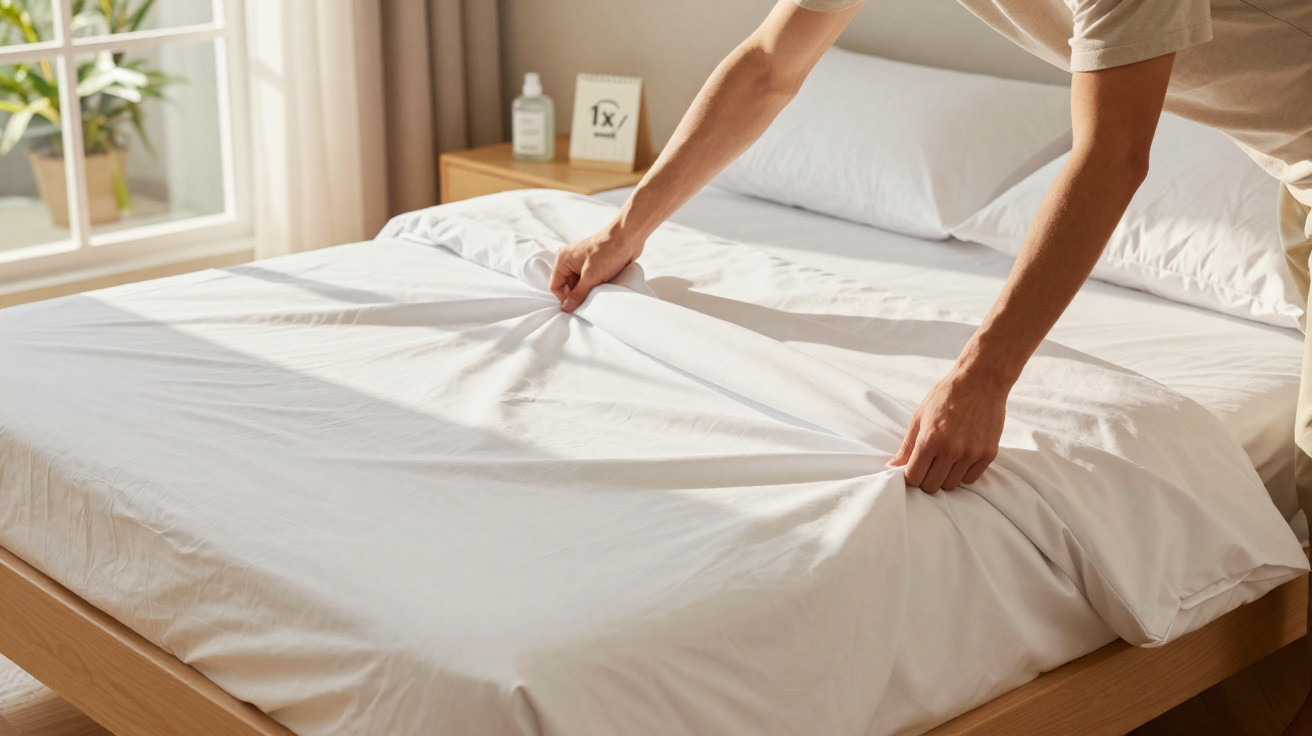
Bed linen should generally be changed once a week, particularly if the sheets are slept in every night. While you sleep, the fabric collects perspiration, natural oils, dead skin cells, dust, traces of skincare and hair products, as well as dust mites and microorganisms, which thrive more readily in warm, damp conditions.
Why are two weeks or a month too long?
Sheets, pillowcases and blankets remain in direct contact with your skin, hair and breath for several uninterrupted hours. Even if the bed looks clean, its fabrics will already have absorbed overnight sweat, naturally shed skin and particles from the bedroom.
Health and sleep specialists commonly advise washing sheets at least weekly. The Sleep Foundation identifies a weekly change as the general guideline, while the Cleveland Clinic likewise recommends laundering bed linen at least once a week to limit the build-up of bacteria and dirt.
What is the ideal interval for changing bed linen?
For a healthy person who showers before bed, does not sweat heavily overnight and does not share the bed with pets, a seven-day interval is usually adequate. This routine supports hygiene without over-washing the fabric and wearing it out prematurely.
- Sheets: once a week.
- Pillowcases: once or twice a week, especially for oily skin.
- Duvet covers: every one or two weeks, depending on use.
- Blankets and duvets: less often, provided they do not touch the skin directly.
- Mattress protector: wash regularly, following the manufacturer’s care label.
When should bed linen be changed more often?
Certain circumstances call for a shorter schedule. People who perspire heavily, sleep with pets, have allergies, rhinitis, asthma, acne or sensitive skin, or live in a hot, humid area may need to change sheets and pillowcases every three or four days.
Changes should also be brought forward during colds, viral illnesses, infections or allergy flare-ups. Pillowcases need particular attention because they collect facial oil, cosmetic residue, hair and saliva, all of which can irritate the skin and aggravate breathing discomfort.
How can you wash fabrics without damaging them?
Proper laundering clears away residue without harming the fibres. Before putting items in the washing machine, separate light and dark pieces, check the care label and avoid using too much detergent, as built-up product can make fabric rough and irritate the skin.
- Use hot water only if the fabric care instructions allow it.
- Choose a full rinse cycle to remove detergent and fabric conditioner.
- Dry everything completely before storing it to prevent a musty smell.
- Do not leave damp sheets in the washing machine for long.
- Store them somewhere dry, away from walls affected by damp.
A clean bed is part of good sleep hygiene
Changing bed linen every week is not excessive housekeeping. It is a straightforward way to reduce the sweat, dust mites, dust and residue trapped in the fabric where your body spends much of the night.
The right routine depends on health, climate and how the bed is actually used. For most households, seven days offers the best balance; in very hot weather, during illness, with allergies or where pets are present, the interval should be shorter so that sheets and pillowcases remain fresh, dry and suitable for rest.




Comments
No comments yet. Be the first to comment!
Leave a Comment