
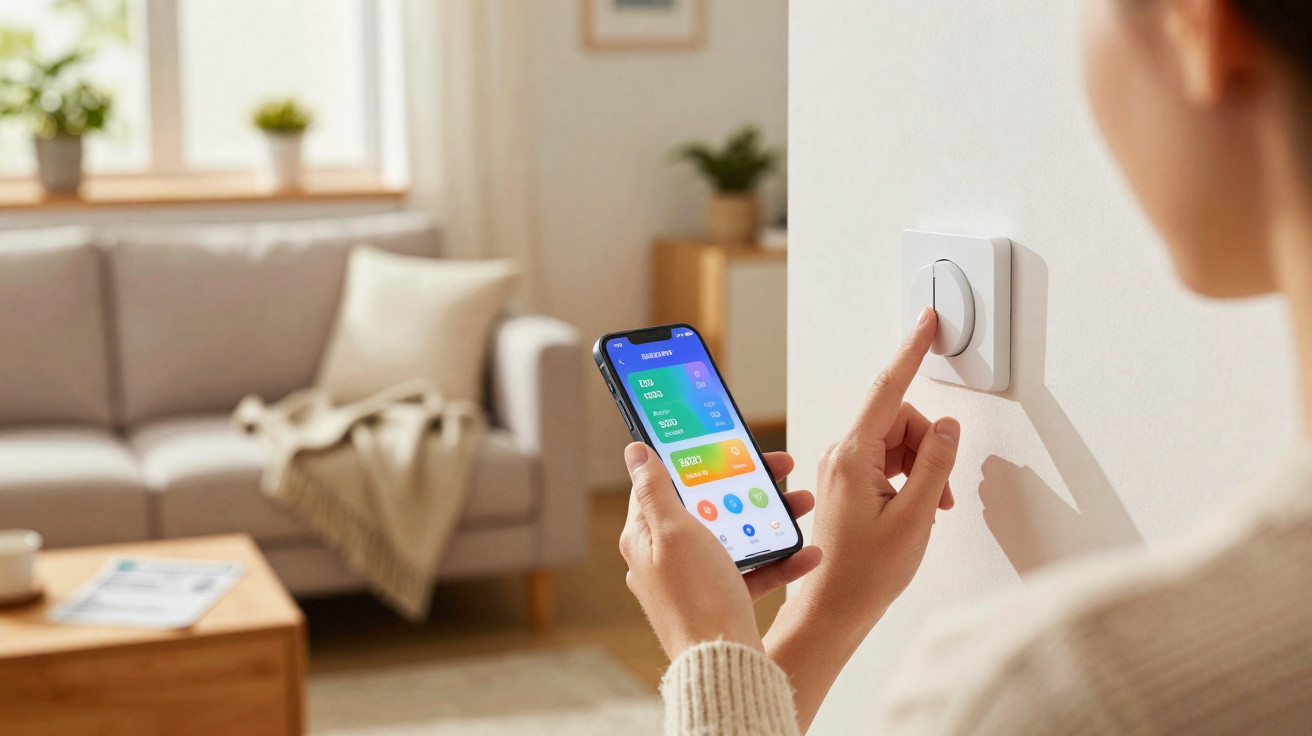
The small box on the wall determines whether you need a thick jumper in January – or only shiver when you see your heating bill. Using your thermostat incorrectly literally burns money. The good news is that a few straightforward adjustments can significantly reduce consumption without turning your home into an icebox.
Turning up the thermostat to heat up faster – an expensive misconception
During winter, many people instinctively set the temperature very high because they expect their home to warm up more quickly. It sounds plausible, but it is simply wrong.
A thermostat controls the target temperature rather than the speed of the heating system. Whether you select 20 or 25 degrees, the boiler or heat pump works at the same output until the chosen temperature has been reached.
“Setting it to 25 degrees when 20 is enough does not heat your home faster – it only heats for longer and at a considerably higher cost.”
A typical situation: it is minus three degrees outside and the home has become cold. Impatiently, people turn the heating right up, go into the kitchen to make coffee, forget about it and later wonder why the room feels stuffy and overheated. This is precisely where an extra 10 to 20 per cent of energy use can often arise, with no benefit to comfort.
Keeping the same temperature all day: convenient but costly
Another common habit is leaving the heating at one temperature from morning until night, regardless of whether anyone is at home. Although this may feel convenient, it is excessive in most cases.
If a home is empty for several hours during the day, the living room does not need to remain at 21 degrees. Reducing the temperature by just two to three degrees noticeably lowers heating demand, as less heat escapes through the walls, windows and roof.
Suitable guidance for many households:
- during the day when people are at home: around 19–21 degrees in living spaces
- during working hours or longer periods away: reduce to around 16–18 degrees
- overnight: set living spaces to 16–18 degrees as well
Modern thermostats can make these changes automatically through timed programmes. Anyone who permanently maintains a high setting pays more – often without noticing, because every small convenience adds up over the months.
Switching the heating off completely is not a good solution either
At the opposite extreme, some people turn their heating off altogether when they are out or asleep in an effort to save as much as possible. It may sound radically efficient, but it creates problems of its own.
When a home becomes very cold, the heating system needs more energy later to bring the walls, floors and furniture back up to temperature. The risk of damp and mould also increases if rooms remain too cold for extended periods.
“A moderate temperature reduction is better than switching the heating off completely – it protects the building fabric and keeps the indoor climate stable.”
In poorly insulated buildings in particular, leaving the heating permanently off can result in damp walls. The expense of correcting this later can quickly wipe out the apparent saving.
Incorrect positioning: when the thermostat can be fooled
Many thermostats are installed wherever the electrician found an available space, which is not always the most suitable location. Yet positioning has a major effect on how accurately the device assesses the real room temperature.
Common problem areas on the wall
- Directly above a radiator: The thermostat is more likely to detect rising warm air than the air in the rest of the room.
- In direct sunlight: A ray of sunshine can raise the measured temperature substantially, causing the heating to switch off too early.
- In a draught or on a cold external wall: The air is measured as colder there, so the thermostat requests more heat and the room overheats.
An internal wall, roughly 1.5 metres above the floor and away from radiators, windows and direct sunlight, is ideal. Anyone renovating or refurbishing should plan for this location from the outset, as it can affect energy consumption for many years.
Smart thermostat, but unwise use
An increasing number of homes have “smart” thermostats, offering plenty of functions through an app or on the device itself. However, many people only use the basic “warmer/colder” setting and therefore miss considerable savings potential.
Getting the most from digital thermostat features
Modern devices can do far more than display a number:
- Weekly programmes: Different temperatures for weekdays, weekends, night-time periods and holidays.
- Occupancy detection: Some models reduce the temperature automatically when nobody is home.
- Consumption records: App-based charts show when the heating works hardest, providing a useful starting point for optimisation.
- Remote control: Warm the home up briefly using a smartphone on the way back, rather than heating it throughout the day.
“Anyone who only sets the target temperature often uses not even half the capabilities of a connected thermostat.”
Carefully adjusted programming is particularly worthwhile with heat pumps or underfloor heating, as these systems respond slowly and benefit from consistent operating periods.
One temperature for every room? Rarely sensible
The body does not need the same warmth in every room. Using one setting throughout the home wastes potential savings.
Practical guide values:
- Living room, kitchen and home office: around 19–21 degrees
- Bedroom: 16–18 degrees is usually sufficient, and many people sleep better in slightly cooler conditions
- Bathroom: 22–23 degrees can be pleasant for short periods, with a lower setting in between
- Storage and hallway areas: 15–17 degrees is often enough, provided there is no risk of pipes freezing
Individual radiator thermostat valves or zoned controls can readily account for these differences. Less frequently used rooms in particular offer savings potential without reducing everyday comfort.
How much saving is realistically possible
Even minor changes to the target temperature can have a clear effect. Energy studies repeatedly cite a rule of thumb: reducing the temperature by one degree saves roughly seven per cent of heating energy, although this naturally depends on the building and heating system.
| Measure | Typical saving |
|---|---|
| Reduce the temperature by 1 °C | around 5–7 % less heating energy |
| Use night-time temperature reduction consistently | an additional 5–10 % possible |
| Set up smart timed programmes | up to 15–20 % overall compared with continuous operation |
For a detached house with annual heating costs of, for example, £1,500, this can save several hundred pounds without anyone having to feel cold.
Even the best thermostat is of little help without heating maintenance
The best control device achieves little if the heat generator itself operates inefficiently. An old, poorly adjusted or dirty system consumes energy regardless of how intelligently it is controlled.
This includes:
- regular servicing of the boiler or heat pump
- bleeding radiators so that water can circulate freely
- hydraulic balancing to ensure all rooms receive heat evenly
- checking the flow temperature – it can often be reduced slightly
“The thermostat and heating system work as a team: only when both are properly matched will the final bill be right.”
How to get started with simple steps
Anyone not wishing to change everything immediately can begin gradually. A short check over one weekend is a sensible first step:
- Measure current temperatures in the most important rooms rather than relying solely on the thermostat scale.
- Check whether the temperature is genuinely reduced when the home is empty during the day and overnight.
- For smart devices, open the app, review the timed programmes and adjust them to daily routines where necessary.
- Trial a reduction of one degree and see whether comfort actually changes.
After a few days, many people notice hardly any difference in how their home feels, but do notice the difference later when they view the bill. This fine-tuning is particularly worthwhile when energy prices are high.
Why mindful use pays off over the long term
A well-used thermostat delivers not only lower costs but also more stable room temperatures. Major fluctuations place strain on both the building fabric and personal wellbeing. Evenly heated rooms help prevent stress cracks in walls and reduce the likelihood of damp corners.
In addition, anyone who saves heating energy automatically reduces their own CO₂ emissions. In many countries, schemes also provide financial support for switching to intelligent control technology. Once configured, most settings run automatically and only need occasional changes, such as when working hours change or during longer trips.




Comments
No comments yet. Be the first to comment!
Leave a Comment