
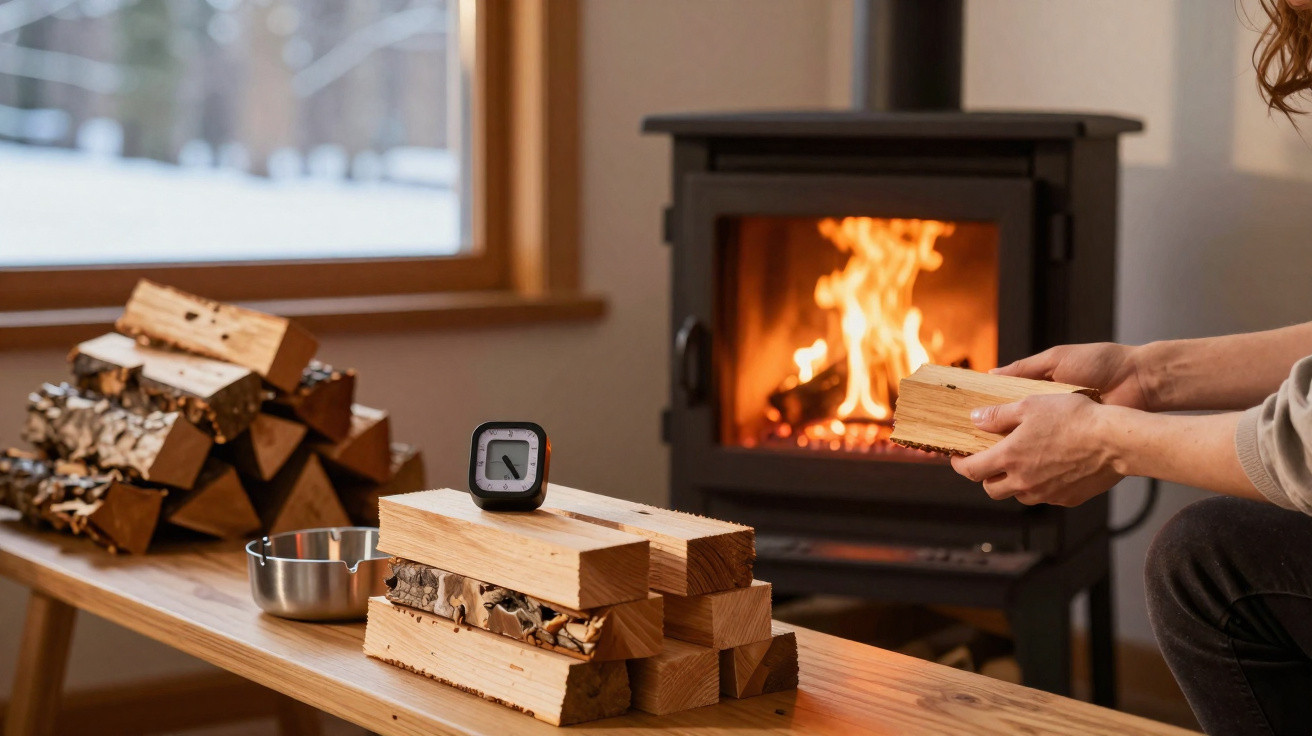
Many households rely on a fireplace or wood-burning stove, yet find heavy logs, substantial mess and inconsistent heat output frustrating. A fuel made from compressed wood residues is now gaining ground and, according to experts, can deliver up to four times the calorific value of conventional logs, while taking up less space and burning considerably more cleanly.
What the new compressed wood briquettes are made of
The “new wonder logs” currently attracting so much attention are in fact a familiar product with an updated image: compressed wood briquettes. They are produced from sawdust and wood shavings that are already generated in sawmills and joinery workshops.
These residues are compacted under immense pressure, without chemical additives, into uniform, solid briquettes. The resulting highly dense, dry blocks or cylinders release considerably more energy in a stove than ordinary firewood logs.
Compressed briquettes made from wood residues can often provide the heat output of three to four conventional logs – while requiring significantly less volume.
Why their heat output is much greater
Lower moisture content means more flame
The key distinction is their moisture level. Ideally, air-dried firewood has a moisture content of 20 to 30 per cent, while partly damp wood can contain as much as 50 per cent. Compressed briquettes are generally below 10 per cent.
- Less water in the wood means less energy is lost through evaporation.
- Flames burn hotter and the stove reaches its operating temperature more quickly.
- The stove glass becomes sooty less readily because combustion is cleaner.
Whereas wet wood tends to “boil” in the stove instead of burning properly, dry briquettes convert almost all of their stored energy into heat. This is directly noticeable on the thermometer.
High density and longer-lasting embers
Intense compression means that a compressed briquette contains far more mass within a smaller area than a piece of split timber. This density produces a longer burn time and steady embers.
Many users say that one briquette block supplies a similar amount of heat to three or four logs of the same size. The benefits are especially apparent in modern wood-burning stoves with effective airflow: even heat, less refuelling and fewer fluctuations.
The main everyday benefits
Cleaner combustion and less cleaning
Conventional firewood comes with familiar irritations: piles of ash in the firebox, soot in the chimney and blackened glass. Thanks to their consistent structure, compressed briquettes burn much more completely.
- noticeably less ash in the stove
- fewer soot deposits in the flue pipe
- stove glass stays clear for longer
This lowers the risk of smouldering fires in the chimney and extends the intervals between cleaning by a chimney sweep or the stove owner.
Environmental benefit: waste becomes heating energy
The raw materials used for these briquettes already exist as by-products: sawdust, planing shavings and small pieces of wood. Rather than being discarded, they are compressed and put to use again. This reduces the need for newly felled timber.
As the briquettes are so dry, burning them produces less particulate matter and fewer unburnt gases. This benefits air quality, particularly in densely populated areas where many homes have stoves.
Reduced storage requirements in a cellar or carport
Anyone who has stacked four loose cubic metres of firewood will know how much room it takes up. The high energy density of briquettes changes that equation.
Practical rule of thumb: One cubic metre of compressed briquettes provides roughly the same heating energy as around four cubic metres of air-dried firewood.
That is a real advantage for small cellars, garages or balconies. There is also no infestation in the woodpile, barely any risk of mould, and the packages are manageable and easy to stack.
| Feature | Compressed briquettes | Conventional firewood |
|---|---|---|
| Moisture content | below 10 % | 20–30 %, often more |
| Calorific value per volume | very high | medium |
| Storage space needed | low | high |
| Amount of ash | low | considerably higher |
| Insects / mould | virtually none | frequently present |
How to use compressed briquettes correctly in a stove
Getting started properly: lighting without frustration
Compressed briquettes do not ignite as readily as thin logs because they are more densely compacted. The key is to get the stove going first with a small flame.
A straightforward sequence is:
- Place two to three firelighters in the firebox.
- Put thin kindling or a small piece of a briquette on top.
- Light the firelighters and open the air supply fully.
- Wait until a stable flame and the first embers have formed.
- Add one or two briquettes to the hot firebox, then adjust the airflow.
Those who are patient at this stage will be rewarded with calm, even flames and a consistently high temperature.
Important safety considerations
Because compressed briquettes contain a great deal of energy in a small volume, they can heat a stove more intensely than ordinary wood. Users should therefore make sure to read the manufacturer’s instructions.
- Observe the maximum fuel quantity for each load.
- Use a stove thermometer to prevent overheating.
- Burn them only in approved wood-burning stoves or fireplaces.
Anyone who is unsure should consult a stove installer or chimney sweep. Many appliances are suitable, but some older models cope less well with the high output.
Compressed briquettes compared with a stack of woodland logs
Heat output and convenience
In a direct comparison, compressed briquettes are clearly ahead in calorific value. They burn for longer, at a higher temperature and with a more stable flame. This is convenient for commuters or working people: load the stove in the morning and the home remains warm for a long time.
Traditional split logs have more emotional appeal: the crackle, the range of timber species and the tradition of stacking wood. People who manage their own woodland can often heat more cheaply with their own timber, although this requires time and physical work.
Price, storage costs and day-to-day practicality
Per kilowatt-hour, compressed briquettes are generally priced similarly to, or slightly above, dry firewood, depending on the region and availability. Once reduced storage requirements, cleaner combustion and the absence of long drying periods are considered, the price difference often becomes less significant.
A practical example: people heating in a city without their own wood storage space often have to buy split logs at a high price as “ready for the stove”. Packaged compressed briquettes need less floor space and can be used immediately.
What consumers should know before switching
When buying, it is worth checking the manufacturer’s information carefully. Reputable suppliers state:
- wood type (softwood, hardwood or a blend)
- residual moisture as a percentage
- calorific value per kilogramme
- shape (cylinder, block, with or without a hole)
Hardwood briquettes generally keep their embers going for longer, while softwood versions burn more quickly and produce high temperatures rapidly. Many users combine both: fast-burning softwood first for the lighting stage, followed by hardwood for long-lasting warmth.
The switch can also offer benefits for allergy sufferers or households with children. Less dust while stacking, no bark, and fewer spiders and beetles around the fuel store make everyday life more pleasant.
Ultimately, the choice depends on numerous factors: available space, budget, desired level of convenience and the type of stove. One thing is clear: anyone wanting to use their fireplace more efficiently today can hardly ignore the new compressed briquettes – they extract considerably more heat from the same stove and make heating somewhat more predictable.



Comments
No comments yet. Be the first to comment!
Leave a Comment