
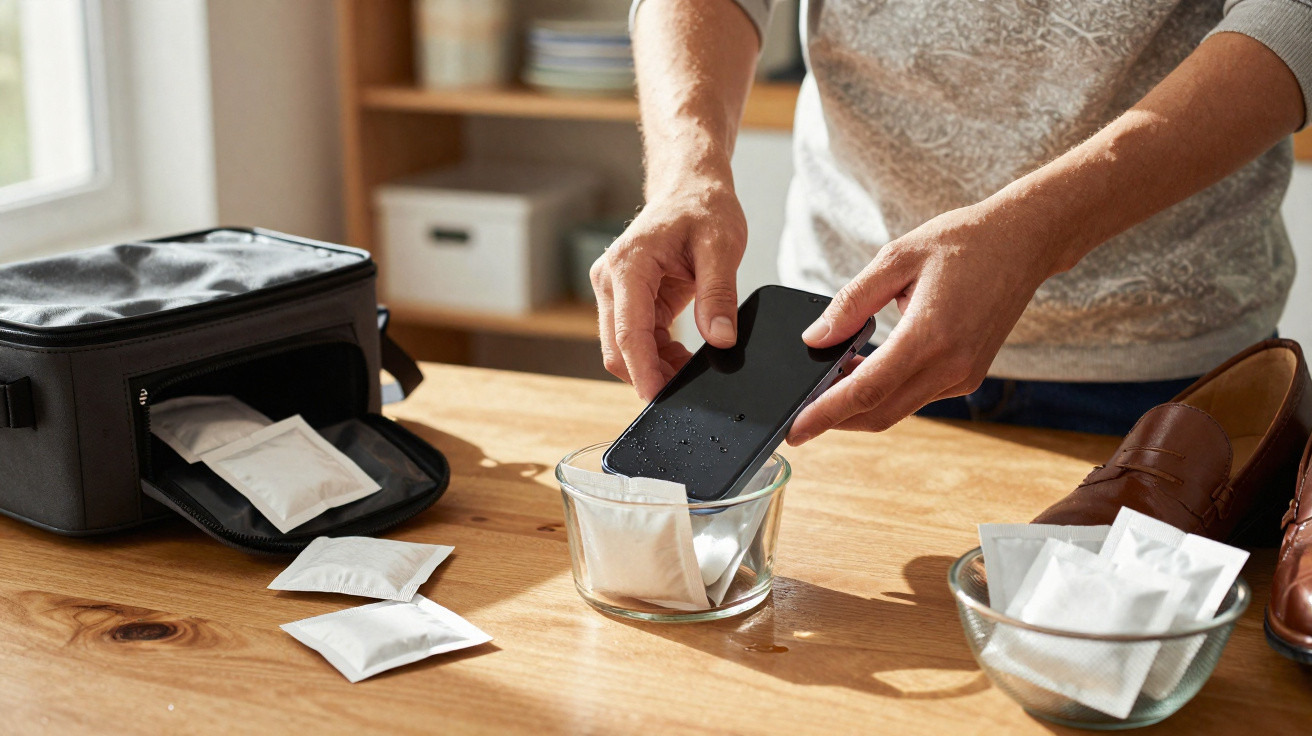
Those unobtrusive little packets appear in nearly every new shoebox, as well as in packaging for electronics and food supplements. Most people open the box, put the item away and automatically throw the small sachet in the bin. In doing so, they discard a useful household aid that can tackle a surprising number of problems.
What is actually inside the white packets
The packets contain silica gel, a granular form of silicon dioxide. This porous material acts like a tiny sponge for moisture in the air, taking in water without visibly changing its appearance.
“Silica gel packets protect products from moisture – and they can do the same in your home.”
Manufacturers include these desiccants in packaging to stop shoes becoming musty, powders forming lumps and electronics suffering moisture damage before they are even used. Once you have unpacked an item, you can put precisely this quality to practical use elsewhere.
Saving technology: how silica gel packets help with moisture damage
Moisture is one of the greatest threats to modern electronics. Even a rain shower or condensation inside a rucksack can damage cameras, headphones or batteries. This is where the packets can help.
First aid for damp devices
When a device has become wet, every minute matters. Proceed as follows:
- Switch the device off immediately and do not use it again.
- Remove any detachable parts, such as cases, batteries (where removable) and memory cards.
- Dry the exterior with a soft cloth.
- Put it into an airtight bag or container.
- Add several silica gel packets – the more, the better.
- Seal the container tightly and leave it for 24 to 48 hours.
Which devices are especially suitable for this method?
- Digital cameras and lenses
- Smartphones and tablets (where they are damp, rather than fully submerged)
- Headphones and in-ear headphones
- Power banks and batteries
- External hard drives and SSDs
- Handheld consoles such as the Nintendo Switch
The familiar rice trick is now considered outdated. Rice grains remove far less moisture from the air and often leave dust inside the device. Silica gel was designed for this purpose and works considerably more reliably.
Everyday uses: where the packets really excel
Anyone who keeps these packets can make effective use of them in many parts of the home. In many cases, even one sachet is enough to noticeably reduce a problem.
In wardrobes and shoes
Moisture can build up in enclosed cupboards. This creates a musty atmosphere and may eventually damage materials.
- A packet in a box of winter clothes helps textiles stay fresh for longer.
- In a shoe cupboard, it can help prevent odours and mildew marks.
- Inside sports shoes, it helps dry the interior after exercise.
Protection for camera bags and rucksacks
Camera bags, photography backpacks and electronics cases are prone to condensation, particularly when you move from cold outdoor conditions into a warm room in winter. Placing one or two packets in each compartment lowers the risk of misted lenses and corrosion.
They are equally helpful in laptop bags or rucksacks carrying technology alongside water bottles. A slightly leaking bottle is often only noticed once the damage has already been done.
Useful in the kitchen and pantry
Dry foods and powders are sensitive to humidity, which can cause clumping and shorten their shelf life.
- A packet in an open tub of protein powder or instant drinks can prevent clumps from forming.
- In a container holding baking powder, gelatine or cornflour, it helps the powder remain free-flowing for longer.
- In the spice cupboard, a sachet may reduce minor clumping in salt or paprika powder.
Important: never open the packets or mix their contents with food. They should always remain outside the area of direct contact, within the container or packaging.
How to prepare used silica gel packets for reuse
Silica gel can only absorb moisture up to a certain point. Once the granules are saturated, they no longer work properly. The advantage is that the packets can be dried out and used again.
Regenerating them in the oven
You can refresh the small packets in one straightforward process:
- Preheat the oven to around 120°C, using conventional top and bottom heat.
- Place the packets on a baking tray, ideally lined with baking paper.
- Leave them to dry for around 60 minutes.
- Turn the packets over once after 30 minutes.
- Allow them to cool completely before using them again.
If there are children or pets in the household, store the packets safely after drying them. The warnings on the sachets are there for a reason: their contents are not suitable for consumption and should be kept away from curious mouths.
Other places where silica gel packets are useful
Many household items are sensitive to moisture. With a little imagination, you will continually find further places to use them.
- Toolbox: Less rust on pliers, drill bits and screwdriver bits.
- Photo albums and trading cards: Protection against warping and mildew marks.
- Musical instruments: In the cases of guitars or wind instruments, they help maintain a more stable environment.
- Document files: Important papers such as contracts and certificates remain dry.
- Windowsill in winter: In closed boxes beside heavily misted windows, they offer a small amount of additional help.
| Location | Benefit of silica gel packets |
|---|---|
| Shoe cupboard | Less odour and a drier environment in enclosed compartments |
| Camera bag | Protection against condensation and corrosion |
| Container of powder | Prevents clumping and extends shelf life |
| Electronics rucksack | Reduces the risk from minor leaks or rain moisture |
| Toolbox | Less rust and surface rust on metal parts |
How silica gel works – briefly explained
Silica gel is made up of countless tiny pores, where water molecules attach themselves. This process is called adsorption rather than absorption: the water does not enter the material itself, but remains bound to its surface.
“Its enormous internal surface area allows a small amount of granules to bind a surprisingly large quantity of water.”
This effect is exactly what makes silica gel so appealing for packaging. The packets take up moisture without becoming sticky or losing their shape. Heat releases the water again, which is why the oven method allows them to be reused several times.
When to take care
Helpful as the packets may be, they must still be used responsibly:
- Never cut the packets open; the granules should not be left loose around the home.
- Keep them out of the reach of young children and pets.
- Do not allow them to come into direct contact with food.
- For severe water damage to electronics, continue to rely on a professional repair workshop.
Silica gel is not a replacement for professional building dehumidifiers, ventilation or a reputable repair service. It is a useful aid that can ease small everyday problems and, in an emergency, may sometimes prevent a device from failing completely.
By collecting the packets deliberately instead of reflexively disposing of them, you can gradually build up a small supply. Kept in a drawer or workshop, these quiet helpers will be ready when needed and can achieve more than their unassuming appearance suggests.

Comments
No comments yet. Be the first to comment!
Leave a Comment