
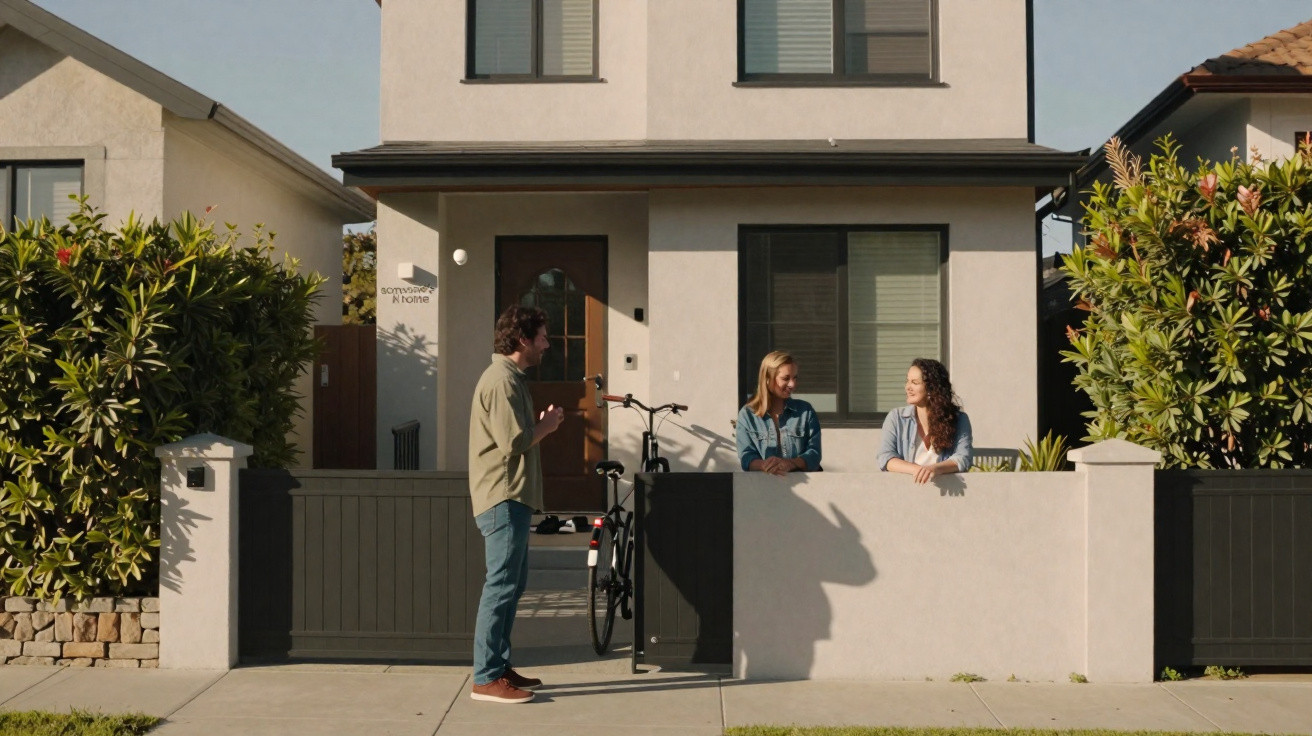
The miniature looks innocent, almost like a toy. Two houses side by side, a little garden and a few fences. But a closer look reveals that this model starkly demonstrates which building and living mistakes turn a home into a magnet for burglars - and which details deter criminals immediately.
A security model that remains just as powerful after 20 years
Around two decades ago, a Japanese security company created a comparative model. Its purpose was to show people clearly how even minor choices in housebuilding, garden design and the exterior of a property can affect the risk of burglary.
Designed for police awareness campaigns, the model then spent years in storage. It has now been displayed again at a trade fair in Kyoto, where it appears remarkably relevant. One side depicts a burglar’s “favourite house”; the other shows the sort of property they are more likely to avoid.
This simple miniature proves in a matter of seconds what statistics have been showing for years: visibility beats isolation.
The model was developed by Security House. One of the company’s planning managers explains that offenders rarely act on impulse. Instead, they watch a property, assess routines and weak points, then decide whether a break-in is worthwhile.
What makes a house burglar-friendly
At first sight, the model’s “wrong” side appears cosy and well protected. That is precisely the misconception: features residents regard as privacy can look like an invitation to criminals.
High walls and dense hedges: the ideal cover for burglars
One key issue is the use of tall walls and hedges that screen a property from public view. Many homeowners believe these protect them from prying eyes. In reality, they mainly conceal the burglar.
- High walls stop neighbours and passers-by from noticing unusual activity.
- Thick hedges create extensive shadows and places to hide.
- More corners and angles mean more blind spots for cameras and witnesses.
This is exactly the arrangement shown by the burglar-friendly house in the model: enclosed, confusing and barely visible from outside - ideal for a professional.
Small signs that shout “Nobody is home”
The model makers also included typical everyday clues that offenders look out for:
- An overflowing letterbox or a visible pile of post that has not been collected for a long time
- Laundry left in the garden or on the balcony for days
- Dark window fronts with no sign of activity
These details suggest that nobody is regularly at the property, that the residents are away on holiday or often return home late. Burglars exploit exactly such gaps.
A bulging letterbox is not a trivial matter - for many offenders, it is the starting signal.
What a house looks like when burglars are more likely to pass it by
The model’s other side shows how to make life harder for burglars without turning a home into a fortress surrounded by barbed wire. The key is visibility and disrupting their ability to work unnoticed.
Open sightlines rather than a fortress mentality
The “secure” model home has no high walls. It uses instead:
- a low, open-style fence
- clearly visible areas around the house
- few corners where somebody can conceal themselves
Anyone walking past the property can quickly see whether a person is in the garden or tampering with doors and windows. For offenders, this is a major risk factor: they could be observed or challenged at any moment.
Technology as an additional disruptive factor
The secure side also indicates both traditional and modern security features. Specialists recommend several layers of protection:
| Measure | Effect on burglars |
|---|---|
| Motion sensors with lighting | Removes darkness for offenders and increases the risk of detection |
| Infrared sensors | Report unusual movement outside the property |
| Video cameras with night mode | Deter offenders and preserve evidence |
| Smartphone apps for alarm systems | Enable rapid responses and make residents appear “present” |
| Good outdoor lighting | Creates fewer dark corners and raises the risk of detection |
The Japanese experts stress that offenders are surprisingly predictable. They avoid people, light and noise. If a door or window cannot be opened quickly enough, many give up after a short time.
Five common mistakes you can easily avoid
Anyone who owns a home or is planning one can draw several clear lessons from the model study. Many protective measures cost very little and primarily require attention.
- Do not prioritise privacy screening at any cost: Avoid high, solid walls. Semi-transparent fencing or hedges that still allow visibility are a better choice.
- Keep an eye on the letterbox: When away on holiday, ask neighbours to empty it regularly. Pause newspaper subscriptions.
- Do not leave laundry hanging for days: It signals that nobody is paying attention or that nobody is at home.
- Simulate movement and light: Timer switches, smart lights and occasionally raising or lowering blinds in the evening create an impression of activity.
- Make burglary attempts more difficult: Strong window fittings, tested door locks and additional security devices lengthen the time needed for a break-in - and many offenders then give up.
Burglars love convenience. Every extra action, every floodlight and every obstacle reduces the chance of success - and therefore their desire to try.
The basic rules remain unchanged - technology is becoming smarter
The Japanese specialists emphasise that the underlying principles have changed little over recent decades: offenders observe, avoid attention and dislike resistance. What is new is mainly the way residents can respond.
Modern systems combine conventional alarm technology with smartphone notifications, facial recognition and cloud storage for camera recordings. This means suspicious activity can be checked even while away on holiday: Has somebody been fiddling with the carport? Is an unfamiliar person suddenly standing in the driveway at night?
What remains important is that technology cannot replace good habits. A connected camera offers limited value if an offender feels completely unobserved behind a hedge two metres high.
Practical examples for greater security around the home
Consider a realistic example: a semi-detached house with a small garden on a terraced housing estate. Many owners completely enclose their gardens with high privacy-screening panels. Anyone climbing in there is effectively invisible. A better arrangement would be a combination of:
- a waist-high fence facing the street, with a clear view of the entrance area
- only partly enclosed side panels, with gaps that allow people to see through
- motion sensors at the rear entrance that also lightly illuminate the neighbouring garden
Or take a typical ground-floor city flat: rather than relying on blinds alone, it is worth considering burglary-resistant window fittings, clearly visible cameras at the building entrance and a community of residents who keep an eye out for unusual movement.
Why neighbours are often the best “sensor”
The Japanese model study also indirectly illustrates the powerful role of neighbours. A house that can be seen from outside benefits from many pairs of eyes observing it. Those who know their surroundings quickly notice when someone “does not fit in” or is handling doors and windows at unusual times.
A brief look over the garden fence, a call to neighbours while away on holiday or a shared group chat for the building: none of these can be fully replaced by an expensive high-tech system. Ideally, social vigilance and technology complement one another.
Anyone planning or renovating their property today should remember the message of the Japanese miniature: less fortress, more visibility. The more clearly an offender feels seen, the less likely they are to choose your home as their next target.



Comments
No comments yet. Be the first to comment!
Leave a Comment