
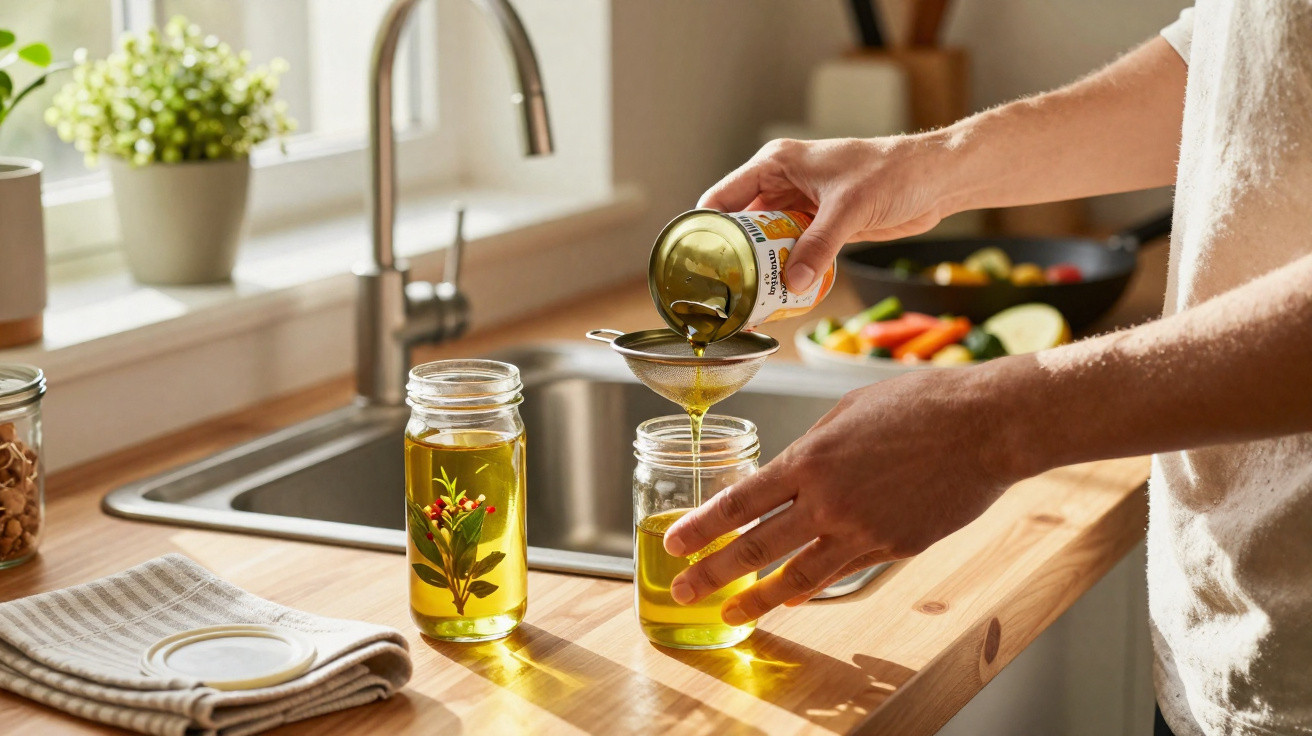
Opening a tin, taking out the sardines, tipping the oil quickly down the sink and rinsing with water: the scene is familiar. It seems convenient, almost automatic - clean, done, forgotten. Yet this very habit has consequences for your pipes, the environment and even the flavour on your plate. Treating the oil as waste ultimately works against you in three ways.
What really happens to sardine oil in the drain
Oil may appear harmless in the kitchen: warm, liquid and light. Inside pipework, however, conditions are very different. As the oil cools, it thickens and clings to the inner surfaces of the pipes. Each further rinse adds another layer.
Over time, this creates a genuine coating of grease that narrows the flow. First the sink starts to gurgle, then it develops a stale smell; eventually, water drains at a snail’s pace - until it stops altogether. At that stage, an expensive emergency call-out from a plumber is often the only solution.
What looks like a small amount of fish oil can turn into a solid lump of fat in the pipes, blocking the entire system.
Anyone in doubt only needs to look at photographs from sewer-cleaning crews. In many towns and cities, enormous fatbergs develop in the wastewater network, caused by cooking oils, frying fat and oil from tinned foods. Chemically, sardine oil is simply edible oil containing fish residues, so it causes the same problems in pipes.
Environmental damage: why oil does not belong in wastewater
The issue does not end at your home’s trap. If oil reaches the sewer and eventually the wastewater treatment works, it disrupts the carefully balanced processes there. Bacteria in the treatment tanks break down dirt particles. Too much fat coats these microorganisms, making them less effective or killing them.
There is another effect as well: a litre of cooking oil can spread across a vast area of water and form a surface film. This thin layer restricts oxygen exchange and puts aquatic life under stress. Even if it is “only” a few tablespoons from a tin of sardines, they add up alongside all the other kitchen oils disposed of by the neighbourhood.
- Overloaded wastewater treatment works require more energy.
- Residual oil can reach rivers and lakes.
- Fats attract other pollutants and bind to them.
- Water quality suffers, as do fish and other animals.
Rules governing waste oil are aimed mainly at catering businesses and industry, but the outcome is the same at home: pouring oil into the sink or toilet merely moves the problem elsewhere - it does not make it disappear.
A resource, not waste: what sardine oil contains
A closer look at the tin soon shows that the oil does more than serve a practical purpose. It protects the fish, preserves its flavour and texture, and combines with the sardines’ own natural fat. Over time, flavour compounds, omega-3 fatty acids and fat-soluble vitamins pass into the oil.
The oil from the tin is essentially a small, concentrated flavour bomb containing valuable nutrients.
Pouring it away means losing some of the sardines’ distinctive flavour - along with the very fatty acids for which the fish is so highly valued. Many people buy costly fish-oil capsules while pouring real fish oil from the tin down the drain. That does not really add up.
How to use sardine oil effectively in the kitchen
The best part is that sardine oil can be incorporated into everyday dishes without any advanced cooking skills. Simply use it in place of some of the oil you would normally add, and it brings a savoury, subtly maritime flavour.
Straightforward everyday ideas
- A punchy vinaigrette: Whisk a little sardine oil with lemon juice or mild vinegar, mustard, pepper and salt. It is ideal with tomatoes or warm potatoes.
- Homemade spreads: Mash sardines with cream cheese or quark, a little sardine oil, onion, herbs and lemon until spreadable.
- Quick pasta sauce: Gently fry garlic in a pan, add sardine oil and combine with lemon zest and parsley. Toss in cooked pasta and it is ready.
- Enhance vegetables: Drizzle a few drops of sardine oil over roasted vegetables after cooking. It turns simple carrots or courgettes into a satisfying dish.
If you prefer a subtler fish flavour, blend sardine oil with neutral rapeseed or olive oil. This keeps the nutrient density high while making the taste milder.
Managing smell and storage
Many people avoid sardine oil because they are concerned about a strong smell. A few simple measures can reduce it:
- Use the oil soon after opening rather than leaving it uncovered for days.
- Keep leftovers in a tightly sealed jar in the fridge.
- Add herbs, lemon zest or garlic to the jar - this infuses the oil and masks stronger notes.
This even makes it possible to collect small amounts and use them later in a larger dish, such as a stew or fish soup.
If you genuinely do not want to eat the oil
Some people do not tolerate fish well or simply dislike the taste. Even then, the oil should not go down the sink. The simplest option is to use an old jam jar or empty bottle as a collection container.
Pour the oil into it, seal the container and store it somewhere cool. The fat will gradually become firmer. Once the container is full, there are two options:
- Household waste recycling centre or collection point: Many local authorities accept cooking oils, and some are used for energy recovery or technical fat recycling.
- General waste as a last resort: If there is no collection point at all, the sealed container can go in the general waste. This keeps the oil out of the sewer system.
The key point is this: liquid oil should never go directly into the sink or toilet; it should always go into a separate container.
How to tell whether the oil is still good
Like all fats, sardine oil can turn rancid. The smell makes this obvious: instead of being pleasantly fishy and savoury, it becomes sharp, waxy or reminiscent of old nuts. In that case, it is suitable neither for eating nor for cooking in a pan.
Its appearance can also reveal a lot. A slight cloudiness or crystals in the fridge are normal, but greenish or grey discolouration is not. When in doubt, discard it - naturally via the collection container, not the drain.
Why one small action saves money over time
Consistently keeping oil out of the sink substantially reduces the risk of blocked pipes. A call-out from a drain-cleaning specialist can easily cost three figures, quite apart from damage caused by overflowing water. By comparison, using an old jar as a collection container costs virtually nothing.
There is another benefit: using the sardine oil means you need less other cooking oil. This adds up over time, particularly with premium oils containing omega-3 fatty acids. Anyone who regularly eats tinned fish can improve their diet in this way without buying extra products.
A practical kitchen habit: small change, major impact
The most important step happens as soon as the tin is opened. Rather than automatically heading for the sink, adopt a new routine:
- Open the tin and pour the oil straight into a small bowl or jar.
- Use some of it immediately in the dish you are making.
- Refrigerate any remaining oil in a sealed container, or add it to the collection container.
After doing this a few times, the new routine becomes automatic. The sardines taste more intense, the pipes stay clear, and the guilt about using the drain disappears. This small habit determines whether sardine oil becomes a problem or a resource.



Comments
No comments yet. Be the first to comment!
Leave a Comment