
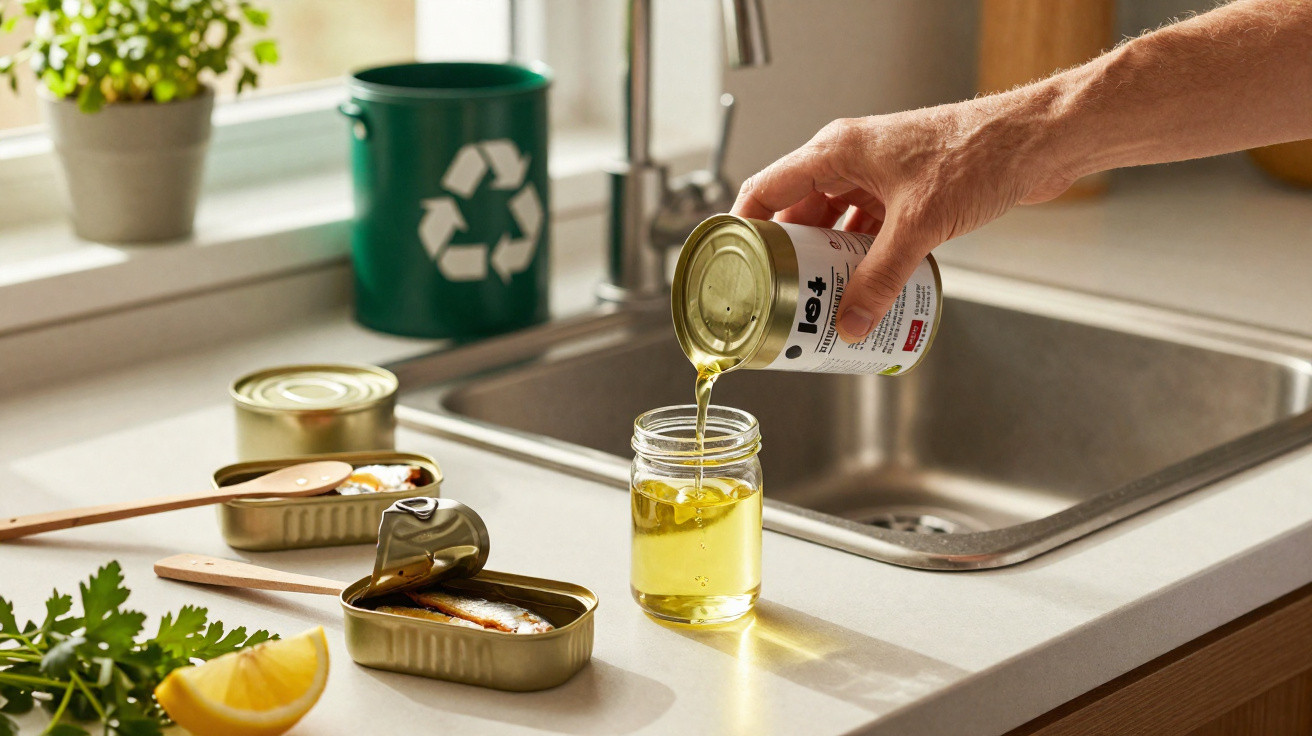
The small tin from the cupboard seems harmless: open the lid, remove the fish, pour the oil down the sink – job done. Yet this automatic habit quietly causes damage in the kitchen, to the environment and even to your own finances. That golden oil is much more than disposable “tin liquid”.
What really happens to sardine oil in the drain
While it is warm, the oil appears runny and harmless. Once it enters the drain, however, it cools down quickly. That is when the real problem begins.
- The oil thickens and sticks to the inner walls of the pipes.
- Over time, it combines with other fats and food debris.
- A solid layer of grease develops, narrowing the pipe diameter.
- Water drains more slowly, accompanied by gurgling sounds and unpleasant odours.
- Eventually, the pipe may become completely blocked – often requiring an expensive plumber.
Many property managers are familiar with this issue: grease-coated pipes are among the most common causes of blockages in kitchen drainage systems. A single spoonful of oil from a tin of sardines may seem insignificant, but it recurs over months and years, building up layer by layer.
“Every tablespoon of cooking oil that goes down the drain partly remains in the pipe system and may cost a great deal of money later.”
Environmental damage: one litre of oil, a problem area of one thousand square metres
The issue does not stop at the kitchen sink. Anything that makes it through the pipes enters the sewer system and then reaches a wastewater treatment plant or, in some cases, waterways directly. Cooking oils are far from harmless there.
One litre of oil can create a film covering around 1,000 square metres of water surface. This fine layer restricts oxygen exchange and places strain on fish, plants and microorganisms. Rivers, lakes and coastal waters therefore face additional pressure.
Grease also causes further problems at wastewater treatment plants. The bacteria used there to break down pollutants work less effectively when too much oil is present in the wastewater. The facilities must use more energy to separate the fat, with the cost ultimately returning to residents through charges.
Why oil from a sardine tin is far too valuable to pour away
Inside a sealed tin, the sardines undergo a kind of miniature maturing process. Some of the fish fat transfers into the surrounding oil, flavours are released, and vitamins and valuable fatty acids become distributed throughout it. This is both a significant opportunity and a major mistake made by many consumers.
Sardines are oily cold-water fish with a high proportion of omega-3 fatty acids. These fatty acids are considered beneficial for the heart, blood vessels and brain. Some of these substances end up in the oil in the tin. Pouring it away noticeably reduces the health value of the meal.
“The oil is a kind of concentrate of flavour and omega-3 – yet in many kitchens it goes down the drain for absolutely no reason.”
Fat-soluble vitamins such as vitamins D and E are also present, as they tend to collect in fat. They disappear too when the oil vanishes into the trap beneath the sink. With very little effort, though, the liquid can become part of everyday cooking.
Practical ways to use sardine oil in the kitchen
Anyone who enjoys, or at least tolerates, its strong fish flavour can readily use the oil instead of other cooking fats. Here are several quick ideas requiring hardly any extra effort:
- A punchy vinaigrette: Combine one part sardine oil with vinegar, mustard and a little neutral oil – ideal for tomato salad or warm potatoes.
- Tinned sardine rillettes: Mash sardines with a little cream cheese or butter, lemon juice and seasoning, mixing in some of the oil – this makes a spreadable topping for bread.
- A quick pasta sauce: Gently fry garlic in a pan, add sardine oil, then stir in some lemon zest and parsley before tossing the pasta directly in the pan.
- Finish vegetables: Drizzle a spoonful of sardine oil over cooked or roasted vegetables, such as broccoli, fennel or carrots, after taking them out of the oven.
If the flavour feels too intense, dilute the oil with a neutral vegetable oil. A ratio of one to three is often enough to make the taste substantially milder without throwing everything away.
If you cannot stand the flavour: dispose of it properly rather than rinsing it away
Some people cannot tolerate the smell of pure fish oil, while others are concerned about rancid notes. In that case, there is a simple alternative that protects both pipes and the environment.
- Pour the oil into an empty jar or an old, clean bottle.
- Seal the container tightly and store it somewhere cool where possible, so that the oil thickens.
- Take it to a civic amenity site on your next visit and leave it at the collection point for cooking oils.
Many local authorities provide containers or collection points for used cooking oils. There, the oil is collected and sometimes processed further, for example into energy or technical products. If you are unsure, check with your local waste service or council office.
If no collection scheme is available and the amount is very small, general waste is the fallback option. In this situation, always put the oil in the bin in a sealed container, never loose inside a bag. Kitchen roll used to wipe out the tin should also go into general waste.
How much sardine oil is still healthy?
For all its benefits, the amount used remains important. Although omega-3 fatty acids are viewed positively, the oil is still calorie-dense. One tablespoon can easily provide around 100 kilocalories. Anyone trying to maintain or lose weight should bear this in mind.
A practical everyday rule of thumb:
| Use | Recommended amount per person |
|---|---|
| Vinaigrette | 1–2 teaspoons |
| Pasta sauce | 1 tablespoon |
| Bread spread / rillettes | 1–2 teaspoons in the overall mixture |
| Drizzle for vegetables | 1 teaspoon |
If you eat tinned fish regularly, you can also save the oil: add small amounts to the same jar each time and use it in dishes that suit a stronger flavour, such as stews or well-seasoned one-pan meals.
Common questions and typical misunderstandings
Can sardine oil simply be rinsed away with hot water?
Hot water only dissolves the fat temporarily. As soon as the mixture reaches cooler parts of the pipework, it cools again and settles on the pipe walls. This merely moves the problem further towards the main drain – where it becomes more difficult to fix.
Is sardine oil automatically rancid if the tin is older?
Tinned fish keeps for a long time provided that the tin is undamaged and properly sealed. A slightly more intense smell is normal. Be cautious if tins are swollen, if there is an unusual metallic or sharp smell, or if the contents are discoloured. In that case, the entire contents belong in general waste, not down the drain.
Is the oil harmful in the food waste bin?
Pure oils do not belong in food waste bins. They disrupt the breakdown process at many composting facilities. Small residues clinging to food scraps are not a problem, but you should avoid liquid quantities.
Why handling sardine oil thoughtfully pays off twice
Anyone who stops reflexively pouring sardine oil into the drain benefits in three ways: pipes stay clear for longer, the environment is under less strain, and what seemed to be waste becomes a useful kitchen ingredient.
Small habits can make a difference. Keeping a small bottle beside the sink provides a reminder to collect the oil. Having a regular plan for using it – such as “vinaigrette at the weekend” – makes it easier to use it in practice. That unassuming tin in the cupboard then becomes a food that offers far more than simply “a quick supper”.




Comments
No comments yet. Be the first to comment!
Leave a Comment