
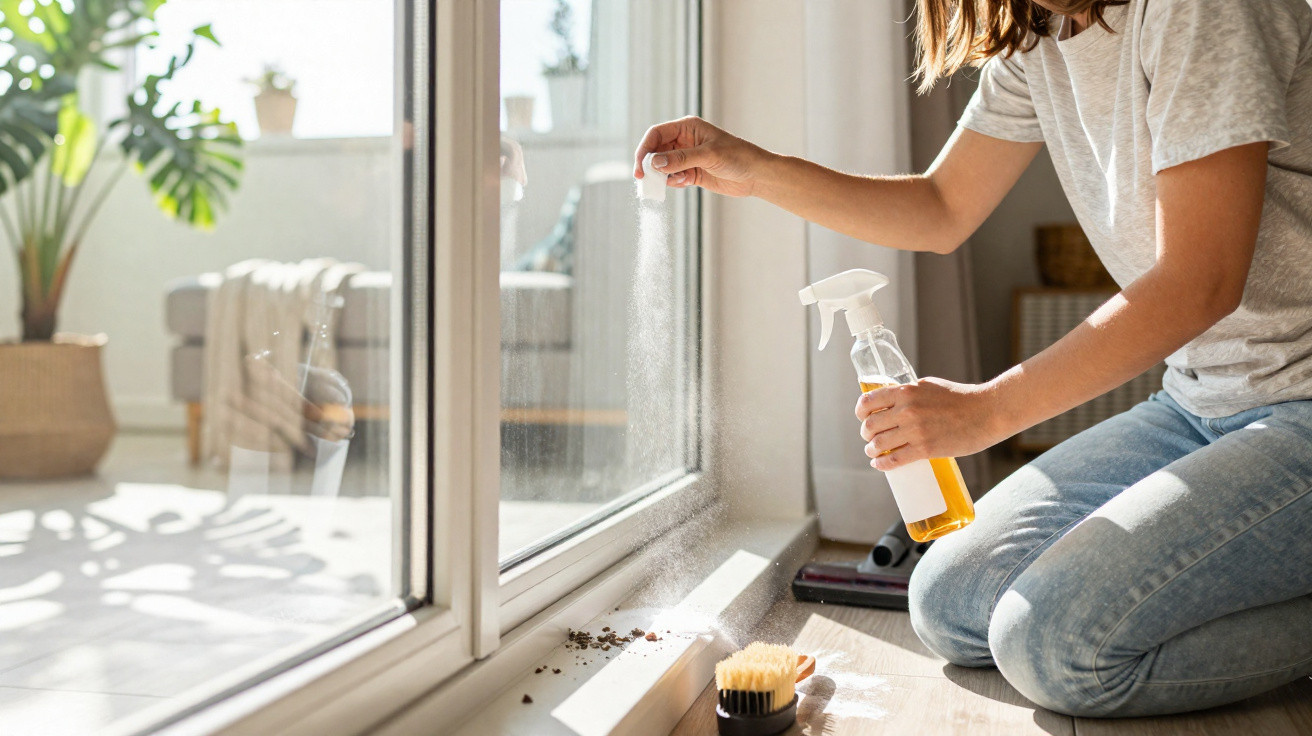
If you find yourself pulling, pushing and jerking the window until your wrists ache, it is easy to assume the window is faulty. Yet the cause is nearly always at the bottom of the frame: a dirty running track. A straightforward household mixture from the kitchen cupboard can get most sliding windows moving smoothly again within minutes, without removing anything or buying costly specialist cleaners.
Why sliding windows suddenly stick
When a sliding window becomes difficult to move overnight, the problem is usually not damaged fittings but dirt in the track.
Over time, a surprising amount of debris builds up in the lower section:
- fine layers of dust
- grains of sand brought in on shoes or from the balcony
- hair, pet hair and crumbs
- cleaning-product residue and kitchen grease
Together, these deposits form a stubborn mass that lodges in the grooves. The window's small rollers can no longer run freely, the pane sits at an angle, and resistance increases every time it is opened.
The cardinal mistake: pulling harder simply forces the dirt further into the track – and can eventually damage the rollers.
Reaching for a bottle of oil or a spray “for better lubrication” is also very common. It may feel better briefly, but the situation worsens over time: oil attracts dust, the mixture turns sticky and creates a sort of braking layer in the track. Simply wiping the surface with a cloth is no longer enough, as the crucial corners remain dirty.
A simple kitchen duo loosens the dirt
The good news is that most sticking windows need only a basic pair of household products that nearly everyone has at home: bicarbonate of soda, also known as baking soda, and ordinary clear white vinegar.
Together, they do exactly what the track requires:
- They break down stubborn dirt and grease.
- The fizzing reaction lifts particles upwards from narrow grooves.
- The powder's mild grit helps loosen deposits without scratching aluminium or plastic.
The aim here is not sterile disinfection, but the gentlest possible mechanical cleaning method that remains effective. This mixture cannot replace a repair if the track is bent or a roller carriage is broken. However, it makes it very clear whether dirt alone is causing the issue or whether a fitter is needed.
A smoothly running sliding window in five minutes
Only a few items found in almost every household are needed for cleaning:
- approx. 20 g bicarbonate of soda / baking soda
- approx. 50 ml clear household vinegar
- an old, clean toothbrush
- a lightly dampened microfibre cloth
- optional: a vacuum cleaner with a narrow attachment
Step 1: Vacuum up loose dirt
Before applying the cleaning mixture, it is worth quickly using the vacuum cleaner. A narrow attachment removes crumbs, sand and spider debris. This means the mixture will not first have to work around larger particles and can penetrate the critical grooves directly.
Step 2: Sprinkle the powder directly into the track
Now use the bicarbonate of soda. Scatter it straight into the running track, but do so strategically:
- concentrate it in the dark, heavily soiled areas



Comments
No comments yet. Be the first to comment!
Leave a Comment