
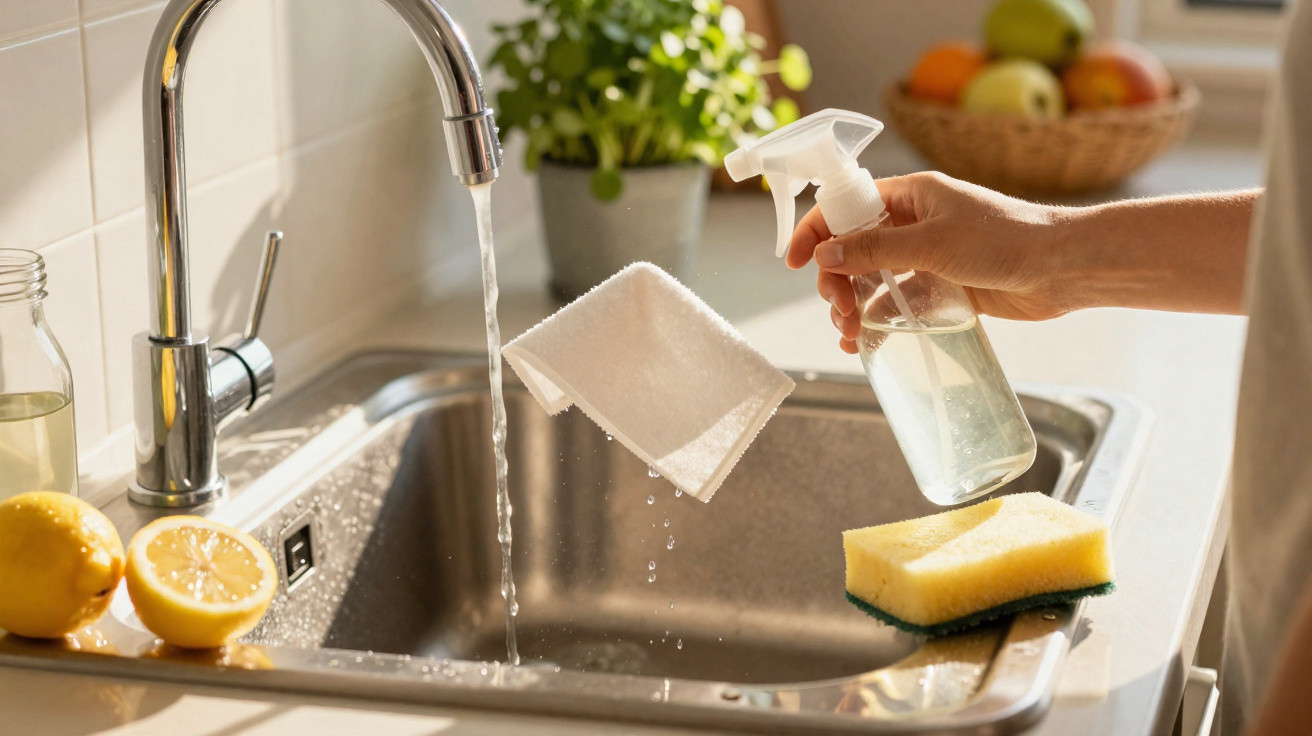
An old-fashioned kitchen trick deals with the problem with surprising ease.
Many households face the same issue: whatever cleaning product is in the cupboard, the white, crusty deposits around the sink and tap always return. What was once taken for granted has largely been forgotten: a straightforward blend of kitchen ingredients that our grandmothers already relied on. It removes limescale deposits without hours of hard work with a brush.
Why limescale clings so stubbornly to the sink and tap
The reason is the water itself. In many areas, the water from the tap is known as “hard water”. It contains high levels of calcium and magnesium. This is barely noticeable while the water is running, but it becomes an issue when water lands on metal, ceramic or stainless steel and gradually evaporates.
As it dries, tiny mineral residues are left behind. They crystallise, build up layer by layer and eventually create the familiar rough-looking white crust around:
- the base of the tap and its seals;
- joins between the sink and worktop;
- the drain and overflow area;
- grooves, joints and small recesses.
The more often hot water is used, the faster this happens. Heat speeds up crystal formation. This is why the kitchen sink often appears more affected than the bathroom basin, even though water splashes there too.
Many people then reach for harsh supermarket descalers. Although these products work quickly, they often contain highly corrosive substances. They can irritate skin, require good ventilation and may gradually damage delicate finishes, including brushed stainless steel or copper.
“Anyone looking for a gentle, inexpensive and effective option can get remarkably far with an old household recipe: vinegar, lemon and water – nothing more is needed.”
Grandma’s mixture: vinegar and lemon instead of harsh chemicals
The principle behind this trick is simple and can be explained scientifically. White household vinegar contains acetic acid, while lemon juice provides citric acid. Both acids react with mineral deposits, loosening the bond between limescale and the surface.
The key point is that the two acids are more powerful together than either one used on its own. Their slightly different acid types target different bonds within the limescale, making the mixture especially effective.
How to make the anti-limescale mixture correctly
For an ordinary kitchen-sink clean, use:
- 250 ml white household vinegar;
- 250 ml water;
- the juice of one medium-sized lemon.
Follow these steps:
- Pour the vinegar and water into a heatproof container.
- Squeeze the lemon and add its juice.
- Stir everything briefly.
- Warm the mixture in the microwave for around 30 seconds, until it is pleasantly lukewarm.
- Transfer it to a spray bottle.
Warming the solution is more than a minor detail. A warm liquid reacts faster: the acid molecules move more actively and can penetrate the limescale structure more easily. That is what makes the difference between “it is all right” and “wow, it really comes off easily”.
How to use it: removing limescale without scrubbing
Before applying the mixture, the sink should be generally clean. Wipe away food scraps, grease and crumbs first. Otherwise, the solution clings to dirt rather than reaching the limescale directly, reducing its effectiveness.
A sparkling sink in just a few steps
- Remove any loose dirt from the surfaces.
- Spray the warm vinegar-and-lemon mixture generously over every limescale-covered area.
- Do not overlook joints, seals or the area around the tap.
- Leave it to work for at least 20 minutes, or closer to 30 minutes for heavy deposits.
- Wipe the area with a damp microfibre cloth.
In many cases, wiping with the cloth is enough, as the limescale comes away in flakes or streaks. For narrow gaps around the tap or beneath the fitting, an old soft toothbrush is useful. It lets you work precisely without scratching the material.
Afterwards, there is one essential step that is often missed: rinse thoroughly with clean water. If acid remains on the surface for too long, fine dull patches may develop over time, particularly on high-shine chrome.
“Always rinse with clean water after cleaning and rub dry – this protects the surface and prevents fresh water marks.”
Finally, dry everything with a clean cloth. It may sound like a trivial step, but drying greatly extends the shine because no fresh droplet marks can form.
How to keep the sink limescale-free in the long term
Anyone who does not want to start the battle against limescale from scratch every time should establish a routine. Rather than carrying out one major clean every few months, a brief weekly treatment achieves much more.
A practical kitchen schedule is:
- once a week: quickly apply the mixture to the sink and tap;
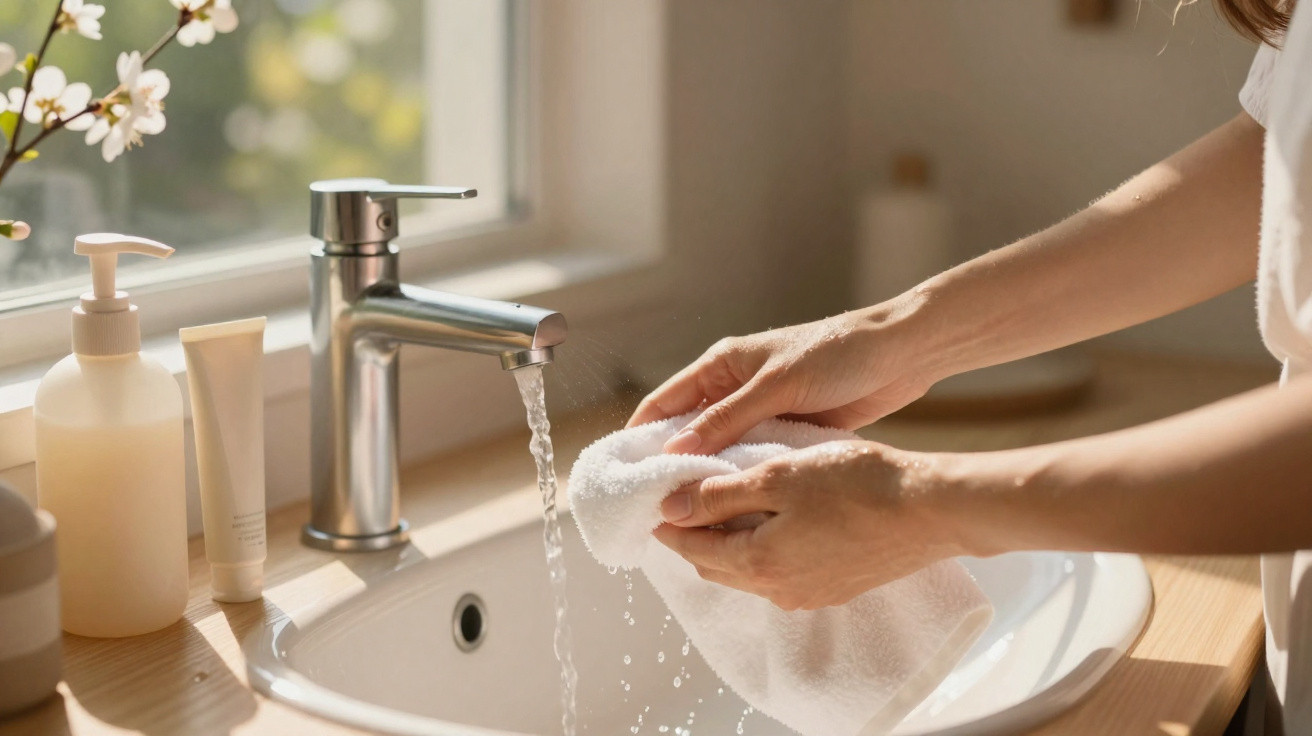
- after every wash-up: wipe roughly dry, especially around the tap;
- every few months: unscrew the aerator and descale it separately.
These short cleaning sessions prevent thick, hard layers from forming, which are then difficult to remove. Those living in an area with very hard water may also consider a simple water filter or a small water-softening system. This lowers the mineral content and, in the long run, also protects the dishwasher, kettle and washing machine.
Where the mixture works – and where caution is needed
The vinegar-and-lemon solution is suitable for many materials, but not all of them. Here is an overview:
| Material | Suitable? | Note |
|---|---|---|
| Stainless steel sink | Yes | Rinse well and rub dry after a short contact time. |
| Chrome tap | Yes | Do not leave it on for long periods or overnight. |
| Ceramic sink | Usually yes | Test it first in an inconspicuous place. |
| Natural stone (marble, limestone) | No | Acid can permanently etch the stone. |
| Delicate specialist coatings | Only after testing | Follow the manufacturer’s guidance and try it on a small area first. |
Particular restraint is needed with natural-stone worktops. Acid attacks not only the limescale there, but also the material itself. If in doubt, always test the solution on a concealed area first.
Why natural products are often the better choice
The mixture’s three ingredients offer several benefits: they are inexpensive, found in almost every kitchen and readily biodegradable. Nothing requiring special disposal goes down the drain. At the same time, they are kinder to taps and fittings, provided that the contact time and material are taken into account.
There is another advantage: the mixture does not have the sharp smell of some industrial descalers. Vinegar does have a noticeable odour, but the lemon juice softens it and it disappears fairly quickly after rinsing.
Practical everyday tips
Anyone using this trick regularly soon develops a few small routines. Practical examples include:
- Keep the spray bottle near the sink and use it briefly after a long cooking or washing-up session.
- For heavily scaled areas, lay kitchen paper over them, spray the mixture on top and leave the paper in place as an “acid compress”.
- Put the aerator into a glass of the warm solution; after 30 minutes, the water flow is usually even again.
For a more pleasant scent, you can add one or two drops of essential oil, such as lemon or lavender, to the cold mixture. This barely changes its effect on limescale, but can make cleaning feel more enjoyable.
Even with this household remedy, nothing remains completely limescale-free without some effort. But anyone who makes the short contact time of the vinegar-and-lemon mixture part of their household routine gains two things: taps that look like new, and the satisfying feeling of achieving it without harsh chemicals.

Comments
No comments yet. Be the first to comment!
Leave a Comment