
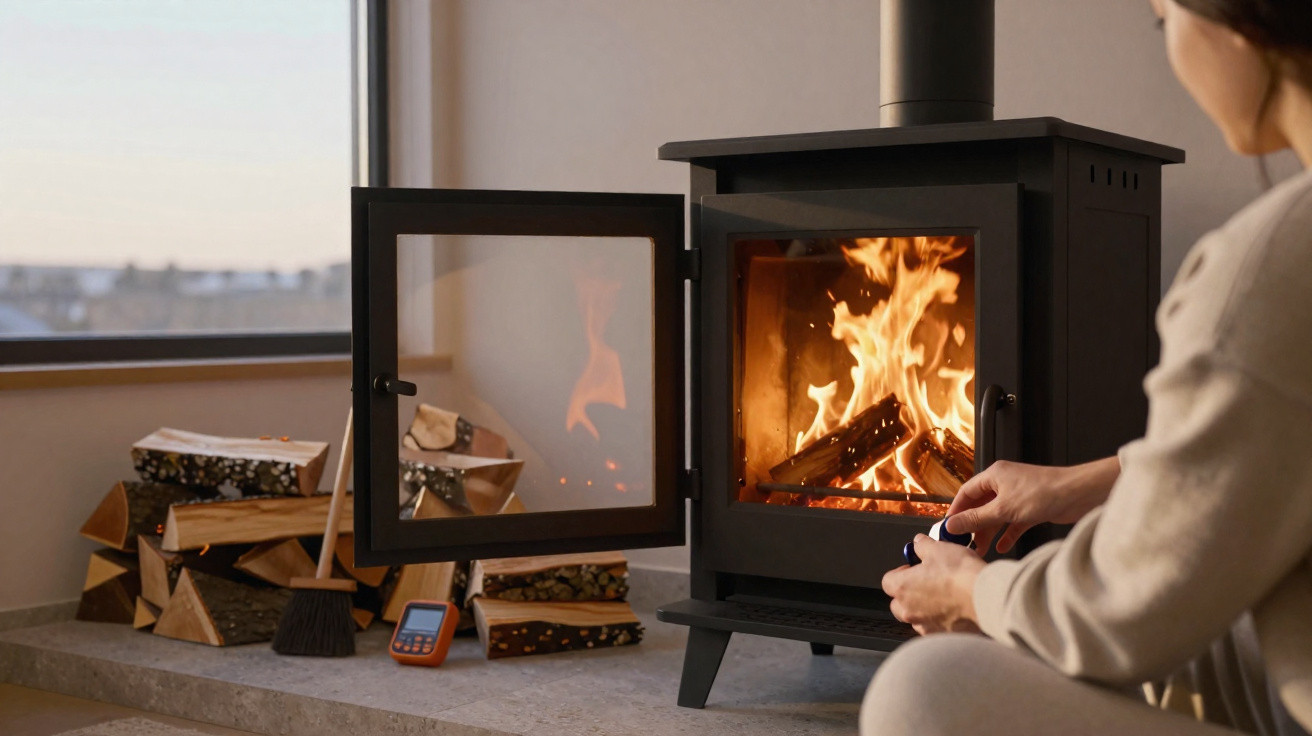
Energy prices are climbing, the weather outside is turning cold – and just when you need it, your wood-burning stove is producing only lukewarm heat.
Yet many people overlook one straightforward measure.
Anyone heating with wood expects cosy warmth and lower heating bills. In reality, however, a stove often falls short of what it could deliver. The cause is rarely the appliance itself, but rather an inconspicuous routine that many households neglect – even though it can almost double heating output.
The simple routine that improves your wood heating
A wood-burning stove or fireplace can be remarkably effective at providing heat – provided the conditions are right. In many living rooms, though, a substantial proportion of the energy escapes unused through the chimney. The most common mistake is allowing the flue to remain dirty for months, or even for an entire heating season.
“A clean chimney flue can almost double the usable heating output – while also reducing the risk of fire and smoke poisoning.”
It is easy to forget about the chimney flue in day-to-day life. The fire is burning, so everything appears to be fine. In fact, soot and other deposits collect on the inside walls of the flue every time the stove is used. Over time, this narrows the passage, weakens the draught and worsens combustion – causing heat output to fall.
Why an unobstructed chimney draught matters so much
A wood fire depends on a carefully balanced interaction of air, heat and exhaust removal. Once the flue restricts the flow, that balance is disrupted. This becomes noticeable in several ways:
- weaker draught, making the fire seem “sluggish”
- more smoke in the combustion chamber
- hotter exhaust gases escaping outside without being used
As a result, the wood still releases energy, but a noticeable share of it leaves the house with the smoke rather than spreading through the living space. A cleaned chimney flue, by contrast, allows exhaust gases to exit more quickly and evenly. The stove can draw in more air, the flame burns hotter and the wood combusts more completely. This is precisely what increases usable heat.
“Put simply: a blocked flue = wasted heat; a clear flue = noticeably more heating power using the same amount of wood.”
How to maintain your chimney and stove throughout the season
In Germany, many local authorities already require regular inspections by a chimney sweep. However, a few simple jobs between appointments can help you get more from your wood-burning stove.
Regular cleaning: little effort, major results
- Use a chimney brush: A chimney brush, sometimes called a “Herkules” or “Hérisson”, can be used to clean the flue yourself. Doing this every few months is particularly worthwhile during the heating season.
- Check the inspection hatch: Many chimneys have an access opening in the basement or on the ground floor. Soot and loose deposits build up here and can be removed easily with a shovel.
- Keep the stove glass and firebox clean: Clean glass does more than improve the appearance – deposits in the firebox often point to unfavourable combustion conditions.
Some households also use so-called cleaning or maintenance briquettes. They are not a replacement for conventional chimney sweeping, but they may help loosen some deposits and slow the build-up of hard residue in the flue.
Warning signs that your chimney flue is already blocked
Certain signs should never be ignored. They indicate a flue that is seriously reducing heating output and may become a safety risk in severe cases:
- a strong, acrid smell of soot in the room
- smoke entering the living area when lighting the fire or adding logs
- the stove taking considerably longer than usual to warm the room
- using more wood than before while getting less heat
If these symptoms occur, the chimney needs a thorough inspection. When in doubt, have a professional inspect and clean it. Deposits can catch fire and cause a dangerous chimney fire, and carbon monoxide poisoning is also possible.
Correct combustion: how your stove works efficiently
A clear chimney flue is essential, but it is not the only factor. How you manage the fire is equally important. This is where many small everyday mistakes can significantly reduce the heat you get from the stove.
Dry wood is essential, not a luxury
Damp firewood may appear harmless at first, but it consumes a great deal of energy. Some of the heat is wasted evaporating the water contained in the wood. This lowers the temperature in the firebox, encourages smoke and soot, and speeds up the contamination of the flue.
| Wood moisture content | Effect on combustion |
|---|---|
| under 20% | clean flame, high efficiency, less soot |
| 20–30% | more smoke, lower heat output, more deposits |
| over 30% | heavy soot formation, poor heat release, risk of flue problems |
Well-seasoned hardwoods such as beech or oak are ideal. They burn for longer, create an even bed of embers and provide more energy per log than most softwoods.
How to light the fire correctly
Many people make the mistake of packing too much wood into the stove at the start. Although this may seem sensible, it restricts the air supply. A better arrangement is:
- place some kindling and firelighters in the stove first
- stack thinner logs loosely on top
- open the air control fully at the beginning
- add larger logs only once there is a stable flame
This lets the chimney warm up quickly, establishes a strong draught and ensures clean combustion from the outset.
Use the air control deliberately rather than “by feel”
The stove’s air control determines how much oxygen reaches the flames. If it is closed too far, the fire is partly starved of air, producing smoke and tar deposits. If it is left fully open all the time, the fire burns too quickly and uses unnecessarily large amounts of wood.
- when lighting: open the air supply fully
- once the flame is burning well: reduce it slightly until the flame is calm but still lively
- avoid keeping the stove on a long-lasting “low ember” setting with the air almost closed – this produces a great deal of soot
How a clean stove can make a difference to your heating costs
Those who maintain their chimney flue and control combustion properly will use noticeably less wood. Many users report savings of up to one third when they switch from damp reclaimed wood and infrequent sweeping to dry wood and regular maintenance.
“Less wood, more warmth: combining a clean flue with proper fire management has a direct effect on heating costs.”
Comfort in the home improves as well. The room heats up faster, the temperature remains more consistent and the familiar smoky taste in the air disappears. Anyone familiar with an old fireplace that heats slowly will often notice the difference straight after the first thorough clean.
Further tips for long-lasting wood stove performance
A few additional measures not only extend the stove’s service life, but also make heating more comfortable and safer:
- Install a CO alarm: A carbon monoxide alarm near the stove can save lives if there is a draught problem.
- Inspect the seals: Perished door seals allow too much unwanted air into the stove, making combustion harder to control.
- Do not overfill the ash pan: A thin layer of ash is sufficient; too much insulates the embers and absorbs heat.
- Do not use the stove as an incinerator: Painted wood, chipboard and large quantities of paper produce pollutants and block up the chimney flue more quickly.
Following these basic rules will help you get consistently more from every load of wood. Especially when energy prices are high, this small maintenance routine makes a difference month after month – both to the temperature in the living room and to the next bill.





Comments
No comments yet. Be the first to comment!
Leave a Comment