
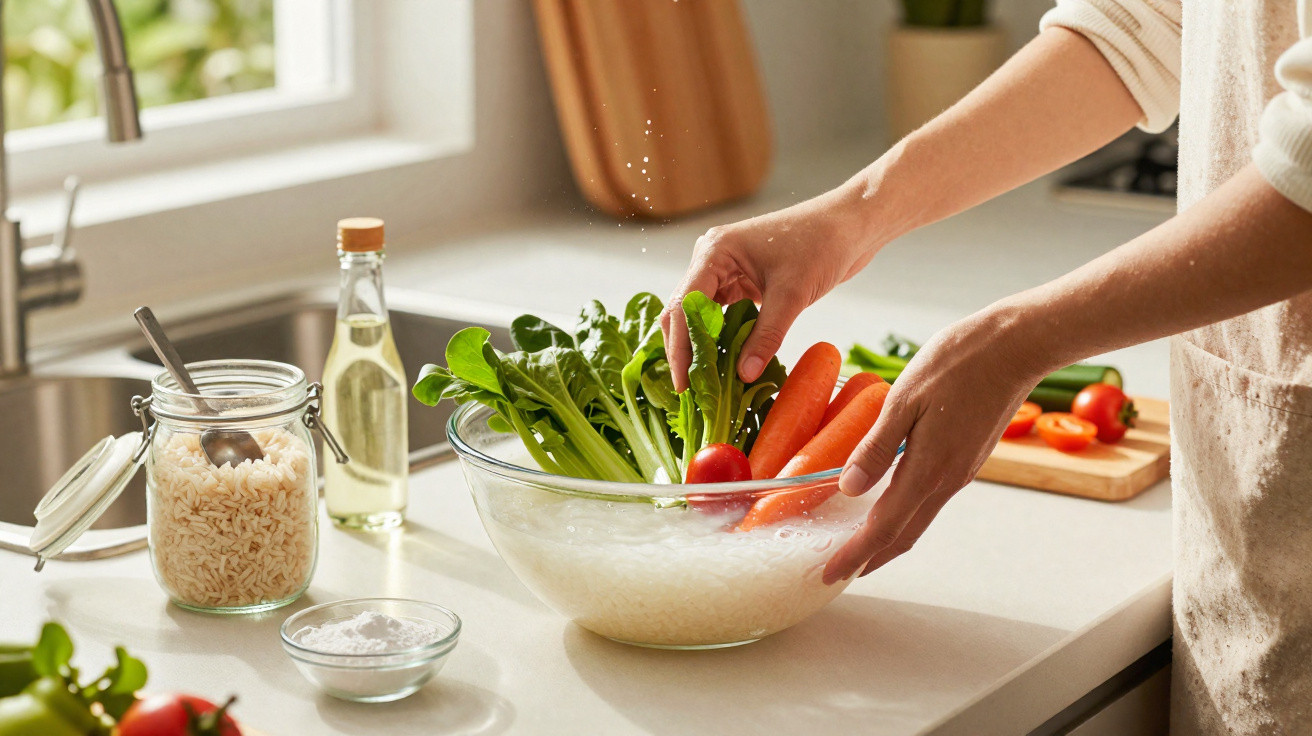
In Korea, families swear by a different, remarkably simple trick.
A cloudy liquid left in the cooking pot that most people pour straight down the drain without a second thought: in many Korean households, this rice water is considered a modest everyday all-rounder – and an effective way to tackle pesticide residues on fruit and vegetables. It is not a laboratory-made miracle product, but a long-established kitchen practice that is now attracting researchers’ interest too.
Why rice water removes pesticides from vegetables
When rice is rinsed, some of the starch separates from the grains and enters the water. This is what creates its milky cloudiness, which may look dirty at first but is not. The liquid contains:
- starch (amidon) from the rice grain
- enzymes
- amino acids
- a slightly alkaline reaction
Together, these components act like a very gentle natural cleaner. Molecules in the rice water attach themselves to residues on vegetable surfaces and help lift them away.
Independent laboratories in South Korea report up to 90% fewer water-soluble pesticides on leafy vegetables when they are soaked in rice water.
This is particularly relevant for produce that receives intensive treatment during cultivation and has a large, delicate surface area:
- leaf lettuces
- spinach
- cabbages such as Chinese cabbage or Savoy cabbage
- bunches of herbs
Many of these crop protection products are formulated to withstand rain. A quick rinse therefore does little. Soaking produce in rice water loosens the coating, allowing a final rinse with clean water to remove considerably more residues.
It remains important to note that this method works mainly on the surface. Substances that have already penetrated deep into the tissue cannot be removed completely this way. Even so, it noticeably reduces the overall level of exposure when the food is eaten.
How to use rice water correctly in the kitchen
The benefit is that there is barely any need to change your usual cooking routine. Many people already wash rice, but rarely make further use of the water afterwards.
Step-by-step instructions for home use
Wash the rice as usual
Put the rice in a bowl, cover it with cold water, stir it by hand and briefly rub the grains together.Collect the water
Pour the first or second batch of rinse water into a clean bowl or a sink with the plug in place.Soak the vegetables
Place lettuce leaves, spinach, pak choi, courgettes, cucumbers, peppers, apples or pears in the cloudy water, ensuring that everything is fully submerged.Wait 10 to 15 minutes
Stir occasionally with your hand so that every area is thoroughly wetted.Rub gently
Carefully move leaves between your fingers, and lightly rub smooth skins such as those of apples or cucumbers.Rinse thoroughly with clean water
Finally, rinse under running water to remove loosened residues and rice starch.
Many Korean families rely on two short soaks in succession, using fresh rice water each time. This is said to soften even more residue. However, contact should not last longer than 15 minutes, as more vitamins may otherwise leach into the water and microorganisms can thrive more easily.
Rice water does not replace organic certification, but it makes conventionally grown vegetables noticeably cleaner in everyday life – at no extra cost.
Rice water, vinegar or bicarbonate of soda: which works best?
Anyone looking into kitchen tips will quickly come across several suggested soaking solutions for washing vegetables. The most commonly mentioned are:
- vinegar water, usually made with white wine vinegar
- lemon water
- sodium bicarbonate, known as bicarbonate of soda or the baking powder option
- rice water
| Method | Advantages | Disadvantages |
|---|---|---|
| Rice water | free, no strong smell, anti-waste, effective against water-soluble pesticides | works mainly on the surface; only available when rice is being washed anyway |
| Vinegar soak | reduces microbial levels, loosens dirt, widely used | may leave a sour taste; delicate leaves can suffer |
| Lemon water | fresh scent, mildly disinfecting | more expensive, can affect flavour, limited evidence regarding pesticides |
| Bicarbonate of soda solution | can remove certain crop protection products effectively | incorrect quantities create a soapy taste; not everyone tolerates it well |
Rice water stands out chiefly because it is produced anyway, costs nothing and does not fill the kitchen with a pungent acidic smell. It also suits a way of cooking that aims to discard as little as possible. For this reason, many households following a zero-waste or low-waste approach are happy to use it.
Other everyday uses for rice water
In South Korea, its use does not end with vegetables. In many homes, the milky liquid is given several other jobs:
- Watering plants: Diluted with clean water, it can provide houseplants with a little additional nourishment.
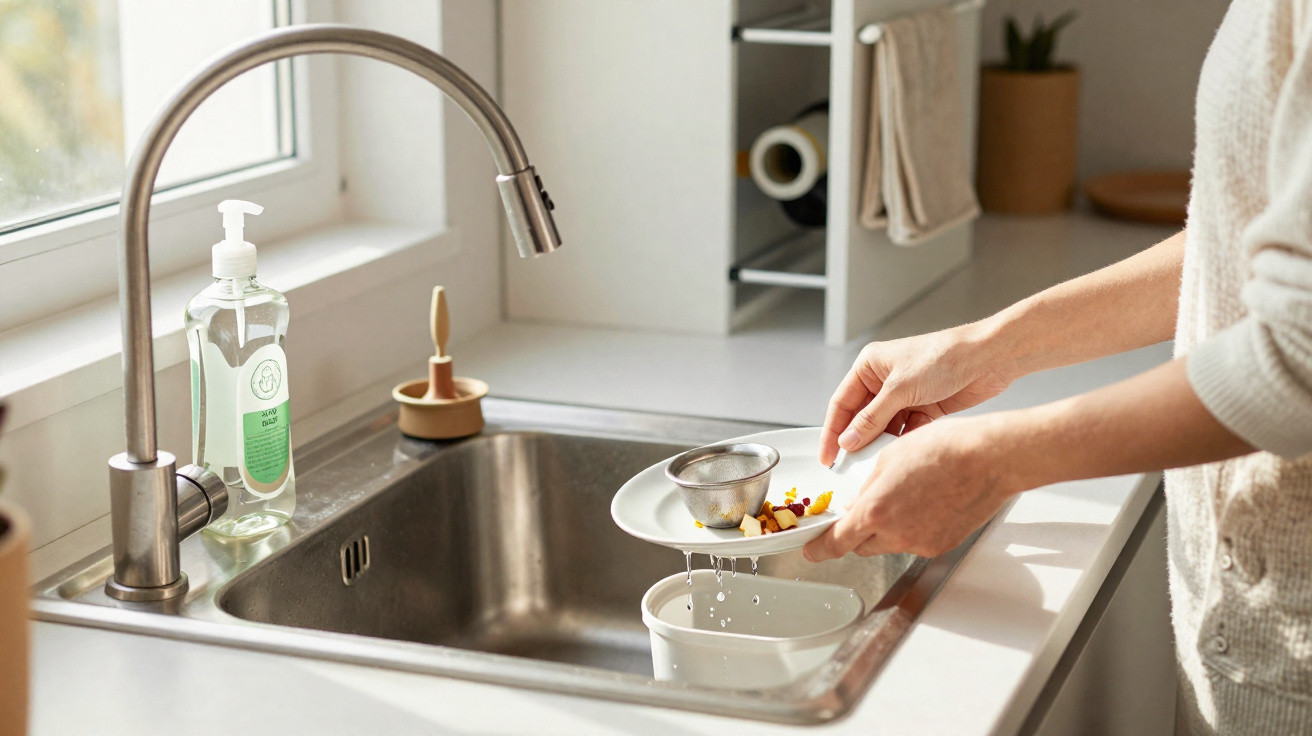
- Washing-up aid: The starch and enzymes help loosen lightly stuck-on food remnants from dishes.
- Hair and skincare: Some people swear by a final rice-water rinse to add shine to hair, or use it as a mild facial toner.
For these purposes, the water should be kept as fresh as possible. Leaving it to stand for hours risks fermentation and unpleasant odours. It will keep in the fridge for no more than one day, although using it immediately after washing the rice is ideal.
How heavily contaminated are vegetables really?
Many consumers underestimate how often fruit and vegetables are treated with crop protection products. Imported conventionally grown produce in particular regularly contains measurable residues. Official checks in Europe show that most samples remain within legal limits, but combined exposure to several substances causes uncertainty.
It is difficult to avoid this entirely, but every measure that reduces residues lowers the amount that ultimately reaches the plate. Buying organic is generally the better option, though it does not provide complete protection. Traces can also be present there, for example through spray drift from neighbouring fields or permitted treatments used in organic farming.
A combination of sensible choices when shopping, careful washing and occasional peeling has the greatest overall effect.
Practical tips for fewer pesticides in everyday life
Rice water alone does not solve the pesticide issue, but it can make a noticeable difference. Combining several habits achieves even more:
- choose leafy vegetables, herbs and berries from regional, seasonal production whenever possible
- soak delicate leaves in rice water, and treat more robust varieties briefly with vinegar water as well
- peel the skins of heavily contaminated produce, such as conventional apples or cucumbers, where necessary
- alternate between different types of fruit and vegetables to avoid one-sided exposure to individual active substances
Anyone who eats rice frequently already has the “material” for this method available almost every day. Households that rarely cook rice can use the trick specifically on days when they do a larger shop or have guests. One large pot of rice produces enough water for several bowls of vegetables.
One point often causes confusion: the water’s milky colour. Many people mistake it for dirt. In fact, it comes mainly from dissolved starch. This is precisely what helps remove dirt and certain residues more effectively. The key is still to rinse vegetables thoroughly after soaking, so that neither starch nor loosened residues end up on the plate.





Comments
No comments yet. Be the first to comment!
Leave a Comment