
The clatter of crockery, running water and a greasy pan left in the corner.
It is a familiar late-night scene in kitchens across Brazil. The sink has already dealt with lunch, afternoon coffee and dinner. We give the plate a quick rinse, scrape away some of the leftovers and leave the rest to the drain. Within seconds, the suds vanish, bringing that misleading sense of relief: “There, it’s clean.” Then, one day, the water simply stops draining. It sits there as an odd smell begins to rise, while you face the mess with a washing-up sponge in your hand. That uncomfortable thought soon follows: “Did I cause this?”
Why the kitchen sink blocks so often – and nobody mentions it when selling the dream kitchen
Everyone knows somebody who keeps a plunger beside the sink. Sometimes, that person is you. The beautiful kitchens in magazine photographs never show the cupful of accumulating grease, stray hairs or rice that slipped off a plate. Household pipework is like the home’s silent intestine: it swallows everything without complaint, day after day, until it can take no more. Once it blocks, it becomes a domestic drama. There is an unpleasant smell, standing water and the risk of dirty water coming back up through the drain. Sunday lunch then turns into an improvised session involving caustic soda, a broom handle and YouTube tutorials.
In a block of flats in São Paulo, a building manager said that almost half of maintenance call-outs involved blocked kitchen sinks. In many instances, the issue was not even particularly old. The flats were new and had seen little use, but the habits were repeated: oil down the sink, leftover beans, instant noodles and bread crumbs. One resident insisted she never put anything “heavy” down the drain. Only liquids: frying oil, syrup and sauce. When the trap was opened, they found a yellowish block of grease as hard as a candle. It looked like church wax. The same scene plays out in houses and flats throughout the country, as though it were a script nobody admits they have already lived through.
The explanation is far less glamorous than the kitchens seen in television dramas. Grease, food waste and soap combine into a sticky substance that adheres to the pipes. Over time, this coating becomes thicker, narrows the inside of the pipework and slows the flow of water. Cold water arrives and hardens the grease. Hot water follows, loosening some of it but not carrying everything away. Gradually, the drain slows down and we ignore it. Then a larger piece of food joins the problem and blocks everything completely. What appears to happen “suddenly” is actually the outcome of months of small everyday abuses. Nobody sees it or talks about it, until the day the pipe takes its revenge.
Small daily habits that protect your kitchen sink (and your mood)
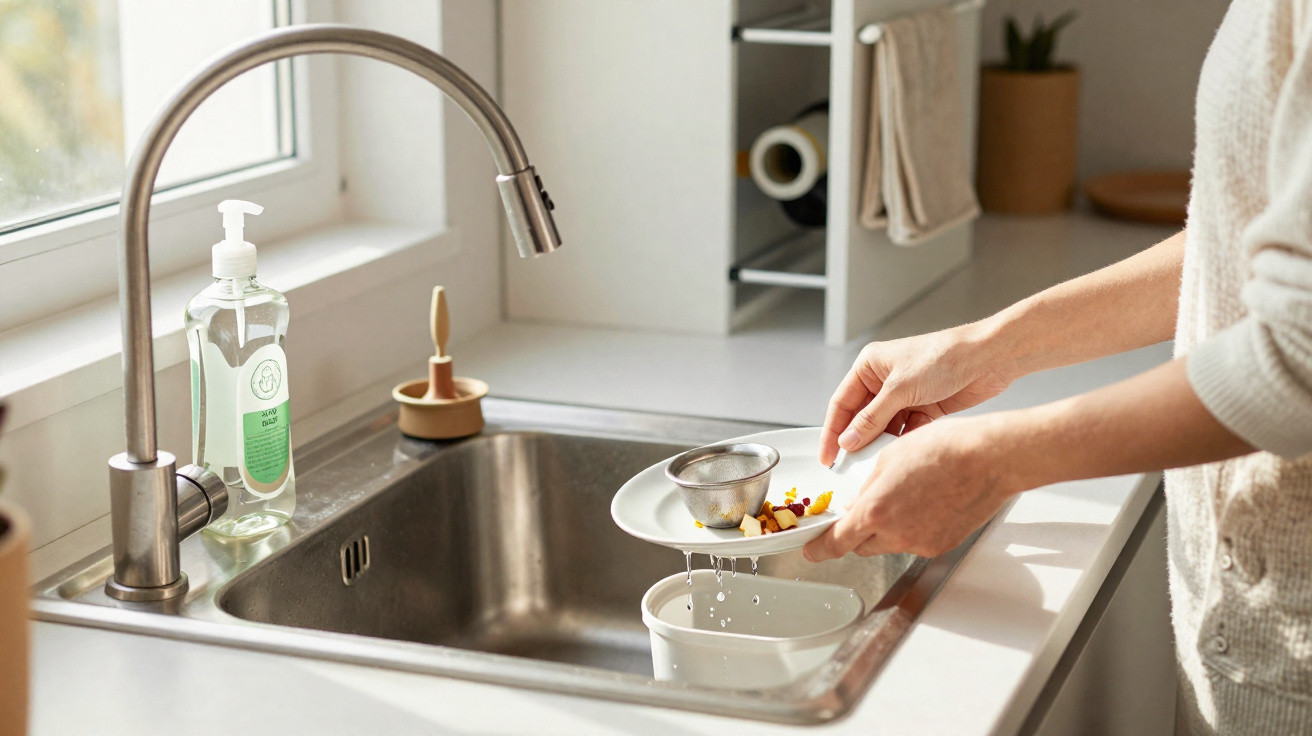
The easiest way to prevent a blockage starts before the tap is turned on. Thoroughly scrape plates into the bin with a spoon or spatula before they go anywhere near the sink. Do not leave rice floating around, pieces of meat or eggshells. Always fit a waste catcher over the drain, whether metal or silicone, to hold back leftovers. It may seem like an insignificant detail, but it stops today’s pasta from becoming tomorrow’s sticky mass inside the pipe. Pouring oil into the sink? It is the worst possible idea. Keep it in a plastic bottle, allow it to cool and take it to a collection point.
People with busy lives often wash up in a hurry. We put everything in the bowl, turn the tap on full and let the water carry away the scraps. The sight is as common as it is dangerous for the pipework. If changing everything at once is unrealistic, make one agreement with yourself: no “whole” food should go down the drain. Soaked bread, a bean, a small bone or the last bit of toasted cassava flour should all go into the bin or compost caddy. Let’s be honest: nobody does this perfectly every day. Yet the more often you make the effort, the less likely you are to wake up to a sink that resembles a swimming pool.
As many plumbers say repeatedly, the answer lies in routine rather than an emergency miracle.
“I am hardly ever called out to repair problems for people who look after the small habits. The trouble comes from the accumulation of daily laziness,” said a neighbourhood plumber in Belo Horizonte.
- Use a drain catcher whenever you wash up.
- Scrape plates and pans into the bin before rinsing them.
- Store used oil in bottles for proper disposal.
- Run hot water into the sink after cooking greasy foods.
- Clean the trap every few months, even if there is no blockage.
When looking after the kitchen sink means looking after the whole home
Preventing a blocked kitchen sink is not merely about avoiding inconvenience. It also concerns the way we relate to our own home, our time and even the waste we generate. Anyone who has had to spend a whole day unable to use the kitchen because of a blockage knows how much it disrupts everything. You start to notice how dependent we are on that invisible flow that takes away what we no longer want to see. When it stops, the house reveals what has been hidden: the grease, the food waste and the excessive faith placed in the drain.
Perhaps that is exactly the point: the sink is not a magic hole. It is a physical passage with very clear limits, governed by simple rules. Once you see the drain as part of everyday life rather than an “official forgetter” of problems, your relationship with it changes. Small rituals then become natural: scraping a plate, quickly checking the catcher before bed or pouring in a pan of hot water after a particularly greasy frying session. There is no need to turn it into a cleaning obsession. It is enough to accept that pipes have a memory too.
Once a habit becomes automatic, it takes less effort. In the end, preventing a kitchen sink from blocking may be less of a technical trick and more a way of using the kitchen with a little more care. That quiet, everyday attention tends to come back as peace of mind: fewer strange smells, fewer last-minute plumber call-outs and less frustration in the middle of a routine. It is the sort of care that does not make for a pretty photograph, but it matters on those late evenings when all you want is to wash the final frying pan and get some rest.
| Key point | Detail | Value to the reader |
|---|---|---|
| Waste control | Scrape plates and use a drain catcher every day | Dramatically reduces the chance of recurring blockages |
| Grease management | Do not pour oil into the sink, and use hot water after frying | Prevents a block of grease forming inside the pipes |
| Preventive maintenance | Clean the trap regularly, even when there are no signs of trouble | Extends the life of the pipework and avoids plumber costs |
FAQ:
Question 1: Can I use caustic soda to unblock the kitchen sink?
Answer 1: It may work in some situations, but it is harsh on pipes and dangerous for the person handling it. Plumbers generally advise using it only occasionally and with great care, prioritising mechanical methods such as a plunger or cleaning the trap, along with less corrosive solutions.Question 2: Will a supermarket “degreaser” liquid solve the problem?
Answer 2: These products can help dissolve light layers of grease, especially when used as a preventive measure. Once the pipe is badly blocked, however, their effect is usually limited. They can be useful allies, but they do not replace physically cleaning the trap.Question 3: Is hot water from the tap enough?
Answer 3: It helps, but boiling a pan of water and pouring it into the sink in one go from time to time is generally more effective at dislodging recent grease stuck to the pipe walls.Question 4: Do eggshells help to “clean” the pipework?
Answer 4: No, they do not. In practice, they become more solid waste that can stick to grease and soap. Shells should go in the bin or a compost caddy, never down the drain.Question 5: How often should I clean the trap?
Answer 5: In a kitchen used every day, every 3 to 6 months is a sensible interval. If you fry food frequently or the water is draining more slowly, it is worth cleaning it sooner.




Comments
No comments yet. Be the first to comment!
Leave a Comment