
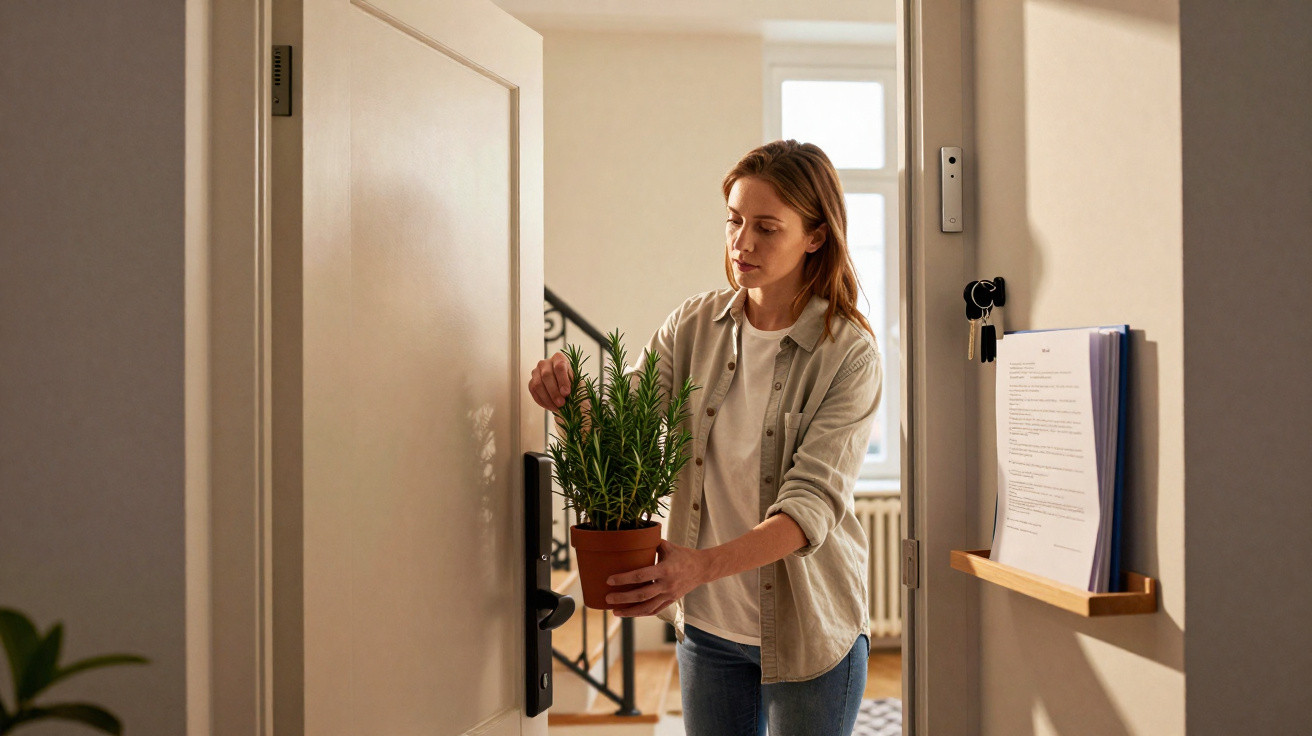
Although CCTV cameras and reinforced doors attract most attention, a far more modest “protector” is quietly reappearing outside homes across France.
French homeowners worried about security are relying not just on alarms and insurance: many are placing bundles of rosemary at their front doors, in the hope that this age-old custom will deter squatters and burglars.
Squats, absent owners and increasing unease
For numerous homeowners, the feared situation is straightforward: they go away on holiday, travel for work or take a long weekend, then come back to find unknown people occupying their property. In legal terms, this is illegal occupation; in ordinary conversation, it is called a squat.
In statistical terms, the issue is still relatively limited. French official data indicates that only several thousand homes are affected annually, while slightly more than a thousand court rulings concerning squat-related evictions were registered in 2019. Nevertheless, concern extends well beyond those figures.
Second homes left vacant, properties waiting to be sold and houses caught up in inheritance proceedings are especially vulnerable. Such homes may remain unoccupied for many weeks or even months, making them appealing to those seeking somewhere to stay as well as opportunistic criminals.
The greatest worry frequently begins after an unlawful entry has been found. Although recent “anti-squat” laws have shortened certain time limits, eviction proceedings may still take weeks or months. Alongside legal documents, court hearings and administrative hold-ups, owners may face damage to their property. The emotional burden of temporarily losing control of one’s home can be equally severe.
Legal procedures to reclaim a squatted home can last several weeks or months, leaving owners feeling powerless on their own doorstep.
Rosemary at the door: folk magic or a subtle deterrent?
Against this uneasy backdrop, rosemary has emerged as an unexpected character. Long before smart doorbells and motion detectors existed, popular tradition already cast this fragrant shrub as a household guardian.
For centuries, Mediterranean traditions have connected rosemary with memory, purification and protection. Bunches were placed over doorways or burned as incense to “cleanse” the home and ward off bad luck, harmful spirits or neighbours’ envy.
Social media is now giving the practice a contemporary revival. Influencers focused on modern witchcraft and “energy cleansing” recommend leaving rosemary sprigs on the doorstep, placing a small bunch above the door frame or positioning a potted plant near windows. Some believe its powerful fragrance creates an unseen shield against ill intent and, consequently, against unwelcome visitors of the distinctly human variety.
Scientifically, no evidence shows that rosemary is better at repelling burglars than other plants. A herb pot will not stop an intruder who is determined to get in. Even so, the custom occupies a space between tradition and psychology.
Rosemary will not replace a solid lock, but for some owners it restores a feeling of control and calm, which counts in times of stress.
Why symbolic protections still appeal
Practices such as putting rosemary by the entrance provide a form of emotional reassurance that technology often cannot offer. That has value when people are thinking about security.
- They provide a tangible act that makes a property feel “protected” to its owner.
- They may prompt householders to consider security more widely and take further practical steps.
- They can ease anxiety, particularly for people already daunted by official processes and legal terminology.
Psychologists researching how people assess risk note that fear of crime is shaped by more than likelihood alone. It also stems from feeling exposed. Modest actions that offer reassurance, including symbolic ones, can lessen that sense of vulnerability and help people manage it.
What genuinely helps prevent squats and burglaries
Security specialists adopt a more practical position. They have no objection to a rosemary plant outside the door, but stress that effective protection against unauthorised entry depends on obvious physical safeguards and some cooperation from neighbours.
Essential prevention steps recommended by experts
- Make the home appear occupied: Ask a neighbour to take in post, move wheelie bins and open the shutters from time to time. Set lights on timer plugs to come on and switch off during the evening.
- Fit straightforward surveillance: A basic connected camera or wireless alarm can be enough to discourage intruders. Stickers or notices reading “property under surveillance” can often put off opportunists.
- Secure access points: Install multipoint locks and reinforced doors, and use window bars or security film in ground-floor homes. Burglars generally seek the simplest route inside.
- Add temporary protection during extended absences: Anti-break-in boards or shutters fitted to windows and doors clearly signal that the building is not an easy option.
- Tell the police or gendarmerie that you are away: In France, the “Tranquillité vacances” programme enables officers to patrol near a home during an owner’s absence.
One measure that is often missed is home insurance that includes legal protection. If a property is occupied without permission, legal assistance within the policy may shorten procedures and lower the owner’s costs. Solicitors experienced in squat cases can submit urgent applications and liaise with public authorities.
Alarms, reinforced locks, visible activity and swift legal backup form the real backbone of anti-squat protection.
Can rosemary fit into a modern home-security plan?
Rosemary may be most useful not because of mystical powers, but because it encourages good routines. Keeping a plant near the front door or on a windowsill can serve as a daily prompt to lock up, activate the alarm or speak with neighbours about suspicious behaviour.
The herb has practical qualities too. It grows well in pots, tolerates heat and occasional neglect, and gives off a pronounced scent when handled. At night, someone brushing against a rosemary pot beside a window or doorway could create noise that wakes occupants or alerts a dog.
Seen in this way, rosemary is one small element of a wider culture of domestic security. It can sit alongside motion-activated lighting, secure letterboxes and good visibility from the street: all understated signs that a home is maintained and monitored.
Combining symbolism and security realistically
| Element | What it brings | Limits |
|---|---|---|
| Rosemary at the entrance | Feeling of protection, visible ritual, occasional noise if brushed | No demonstrated effect on determined intruders |
| Reinforced doors and locks | Physical resistance, delays or prevents entry | Expense and installation work |
| Cameras and alarms | Deterrence, alerts and evidence following an intrusion | Require upkeep and may produce false alerts |
| Active neighbours | More people watching, rapid reports of suspicious behaviour | Relies on trust and local relationships |
Understanding the legal meaning of “squat”
The term “squat” may describe very different circumstances. In some cases, it concerns vulnerable people unable to obtain housing; in others, organised groups occupy vacant properties for financial gain. Legally, the central question is whether the owner gave consent.
Changes to French law in 2023 increased penalties for illegal occupants and sought to make residential evictions easier. In theory, owners now have quicker remedies, but they must still respond promptly by lodging a complaint, collecting evidence of ownership and occupation, and approaching local authorities or a solicitor.
Confusion can sometimes occur between disputes over temporary occupation, disagreements between neighbours and actual squats. Photographs, copies of title deeds and records of every interaction with intruders can help establish the facts should the matter reach court.
Practical situations: from a holiday flat to an inherited home
Consider a modest flat in a coastal resort that stands empty for much of the year. A rosemary pot on its balcony railing will not reduce its exposure if the shutters remain closed for months and post accumulates. Regular visits from a local caretaker and properly secured shutters would make a much more substantial difference.
Now consider a large family house subject to a complicated inheritance. The siblings are abroad, the garden is overgrown and nearby residents do not know who owns the property. In this situation, visible maintenance - cutting the grass, turning lights on occasionally at night and even hanging simple curtains rather than leaving bare windows - may reduce the appearance of abandonment that can draw intruders.
In each case, rosemary may function as a prompt for good habits rather than a magical defence. A relative watering the plants may also inspect windows, check locks and spot footprints or damaged shutters at an early stage.
Balancing risk, belief and everyday life
Home security commonly lies where sensible risk management meets personal belief. One person may feel more secure with an advanced alarm app, while another prefers a traditional house blessing. Many people now use both without viewing them as incompatible.
For owners concerned about squats and burglaries, the most practical strategy is layered: physical protection, attentive neighbours, insurance, legal preparation and any symbolic rituals that help them remain calm and alert. In that setting, rosemary is not a miracle solution, but a fragrant, modest reminder that caring for a home depends as much on attention as on hardware.


Comments
No comments yet. Be the first to comment!
Leave a Comment