
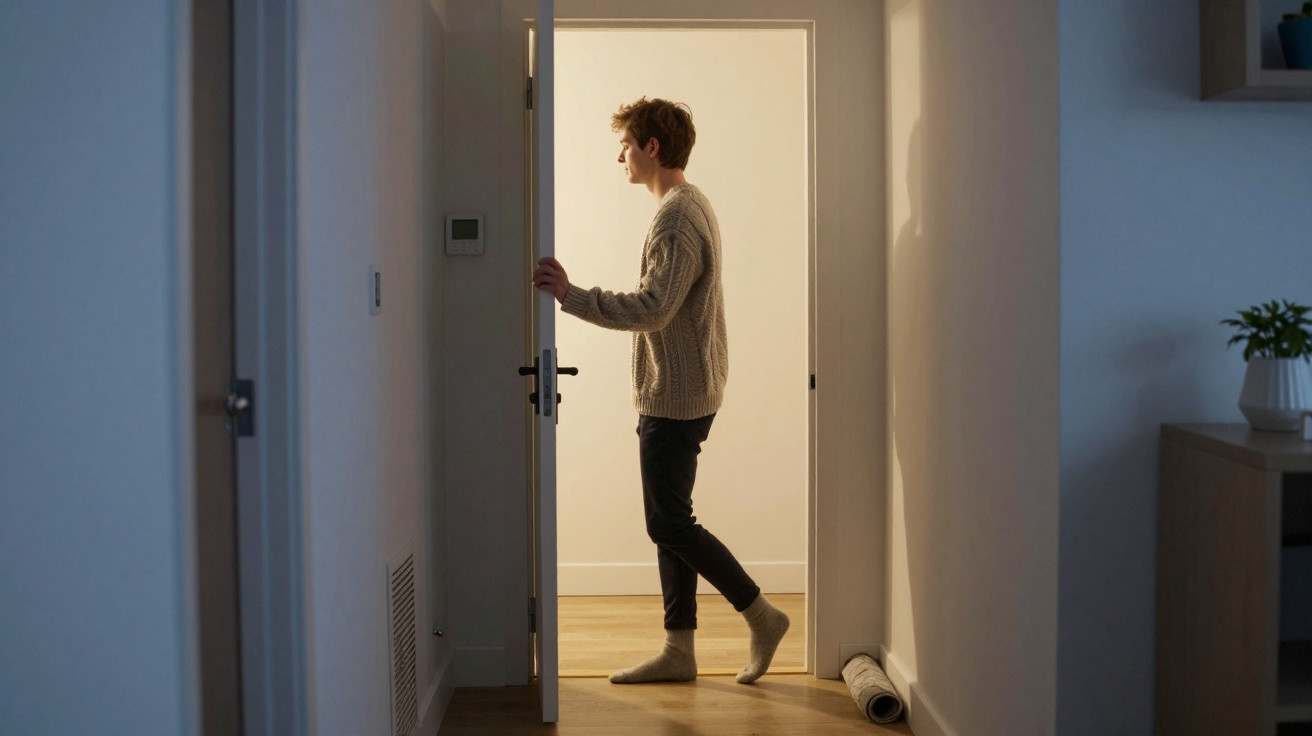
Many people simply turn up the heating in winter and hope for the best. Yet the way air moves through a home helps determine whether it feels genuinely comfortable or whether only the heating bill rises. A seemingly minor choice - leaving doors open or shut - has a direct effect on efficiency, comfort and the lifespan of the system.
Why air circulation matters so much when heating
A heating system produces heat, but air is what carries that heat to the places where it is needed. When air can move freely, temperatures are distributed relatively evenly. When its flow is obstructed, cold corners and overheated areas develop, while the system has to work harder than necessary.
“Allowing air to circulate often means heating more quietly, more evenly and with less energy.”
This is immediately noticeable in many homes: the hallway feels cold, the living room is too warm and the bedroom remains chilly despite the heating being turned up. The thermostat is often not the cause; instead, it is the interaction between doors, radiators, air vents and furniture.
The key issue: how your home “collects” its air
When deciding whether internal doors should be open or closed, heating, ventilation and air-conditioning professionals first consider one point: where and how does the system draw air back in? In other words, where is the return air collected? There are essentially two arrangements.
Arrangement 1: central return air - leaving doors open can save money
Many detached homes and flats with warm-air heating or mechanical ventilation have one central return-air grille. It is commonly located in a hallway, stairwell or larger living space. Warm air from individual rooms is intended to flow back there, be drawn in again and then redistributed.
If internal doors are usually shut, a problem can arise. The air is trapped in the room, the pressure there rises slightly and the air looks for alternative routes - beneath the door, through gaps and, at times, even through sockets or other leaks. This has several consequences:
- the system must run for longer to maintain the required temperature
- some rooms become too warm while others remain noticeably cooler
- over time, the fan, motor and other components are placed under greater strain
Specialists regularly hear complaints about “uneven warmth”. Very often, permanently closed doors alone are enough to create precisely this issue. Opening doors - at least for part of the time - allows the system to operate more freely, lets air return to the central grille and makes heating run more smoothly.
“With central return air, keeping doors open supports the heating system and reduces long-term wear.”
Arrangement 2: separate return air in each room - doors may remain shut
The situation is different if every room has its own return-air opening. In that case, the system takes air back in directly from the same room into which it previously supplied it. Air effectively circulates within that room, without needing to travel through the hallway.
With this type of arrangement, keeping a door closed will generally not harm the system. It may even be beneficial, as the heat stays in the room currently being used. The system does not need to try to warm an entire hallway simply because heat is escaping into it.
There is one important condition: the system needs maintenance. Filters must be clean, air routes unobstructed and vents correctly adjusted. With room-by-room return air, personal comfort is then the main factor:
- door shut: more quiet, more privacy and focused warmth in the room
- door open: slightly more balanced temperatures, with smells and moisture able to circulate
Common mistakes that waste heating energy
In day-to-day work, heating engineers repeatedly encounter the same patterns. People feel cold in particular rooms and turn the heating higher instead of addressing the air circulation first. Typical pitfalls include:
- keeping doors permanently closed where there is central return air
- placing sofas or cupboards directly in front of radiators or air grilles
- blocking air channels with boxes, curtains or hallway furniture
- dirty filters in ventilation systems restricting the airflow
“Many ‘heating problems’ do not start at the boiler, but in the final few metres: at doors, furniture and filters.”
Resolving these points often creates an immediate realisation: it is the same boiler and the same heat pump, but the home feels far more balanced, even at the same or a lower setting.
How to assess your own heating system
Not everyone knows exactly how their heating or ventilation system is configured. Even so, a few simple observations can reveal a great deal:
| Observation | Likely type | Door recommendation |
|---|---|---|
| One large grille in the hallway, with hardly any grilles in the rooms | Central return air | Leave doors mostly open while heating is on |
| Each room has its own supply and extract-air openings | Room-by-room return air | Open or close doors according to comfort |
| Only conventional radiators, with no visible grilles | Wet heating system without air ducts | Decide based on the radiator layout |
With a conventional wet heating system using radiators or underfloor heating, air movement is more passive. Return-air grilles matter less here; the key question is whether a room should be heated along with the rest of the home or deliberately kept separate. Anyone wishing to keep a bedroom cooler, for example, benefits from keeping the door shut - otherwise heat from the hallway will flow back in.
When closing doors is worthwhile - and when it causes problems
A few straightforward rules of thumb can help in everyday life:
- Leave doors open if you use central warm-air heating or ventilation with one large return-air grille and want even temperatures.
- Close them if you deliberately want certain rooms to remain cooler, such as storage rooms or rarely used guest bedrooms.
- Leave doors partly open, for example overnight, if you want fresh air to move between rooms and the hallway without constantly losing heat to cold areas.
Anyone with children’s bedrooms will recognise the balancing act: warm air should not escape completely, but the hallway should not become freezing either. Leaving the door slightly ajar can make a considerable difference. Air can find a route through without leaving the room entirely open.
The role of air pressure, humidity and comfort
There is physics behind the question of whether a door should be open or shut. Closed doors in homes with powerful ventilation or extractor hoods can create pressure differences. Air is extracted from some rooms faster than from others. The result can be draughts around windows, whistling doors or even a faint “knocking” sound when the system starts.
Open or partially open doors help to equalise these pressure differences. Air then follows the route with the least resistance rather than being forced through every small gap. This protects components and reduces the likelihood of irritating noises.
Humidity also plays a part. In heavily heated, enclosed rooms, the air dries out more quickly. Open doors to less-heated spaces can distribute moisture more effectively - for example, when humidity from the bathroom after showering spreads to the rest of the home. People with allergies or asthma often benefit from a calmer airflow that is less disrupted.
Practical everyday scenarios
Working from home in winter
If you spend the day in your home office while the rest of the home is barely used, a clear approach is worthwhile. Turn the heating in the study up moderately, close the door and keep the hallway and other rooms cooler. This concentrates warmth where you are spending time. In the evening, when all rooms are being used again, open the doors and bring more background warmth into the whole home.
Cool bedrooms, warm bathrooms
Many people prefer a cool bedroom but a cosy bathroom. In the morning, a short targeted period can help: heat the bathroom and open its door to the hallway so that some warmth can spread. Open the door after showering as well, allowing moisture to escape and helping to prevent mould. Once the bedroom has been aired, close its door again so it is not heated unnecessarily.
Hidden risks and opportunities for the heating system
When a system has to work against closed doors and blocked grilles for long periods, mechanical strain increases. Fans operate more frequently at higher output, filters become clogged sooner and bearings wear down. These effects may not appear immediately on an electricity bill; instead, they can emerge years later as costly repairs or the need to replace the system earlier than expected.
The positive side is that more thoughtful use of doors, filters and air routes can postpone some investments. Reducing the burden on the system can often add several years to the service life of motors and control electronics. This is particularly significant at a time of rising energy costs and tradespeople’s charges.
How small behaviour changes add up
Consider a typical detached home heated continuously for around five months during winter. Just one less hour of heating run time per day can provide noticeable relief. Over the years, this accumulates - not only financially, but also through lower CO₂ emissions and reduced maintenance requirements.
The question “door open or door closed?” is therefore about far more than comfort. It affects airflow routes, pressure conditions, material stress and humidity levels. Anyone who understands their own system and uses doors purposefully can turn a simple everyday action into an effective way to prevent energy waste.


Comments
No comments yet. Be the first to comment!
Leave a Comment