
It begins with a small but irritating draught.
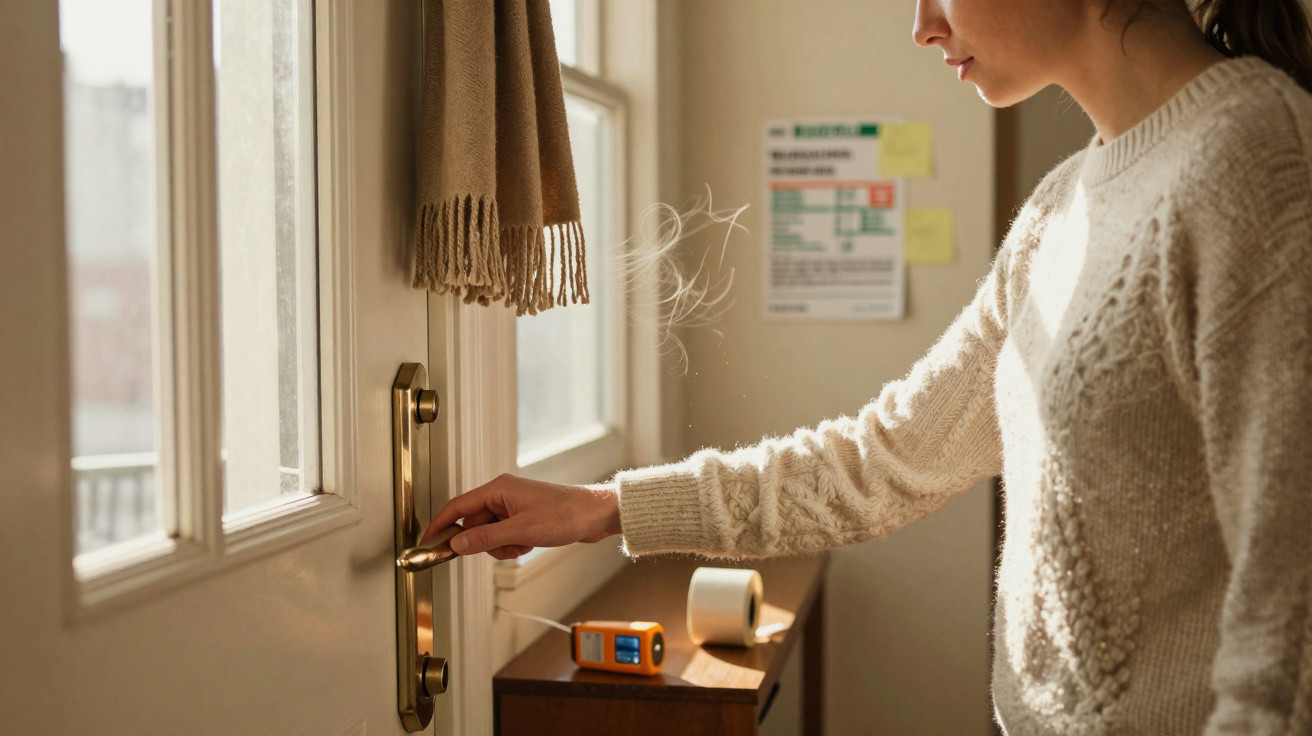
You are standing in the hallway with your coat still on when a cold current of air brushes around your ankles. The radiators are working away, your energy bill has doubled since last winter, but the house still feels faintly like an unsealed cabin in a gale. You move around with your hand outstretched like a human thermometer, feeling the walls, windows and, eventually, the front-door handle.
In under a second, you notice it: cold metal. Colder than the room. Colder than it ought to be.
You pull your hand away and start adding things up.
Perhaps the heating is not the real issue. Perhaps the warmth is slipping out through the doors.
The surprisingly simple “door handle test”
The “door handle test” may sound slightly ridiculous at first. However, once you have done it, the sensation is hard to ignore. The idea is straightforward: a door handle can act as a small metal messenger, transferring the outdoor temperature directly into your hand.
On a cold day, it can reveal the truth more quickly than a smart thermostat.
No equipment or app is required - only your fingers and a little awareness. Touch the handle, wait briefly, and pay attention to what your skin tells you.
This is often how it happens.
Someone says their home is permanently cold. They turn the heating up, buy a heavier blanket and perhaps even blame the ageing windows. Then, almost accidentally one day, they place a hand on the door handle and feel an icy jolt, as though the handle belongs outside in the garden rather than indoors.
They try the rear door and get the same result. Then the balcony door: exactly the same.
The picture suddenly becomes clearer: these are not merely doors, but thermal bridges. Each month, the energy bill quietly shows the consequences.
The explanation is simply everyday physics. Because metal conducts heat very effectively, the internal part of a handle is linked almost like a pipe to the external section exposed to wind and rain. When the air outside is freezing, the handle becomes cold and draws heat from the warm air within your home.
Your hand detects that tiny shock immediately.
When a handle feels clearly colder than the surfaces around it, take it as a sign that energy may be escaping through the door, with the handle serving as a neon indicator of the problem.
How to use the door handle test and what to do afterwards
The process could hardly be easier.
Choose a cold day or a late evening, when the heating is running and the temperature outdoors has fallen. Visit each external door in turn. Let your hand relax, as though you were about to shake hands, then lightly place your fingers on the metal handle for 5 to 10 seconds.
Compare its temperature with the room: does it feel close to ambient temperature, or significantly colder than the wall, door frame or a nearby wooden surface?
Carry out the same check on every door facing outdoors, including the front and back doors, balcony door and garage entrance.
If you experience that sharp cold feeling, there is no need to worry. You are far from the only person whose home has a “free-air conditioning system” working against them throughout winter. The first instinct may be to arrange a complete door replacement immediately. While that may help, it is not the only option.
The cause can sometimes be an inadequately insulated lock, a thin metal plate or missing seals around the frame. Even modest alterations may make that icy handle feel less severe.
Use the test as an early warning rather than proof that the whole door must be replaced.
We’ve all been there, that moment when you touch something at home and suddenly realise, “Ah, that’s where my money is vanishing every month.”
- Improve the seals
Applying self-adhesive draught-proofing strips around the frame can reduce draughts and lessen the temperature difference you feel at the handle. - Check the threshold
A narrow gap beneath the door can create a continual stream of cold air, which is particularly noticeable near the lower part of the handle. - Insulate the lock zone
Lock cylinders and letterboxes are common weak spots; covers or insulated flaps can make a considerable difference. - Upgrade hardware
Replacing existing handles with versions that include thermal breaks limits the direct metal “bridge” between outdoors and indoors. - Arrange a professional inspection
If several handles feel freezing, an energy assessment or blower-door test can identify every concealed air leak.
Beyond the handle: seeing our homes differently
After trying the door handle test, you may begin to view your home in a new way. A cold handle is not simply an annoyance; it is a symptom that your house is communicating something while you have only been partly listening. You start spotting the draught beneath the door, the faint whistling sound on stormy evenings and the way the doormat shifts when the wind rises outdoors.
In truth, no one carries out these checks every day.
Still, this small action - taking 30 seconds as you put on your shoes - can alter the way you use energy and spend money.
| Key point | Detail | Value for the reader |
|---|---|---|
| Door handle as a heat-loss signal | Metal transfers outdoor cold to your hand within seconds | An immediate way to spot possible energy leaks without tools |
| Simple test routine | Hold each external handle for 5–10 seconds on a cold day | A fast home check that anyone can carry out, including tenants |
| Actionable fixes | Seals, thresholds, lock insulation or upgraded hardware | Reduced bills, improved comfort and fewer “mystery draughts” |
FAQ:
- Does a cold handle always mean my door is badly insulated? Not necessarily. Metal naturally feels colder than timber or plastic. The important factor is the contrast: if the handle is much colder than nearby surfaces, particularly across several doors, it is a strong indication of heat loss.
- Can I do the door handle test in a mild climate? Yes, although it is most effective when there is a clear gap between indoor and outdoor temperatures. Try it early in the morning, at night or during a cold spell while your home is being heated.
- Is replacing the door the only real solution? No. Although new doors can help, better seals, insulation around the lock area or handles designed with thermal breaks can often improve comfort and reduce costs.
- What if I live in a rental and can’t do big work? You can still fit draught-proofing strips, draught excluders and small accessories around the handle and lock. These inexpensive measures are generally removable and suitable for rented homes.
- How often should I repeat the test? For most people, once at the beginning of each cold season is sufficient. You can repeat it after work has been carried out on the doors or insulation, and notice the difference with your own hands.





Comments
No comments yet. Be the first to comment!
Leave a Comment