
The scene is nearly always the same: the heat is building, you glance at the fan in the corner of the room and notice a grey crust coating its blades.
Just seeing it can make your nose itch. Then comes the unspoken dilemma: clean that bulky thing now and watch a cloud of dust spread through the whole house, or pretend you did not notice and switch it on anyway? Plenty of people choose the latter, take a breath and press the button. The noise starts, followed by the breeze and that smell of “a room shut up for months”. Anyone with rhinitis knows the trouble it causes. Parents of young children may feel a slight pang of guilt, too. There is a gentler way to deal with it: less mess, less drama and more control over what you are breathing in.
Why cleaning a fan has become almost impossible
Anyone who has taken a fan apart knows that the dust found there is no small matter. It sticks to everything, creating a thick layer on the grille, blades and motor. The longer you leave it, the more the appliance seems to become a reverse vacuum cleaner, sending all those impurities back into the room. The issue is that most homes do not have much space for this sort of cleaning. Some people clean a fan on top of the bed, in a cramped area, with the window shut. The equation is simple: little air circulation and lots of loose dust - enough to make even the dog sneeze.
We have all been there: you decide that today is the day, pick up the fan, take it into the living room and begin dismantling it, only for the house to look like a building site five minutes later. There is dust on the sofa, TV unit, toys and keyboard. A survey by the Brazilian Association of Allergy and Immunology suggests that around 30% of Brazilians have some form of respiratory allergy. You do not need to be an expert to see the link: many people sleep with the fan running all night, pointed straight at their face, breathing in everything that had been stuck to it. This happens repeatedly in small flats, studio apartments, student house shares and homes where there is little time for a more thorough clean.
There is another point that is rarely discussed: a dirty fan does not merely disperse dust, it also performs less effectively. The blades become heavier, the motor heats up and the noise increases. It uses a little more electricity while providing less comfort. Cleaning only the outside may make it look better, but it does not address the heart of the issue. The real question is how to clean it intelligently, without creating a fog of dust around the room. The answer lies in two simple measures: controlling airflow and containing dirt at its source. Once this becomes part of your routine, the fan becomes less of a villain and more of an ally.
How to clean a fan without creating a dust storm
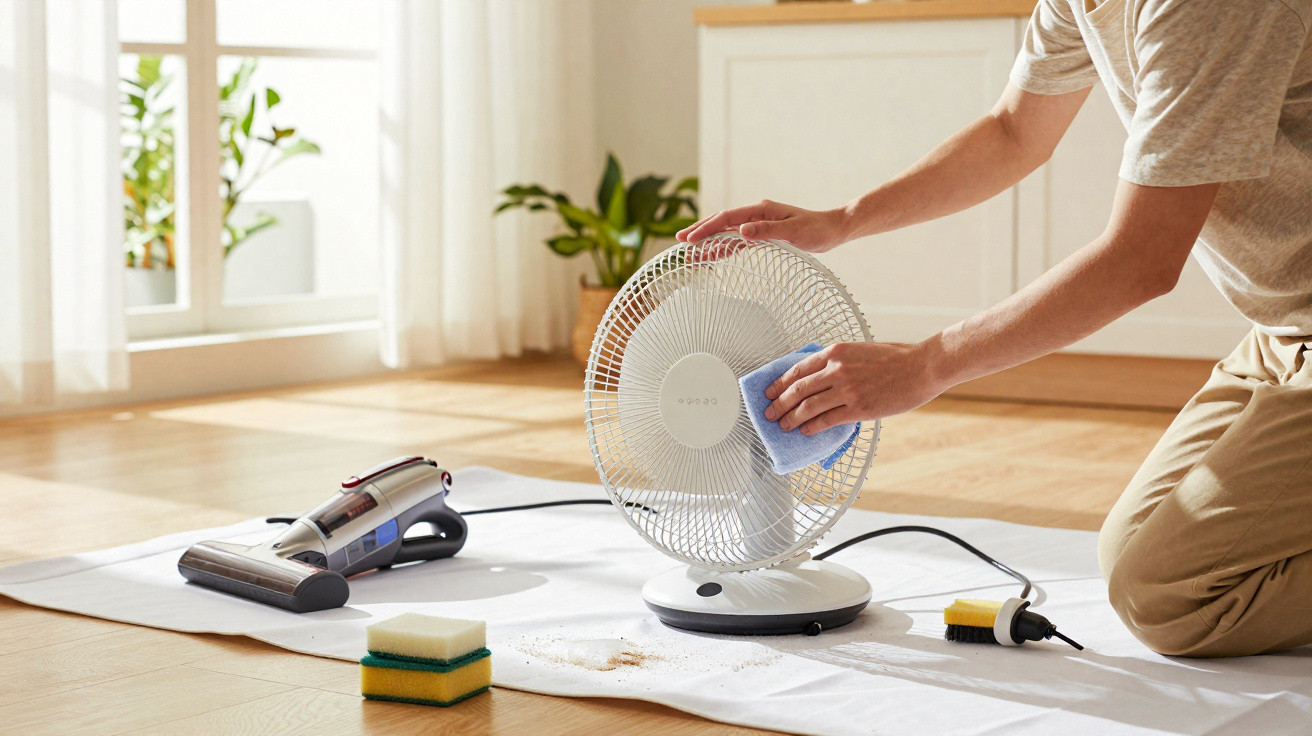
The first step changes everything: pick the right place. A balcony or open utility area is ideal. If you do not have one, choose a room with a large window and a door that can be shut afterwards. Lay an old sheet or a large plastic cover on the floor to catch anything that falls. Unplug the fan and, if it is a desk or pedestal model, carry it carefully. Always use a slightly damp cloth for the first contact with dust, never a dry one. When the cloth is a little wet, it traps the dust instead of sending it into the air.
A common mistake is to start taking everything apart without giving it any thought. The front grille comes off, the rear grille is unclipped, the blades fall to the floor, and suddenly there is dust everywhere. Taking a breath and working in stages makes a difference. Begin with the outside, wiping the grille with a damp cloth while it is still assembled, simply to remove the thickest layer. Only then should you dismantle it, preferably placing the parts on the sheet. Let us be honest: nobody does this every day. So, when you do tackle it, it is worth doing properly and without rushing. Wearing a simple non-woven or cloth mask can greatly reduce discomfort for anyone who sneezes easily.
“Cleaning a fan properly is not just a matter of appearance; it is a quiet matter of household health.”
Here is a tip many people use that makes a real difference: wash removable parts in a basin of warm water with a little mild washing-up liquid, rather than scrubbing everything in the open air. Put the grille and blades into the basin, move them gently and allow the dirt to come loose in the water rather than in your living room.
- Use a damp cloth to remove the heaviest dirt before dismantling the fan.
- Choose an isolated room or an outdoor area with good ventilation.
- Cover the floor with an old sheet, towel or large plastic cover.
- Wash the parts in a basin rather than holding them under the tap and splashing water everywhere.
- Let every part dry fully before reassembling it, so the motor is not compromised.
Making fan cleaning an easy habit rather than a punishment
There is a somewhat psychological side to this that few people admit: we tend to put off anything that seems difficult. A fan is bulky, has a lead, weighs something and takes up space. Whenever you think about cleaning it, your mind already imagines the mess, coughing and tiredness. The trick is to make it feel less dramatic. Rather than waiting until the appliance is filthy, build a light clean every two or three weeks into your household routine. Five minutes with a damp cloth over the blades and grille prevents that alarming build-up that demands a full-scale operation.
One practical approach is to link the task to something already in your weekly routine: before changing the bedding, before cleaning the bathroom, or on the day you mop the house. The reasoning is simple: if the floor is about to be cleaned anyway, having a little extra dust concentrated there is not a major issue. This care can make a real difference for households with children or older people with respiratory allergies. There is another benefit, too: the cleaner the fan is, the less noise it makes, creating a calmer setting for sleeping, working or watching something in peace.
If you have made it this far, you have probably remembered a neglected fan in a spare bedroom or on top of a wardrobe. Perhaps it is the kitchen fan, exposed to grease from the hob and building up a mixture of dust and sticky film that is hard to remove. The straightforward truth is this: a dirty fan is not a minor detail, but a constant source of pollution indoors. When we start paying closer attention to these small appliances, we realise that the way we deal with them says a great deal about how we care for the air we breathe every day.
| Key point | Detail | Value for the reader |
|---|---|---|
| Choosing the right location | A ventilated, isolated room with the floor covered | Less dust spreading through the rest of the house |
| Using a damp cloth and basin | A slightly wet cloth and washing in still water | Dirt is contained, allergies are reduced and cleaning is more efficient |
| Creating an easy care routine | Quick cleans every few weeks | A fan that remains functional and a healthier home |
FAQ
- Question 1: How often should I clean the fan to prevent heavy dust build-up? A light clean every 15 to 20 days is enough to avoid serious accumulation. A more complete clean involving dismantling can be done every 1 or 2 months, depending on use and the amount of dust in your area.
- Question 2: Can I use a vacuum cleaner directly on the fan? Yes, as long as the appliance is unplugged and the nozzle is used carefully, without forcing loose parts. Ideally, combine the vacuum cleaner with a damp cloth, so you do not stir up anything the vacuum cannot remove.
- Question 3: Is it safe to wash the motor section with water? No. The motor area must not get wet. Clean it only with a slightly damp cloth or a soft brush, always with the fan unplugged, and wait until it is completely dry before switching it back on.
- Question 4: Does a ceiling fan follow the same process? The principle is similar, but the method changes. For a ceiling fan, use a damp cloth on the blades, a sturdy ladder and, if possible, a mask. Do not throw water over it. Where there is a lot of dust or grease, use a gentle solution of diluted mild washing-up liquid and a well-wrung cloth.
- Question 5: Do scented products help or hinder? They may leave a pleasant scent, but they are not essential. In excess, some strong fragrances can irritate people with rhinitis or asthma. Water, mild washing-up liquid and a damp cloth deal with much of the dirt without overdoing the odours.


Comments
No comments yet. Be the first to comment!
Leave a Comment