
As the year turns amid expensive energy and persistent cold, small choices made at home are beginning to matter as much as the temperature outside.
With winter 2025 approaching and electricity and gas bills still under pressure, Brazilian households are looking for inventive ways to stay warm without breaking the budget. In ageing flats, poorly insulated homes and properties relying on improvised heating systems, the difference between feeling cold and being comfortable may come down to three straightforward tricks rooted in basic science.
Why your home feels cold even with the heater on
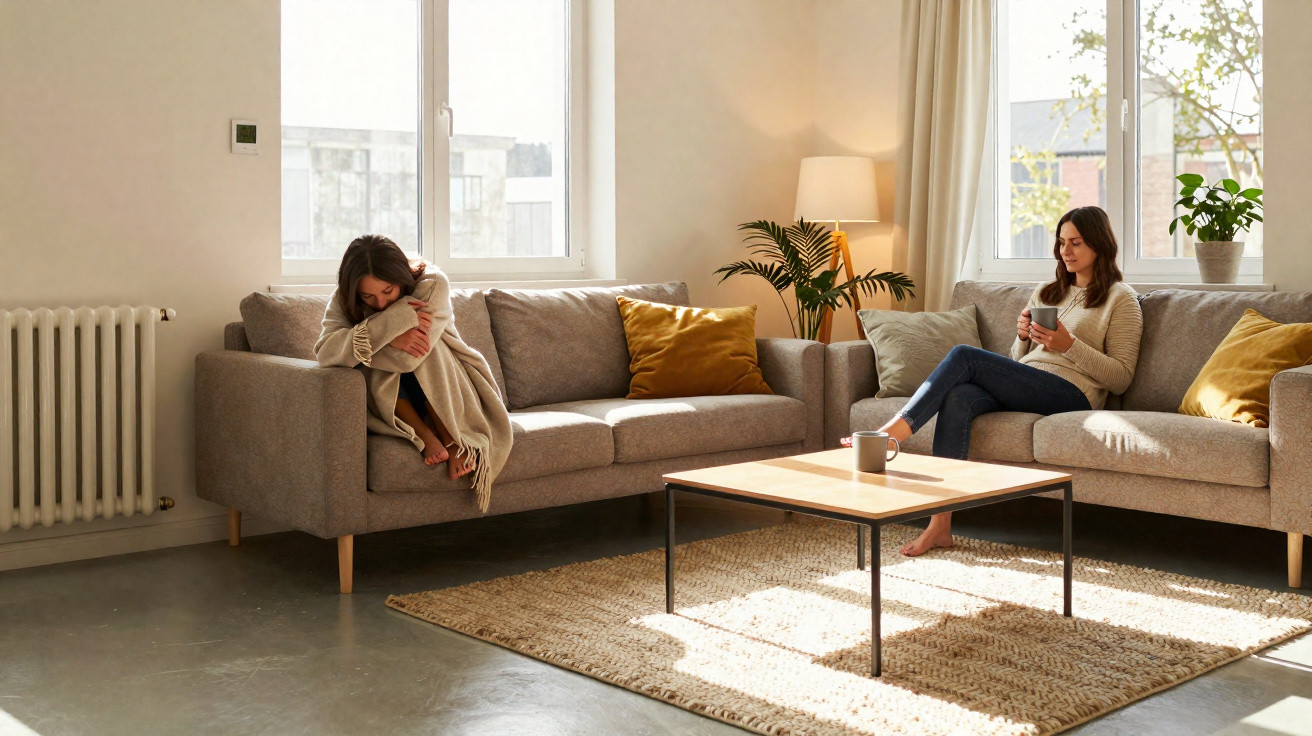
It is a familiar problem: the heater stays on, the bill rises, yet the room still feels deeply chilly. The reason is less about the heater’s “power” and more about the way the home deals with three physical processes: conduction, convection and thermal radiation.
Thermal comfort depends not only on the temperature shown on the thermometer, but also on how the body exchanges heat with the air, walls and surrounding objects.
When warm air escapes through gaps, walls “steal” heat from radiators, or the body loses energy to cold surfaces, a home can feel colder than it really is. The good news is that this can be turned around with materials that most people already have, including aluminium foil, rugs and a simple electric kettle.
Strategic draught-proofing: keeping heat where it is produced
Energy-efficiency studies indicate that up to one-third of a home’s heat can be lost through gaps around windows, doors and less obvious openings. This happens through conduction and air currents: cold wind comes in, heated air goes out, and the heater must keep working to make up the difference.
Small leaks, major waste
The edges of sliding windows, older doors, and tilt-and-turn windows in bathrooms and kitchens are often the most problematic areas. On windy days, simply holding a hand near a gap can reveal a stream of icy air.
- Applying rubber or foam sealing strips and profiles to windows and doors limits cold-air infiltration.
- Using fabric draught excluders, or door snakes, stops wind entering at floor level.
- Properly closing internal blinds and curtains at night adds another insulating layer.
Flooring is another overlooked culprit. In homes with cold tiles or polished concrete, heat loss through the feet can be considerable. Rugs made from natural fibres, such as wool or sisal, can raise the perceived temperature at floor level by up to 1 to 2 ºC, making a substantial difference to comfort.
When the floor no longer makes your feet cold, the body can tolerate slightly lower thermostat settings without discomfort.
Aluminium foil behind the heater: managing heat through radiation
Every heater gives off warmth in all directions, including towards the wall. In older buildings or on walls facing outdoors, a meaningful share of that energy is lost outside rather than warming the room. This is where the aluminium-foil trick comes in.
How the reflective panel works
Aluminium has very high reflectivity: it sends back most of the thermal radiation it receives. Placed behind a heater, it forms a kind of shield that directs warmth back into the room instead of allowing it to disperse through the wall.
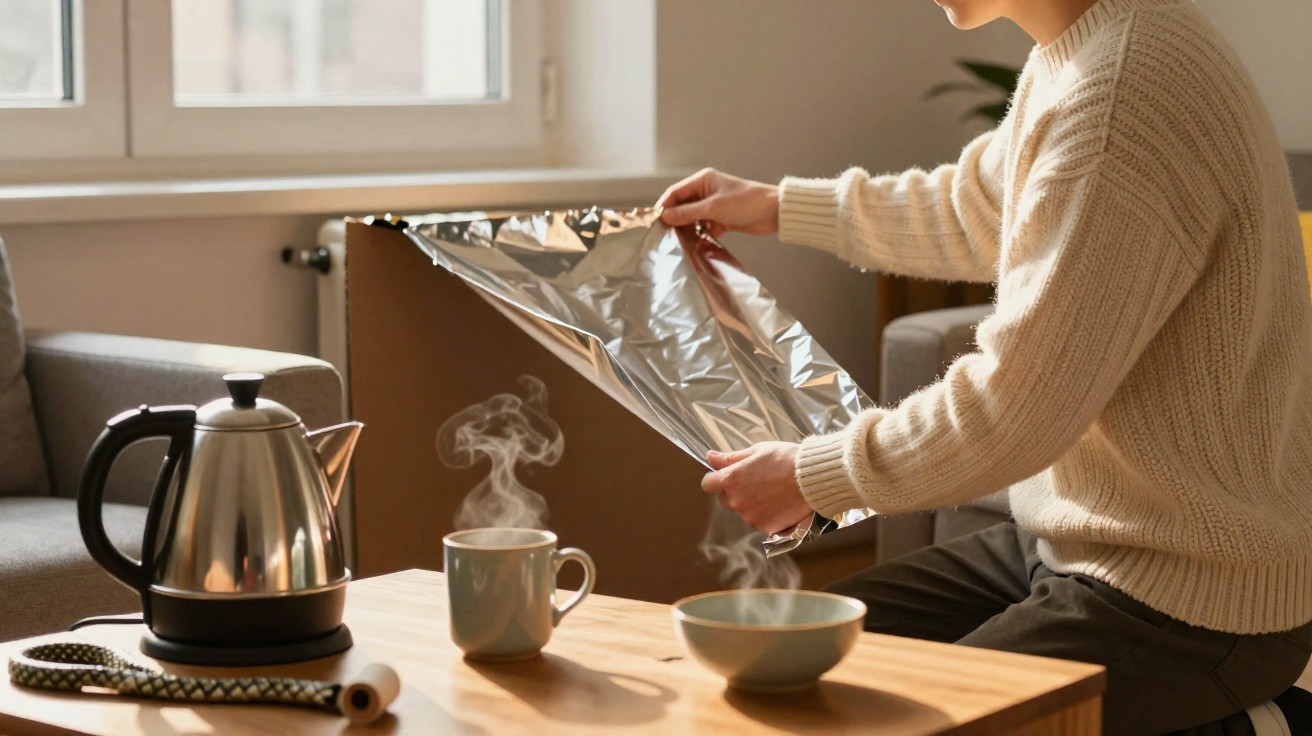
A homemade version is usually enough:
- Cut a piece of cardboard slightly smaller than the heater.
- Cover the cardboard with aluminium foil, with the shinier side facing the room.
- Place the panel between the heater and the wall, leaving a small gap for air circulation.
European studies into thermal efficiency estimate that this type of panel can cut heating consumption by between 5% and 10% in rooms with a cold external wall. In Brazilian homes using portable electric heaters, that improvement may translate into savings of several tens of reais over a harsher winter in the South and South-East.
Aluminium foil does not “create” heat: it simply redirects the energy you are already paying to produce more effectively.
A few precautions are vital: do not put foil directly against electric heating elements, avoid using it with very modern equipment that has sensors close to the wall, and watch for damp, which can damage the cardboard over time.
Electric kettle, steam and body heat: the multiplying effect
Even homes without a central heating system contain heat sources that are already used every day. Human bodies, cooking, lamps and electronic devices all contribute to the home’s heat balance.
When people become living “radiators”
A person at rest gives off roughly 80 to 100 watts, equivalent to an old incandescent light bulb. In an enclosed room containing four people, that output comes close to that of a small heater.
Bringing the family together in one room during the coldest hours, keeping internal doors shut to concentrate warmth, and using textiles such as throws, cushions and heavy-fabric curtains all help keep that energy within the room.
The electric kettle as a comfort ally
In the kitchen, the way water is heated affects the energy bill. Consumption studies suggest that a modern electric kettle uses up to 30% less energy to bring water to the boil than a pan on an electric hob or a container in the microwave, provided that only the amount actually needed is heated.
| Method | Typical efficiency | Point to note |
|---|---|---|
| Electric kettle | High | Do not overfill it; descale regularly |
| Pan on an electric hob | Medium | Major losses occur if the pan is thin or has no lid |
| Microwave | Variable | Less efficient for large volumes of water |
When tea, coffee or soup is prepared in the evening, some of the released steam and warmth heats the kitchen air and surfaces. Any hot water left over can be used for a quick wash-up or a hot-water bottle, extending the use of energy that has already been spent.
The golden rule is straightforward: heat only what is needed and make the most of every bit of heat generated at home.
Warm-toned LED bulbs, at around 2,700 kelvins, help the brain read a room as cosier. The actual air temperature changes very little, but the feeling of warmth increases, reducing the urge to turn up the heater.
When it all adds up: practical scenarios for winter 2025
Picture a 60 m² flat with old aluminium-framed windows and a portable electric heater. During a cold weekend, the resident fits sealing strips, makes aluminium-foil panels behind the heater, and centres evening activities in the living room, using a rug, closed curtains and the electric kettle regularly for hot drinks.
Together, these steps are likely to add a few degrees to the perceived temperature in the most-used room, making it possible to reduce the heater’s output or running time slightly. For a stretched monthly budget, that margin can prevent unwelcome end-of-month surprises without forcing the family to feel cold.
It is worth noting several risks and limits: poorly positioned aluminium panels can restrict heater ventilation; candles used as a heat source require constant supervision and good ventilation; and excess moisture produced in the kitchen must be offset by opening windows for a few minutes each day to prevent mould.
Terms such as “conduction”, “convection” and “radiation” may sound remote from everyday life, but they describe precisely what happens when an air current passes through a window gap, when warm air rises to the ceiling, or when a cold wall seems to “draw” heat from the body. By adapting the home to these simple laws of physics, winter 2025 is likely to be less punishing - and the impact on the energy bill somewhat less alarming.
Comments
No comments yet. Be the first to comment!
Leave a Comment