
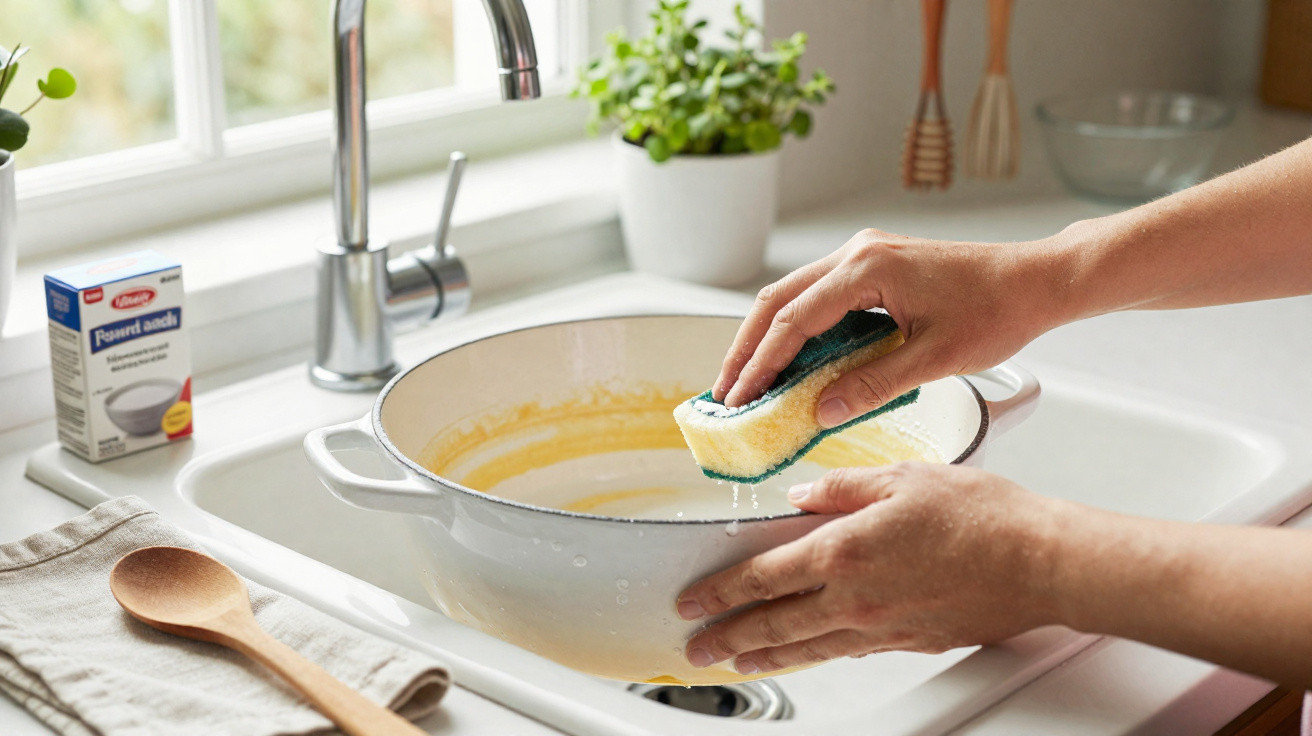
On a Sunday evening, after a gratin has caught a little too firmly, an enamelled cast-iron casserole dish can sit on the hob like a quiet reproach. Inside, a brown ring appears to have settled permanently on the base, while the outside bears the dull marks left by flames and splatters. We all know that hesitation: scrub hard, leave it soaking overnight, or pretend the stain is not there. A casserole dish is expensive, ages alongside us, and no one wants to scratch its attractive cream or coloured enamel over a little leftover sauce. The reassuring news is that an impressive mark is not necessarily a permanent one. You simply need to slow down a little.
Before cleaning, identify what has really stained the enamel
A stained casserole dish is not automatically a damaged one. In many cases, the brown marks on the base come from protein, sugar or fat that has cooked for too long, especially after a roast, a reduced tomato sauce or onions left unattended for a few minutes too long. The enamel itself remains intact beneath this browned film. When cold, the stain can look worrying, almost black, yet it often becomes lighter as soon as it is wetted. That is a comforting sign: what you can see is not always embedded in the material.
In a family kitchen, a white casserole dish may develop a faint beige tint after only a few slow-cooked meals. One friend was convinced hers was “ruined” after a saffron risotto and lemon chicken, only to find that a gentle soak removed most of the marks in twenty minutes. Coloured pigments, particularly turmeric, paprika and tomato, readily cling to fatty deposits. They need patience rather than force. The most effective approach is often the one that is not rushed.
It is also important to tell a stain apart from a chip. A small rough patch that is greyish or metallic, especially around the rim of the casserole dish, may indicate a chip in the enamel: no miracle product will make it disappear. A stain, on the other hand, will usually feel smooth beneath your finger. Let us be honest: no one really inspects their casserole dish in the light from the window every day. Even so, this quick check can stop you reaching for an abrasive sponge when a few calm steps would be enough. Enamel tolerates neither thermal shock nor repeated harsh treatment.
The gentle method for removing stains without scratching an enamelled cast-iron casserole dish
Always begin with hot water, mild washing-up liquid and a wooden or silicone spatula. Fill the casserole dish until the stained areas are covered, leave it to stand for fifteen to thirty minutes, then lift away the residue without scraping. If the mark persists, gently heat the water for a few minutes before turning off the heat. Warmth softens stuck-on cooking residue and makes cleaning far less laborious. Never plunge a hot casserole dish into cold water: thermal shock is enamel’s discreet enemy.
For rings that remain after this first wash, bicarbonate of soda can help, provided it is used as an occasional aid. Add two tablespoons to a small amount of water, heat it at the gentlest simmer for five to ten minutes, then allow it to cool completely. Finish with a non-abrasive sponge. Avoid making a dry paste and rubbing vigorously: while bicarbonate of soda may seem harmless, it becomes more abrasive when used as a scouring powder. Gentleness often achieves better results than persistence.
Exterior stains call for the same composure, particularly beneath the casserole dish where heat has baked on grease. A soft sponge, warm soapy water and a little waiting time remain the essentials; for stubborn marks, you may consider a cleaning cream formulated for enamel, following its instructions exactly. No steel wool, no scouring powder and no oven cleaner: these shortcuts can permanently dull the surface.
“An enamelled casserole dish is best cleaned in layers: soften, lift away, then rinse.”
- Use a soft sponge or a flexible nylon brush;
- Allow the casserole dish to cool before soaking it;
- Dry the rim and handles thoroughly after washing;
- Repeat a gentle method rather than scrubbing too hard in one attempt.
Everyday habits that keep enamelled cast iron looking bright for longer
An enamelled cast-iron casserole dish does not need to look as flawless as it did on its first day to cook well, and its subtle changes in tone also reflect meals shared. Once it is clean, dry it straight away with a clean tea towel, particularly around the lid and handles, where moisture can linger. Store the lid slightly ajar, or place a thin cloth between the two parts if they are stacked. This is not collector’s fussiness: it reduces stale odours and protects the edges from tiny, unseen knocks.
When cooking, a few routines prevent many marks. Preheat over a medium heat rather than the highest setting, add a little fat where the recipe allows, and do not leave a sauce reducing unattended. The thick cast-iron base retains heat for a long time; a hob set too high will continue cooking even after the heat has been turned down. A casserole dish does not like being rushed. It prefers slow cooking: the kind that fills the house with delicious aromas and leaves you time to lay the table.
There is one final, very practical question: should you simply live with slight interior discolouration? Yes, if the surface remains smooth and sound. A light patina affects neither cooking nor flavour, and trying to erase every shadow can wear the enamel prematurely. Share a photograph of your casserole dish before panicking, compare the mark with those reported by other users, or ask the manufacturer for advice if there is a chip: these simple habits can prevent you from throwing away or replacing an item designed to last. A beautiful casserole dish is also one that continues to be used, meal after meal.
| Key point | Detail | Benefit for the reader |
|---|---|---|
| Warm soak | Hot soapy water, followed by gentle heating if needed | Loosens residue without harming the enamel |
| Diluted bicarbonate of soda | Two tablespoons in a small amount of water, at a gentle simmer | Reduces stubborn stains with a measured action |
| Methods to avoid | Steel wool, abrasive powders, oven cleaners | Preserves shine and limits micro-scratches |






Comments
No comments yet. Be the first to comment!
Leave a Comment