
One evening, after frying some onions, the cooker hood light exposes what we would often rather not see: a sticky, yellowish film covering the metal filters. The first thought is usually of a miracle cleaner, rubber gloves and a lengthy chore - so it gets postponed until the following weekend. Yet boiling water and bicarbonate of soda can do much of the work in 15 minutes, without turning the kitchen into a laboratory. The outcome can be unexpectedly impressive.
When cooker hood filters become genuine grease sponges
We all know the moment when the cooker hood appears to be running, yet cooking smells still linger around the flat. A closer look at the grilles soon explains why: their mesh is clogged with dried grease, dust and tiny particles that have accumulated meal after meal. This build-up develops gradually, almost unnoticed, until it can no longer be overlooked.
For Claire, who regularly cooks for her two teenagers, the turning point came while she was changing a bulb beneath her cooker hood. Her fingers brushed the filter and came away sticky, despite a quick wipe with a sponge a few weeks earlier. After 15 minutes in very hot water with bicarbonate of soda, brownish water began running into the sink. “I didn’t realise there was so much grease in there,” she said, slightly dismayed.
The principle is straightforward: heat softens set grease, while bicarbonate of soda helps release embedded residue and neutralise odours. This is not some old-fashioned miracle that means you never have to scrub, but it does make scrubbing far less arduous. The real luxury is not a flawless kitchen; it is a household task that does not take up the whole evening.
The boiling-water and bicarbonate method that works in 15 minutes
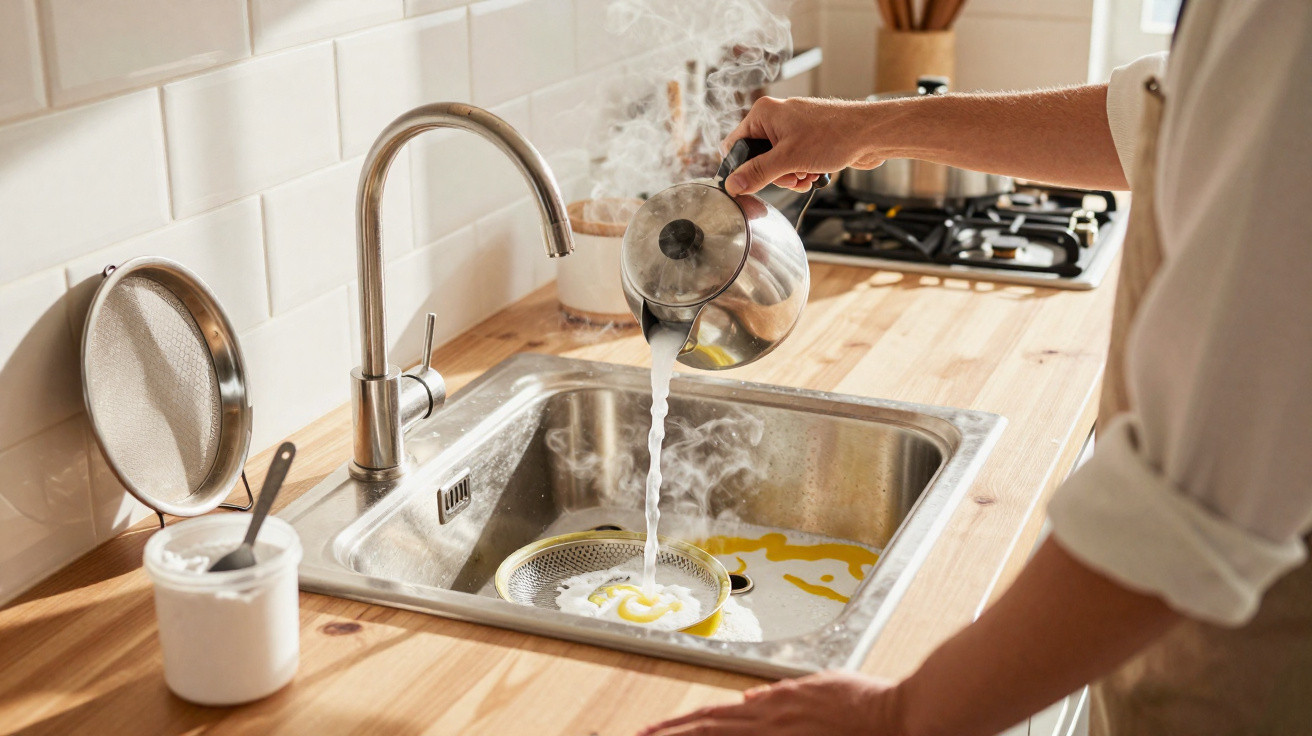
First, switch off the cooker hood at the mains and remove the metal filters, which are usually held in place by a small tab or catch. Put them in the sink, a large washing-up bowl or a deep roasting tray, then pour over very hot water - ideally just below boiling - to cover them as fully as possible. Add two to four tablespoons of bicarbonate of soda, depending on the filter’s size and the amount of grease present.
Leave everything to soak for 15 minutes, without rushing and while keeping your hands clear of the hot water. The grease will start to break apart on the surface, while the cloudiest areas may take on a slightly milky appearance: that is a good sign. Then brush along the mesh using a soft brush, an old washing-up brush or a non-abrasive sponge. Most of the build-up will then lift away without a struggle, particularly if cleaning has not been put off for months.
Let us be honest: nobody really does this every day. In a family kitchen, cleaning the filters once every four to eight weeks is generally enough, although it may need doing more often if you cook lots of fried food, fish or wok dishes. Rinse the filters thoroughly in clean water, shake off the excess, then allow them to dry fully on a clean tea towel before refitting them. Putting a still-damp filter back into a cooker hood is never a particularly good idea.
Mistakes that make cleaning take longer than expected
The first mistake is pouring boiling water into a delicate sink without taking precautions, or handling the filters with bare hands from the first minute. It is better to use a heat-resistant bowl, thick rubber gloves and tongs if needed. If the filters are especially grimy, repeat the soak rather than attacking them with a metal scouring pad: it can scratch the metal, making it easier for dirt to cling to it in future.
Take care not to confuse washable metal filters with charcoal filters, which are fitted to many cooker hoods operating in recirculation mode. Charcoal filters should not usually be immersed in boiling water; instead, they need replacing in line with the manufacturer’s instructions. A quick check of the manual can prevent an unpleasant surprise. Boiling water and bicarbonate of soda should be used only on metal grilles, commonly made from aluminium or stainless steel.
If the grease appears old and stubborn, add a few drops of degreasing washing-up liquid to the hot water, without piling on harsh products. The method remains straightforward, inexpensive and gentle enough for regular maintenance.
“Good cleaning is cleaning you can repeat without spending hours thinking about it.”
- Remove the filters only after the cooker hood has been switched off and has cooled down.
- Soak them for 15 minutes in very hot water with bicarbonate of soda.
- Gently scrub the mesh using a soft brush.
- Rinse generously and leave to air-dry.
- Never submerge a charcoal filter that is designed to be replaced.
A small habit that genuinely improves the kitchen air
A clean filter does more than improve the appearance of the cooker hood: it can also help the appliance capture everyday steam and odours more effectively. The difference is often noticed afterwards - less greasy film on nearby cupboards, a kitchen that seems to breathe more easily, and the pleasing feeling of starting again with a clean base. It may not look dramatic at first, but it matters in a room where so much time is spent.
The easiest approach is to pick a realistic reminder: the first Sunday of the month, after a large meal, or when the grilles start to lose their metallic sheen. There is no need to feel guilty if several weeks go by. The aim is simply to avoid the point at which grease turns as hard as varnish and every section of mesh needs ten passes with the brush. A few regular minutes are better than a dreaded chore.
This task can even become a small piece of household knowledge to pass on to someone close who is moving home, a neighbour or a child old enough to lend a hand. Hot water, bicarbonate of soda and a brush: three very ordinary things for a cleaner cooker hood. And perhaps other forgotten corners of the kitchen could be tackled with the same simple approach.
| Key point | Detail | Benefit for the reader |
|---|---|---|
| Soaking time | 15 minutes soaking in very hot water | A quick solution for routine maintenance |
| Product used | Bicarbonate of soda, with washing-up liquid if needed | Fewer harsh products and lower cost |
| Useful precaution | Clean washable metal filters only | Prevents damage to the cooker hood’s charcoal filters |




Comments
No comments yet. Be the first to comment!
Leave a Comment