
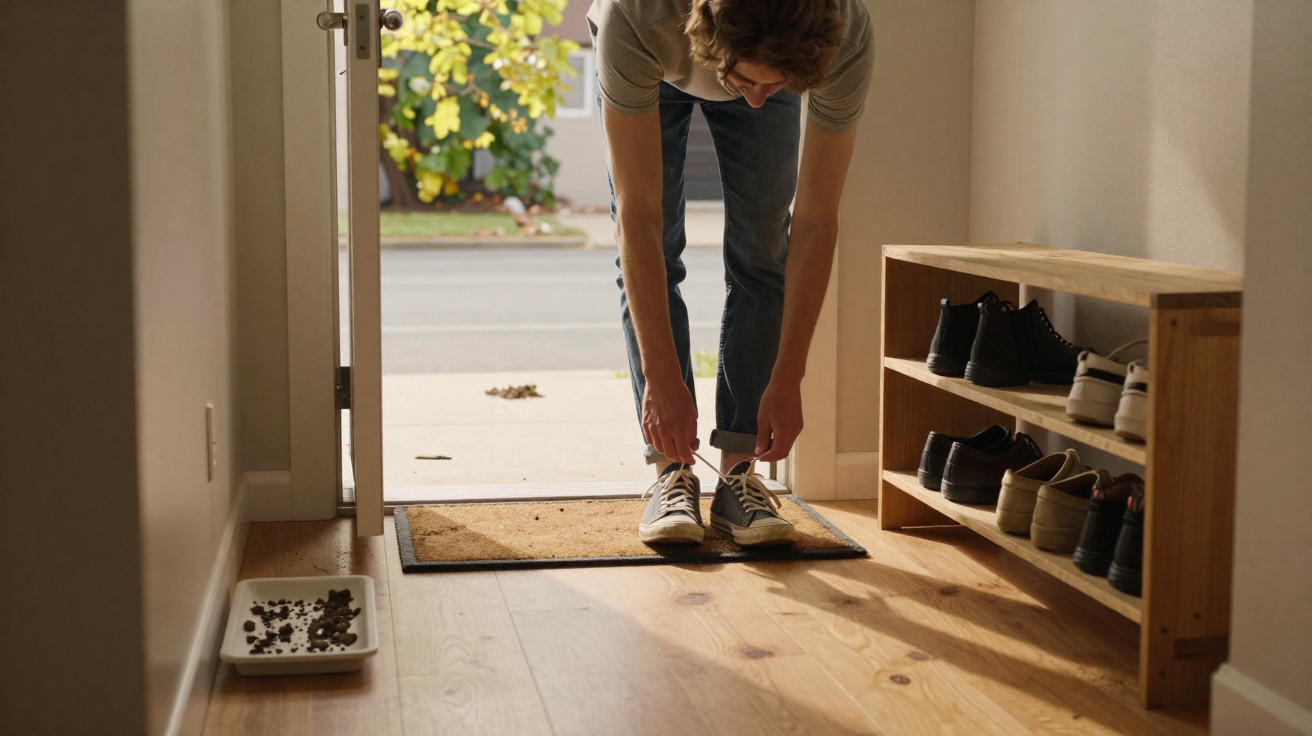
On a all experienced it: on arrive home on a rainy evening with bags of shopping in both hands, leave them in the hallway and walk through the living room without a second thought. Our shoes have been on pavements, the Underground, supermarket car parks and perhaps through a questionable puddle or across the floor of a doctor’s surgery. They then cross the doormat, pass the sofa and come within a few metres of children’s toys or the dog asleep nearby. Because it is so routine, the action barely registers. Yet a closer look at what clings to a sole changes the picture. Microbiologists are not suggesting a constant danger, nor that homes should be disinfected from top to bottom. They simply point out a slightly uncomfortable fact: shoes are highly effective collectors. What they pick up does not stay outside the front door.
Beneath the sole: a small catalogue of the outdoors
We all know the reflex of scraping a sole before entering someone’s home: a trapped pebble, a damp leaf or a patch of dried mud. But what is visible is only part of the journey. Rubber grooves also hold fine particles, organic residue and micro-organisms gathered with every step, particularly in busy public areas.
A frequently referenced study by researchers at the University of Arizona examined shoes worn in everyday life. Bacteria were found on 96% of the soles tested, while coliform bacteria, notably associated with faecal matter, appeared on around one quarter of them. That figure may make people wince, but it mainly reflects ordinary life: dirty pavements, animal waste, public toilet floors and stagnant water overlap far more often than we tend to think.
The researchers also found that not all bacteria remained stuck underneath the shoe. Some can be transferred to indoor flooring, especially immediately after coming through the door. This does not mean that every household becomes hazardous the moment a pair of trainers crosses the threshold: the presence of a microbe alone is not enough to cause an infection. However, a dirty sole works like a stamp, and the floor at home eventually carries a small trace of the outdoors.
Should you really take off your shoes when you get home?
The easiest approach is to create a proper stopping point in the hallway. A sturdy outdoor mat removes some of the visible dirt, while a washable doormat inside helps limit what remains. Keeping slippers, clean sandals or even thick non-slip socks by the door makes changing footwear almost automatic, including on rushed days.
The usual trap is assuming that a quick wipe is enough after a wet day. In truth, hardly anyone does that every day. A realistic routine works better: vacuum regularly and wash floors in high-traffic areas, rather than commit to immaculate cleaning only to give up by Wednesday evening.
Households with a crawling baby, someone who is immunocompromised or a pet that spends a great deal of time close to the floor may benefit from being slightly more thorough. This is not about becoming obsessive; it is a calm way to reduce what is brought indoors unintentionally.
“Shoes can transfer bacteria indoors, but the aim is not to live in fear: it is above all about limiting an avoidable source of contamination,” captures the spirit of recommendations made by many microbiologists.
- Set aside a hallway area for shoes and boots.
- Wash very dirty soles after walking through mud or visiting a contaminated place.
- Keep clean slippers available for guests who are happy to remove their shoes.
- Clean the floor near the door regularly, especially where young children are present.
A small change that also reflects how we view the home
Taking shoes off is neither a universal rule nor a judgement on people who do not do it. In some families, it is a habit learned in childhood; in others, asking a guest to remove their shoes can feel almost too personal. Even so, it takes only a few minutes to see the difference on a pale floor or in a home with an animal: less dust, fewer marks and the pleasing sense that the home is genuinely separate from the street.
Ultimately, the issue goes beyond bacteria. It concerns that small mental transition between the bustle outside and arriving home: putting down your keys, taking off your coat and then removing your shoes. Microbiologists stress that reducing transfer is more realistic than trying to eliminate every microbe, because a perfectly sterile home does not exist and would not necessarily be desirable. What remains is a simple, almost unnoticed habit that offers a little protection for floors and changes the atmosphere from the first step inside.
| Key point | Detail | Benefit for the reader |
|---|---|---|
| Soles retain microbes | Tread patterns trap dust, organic residue and bacteria encountered outdoors. | Better understand why indoor floors can become dirty quickly. |
| The risk needs perspective | The presence of bacteria does not automatically mean illness. | Build useful habits without becoming excessively worried. |
| Removing shoes remains the easiest solution | A hallway space, slippers and regular cleaning are often enough. | Easily reduce dirt brought in from outdoors. |
Comments
No comments yet. Be the first to comment!
Leave a Comment