
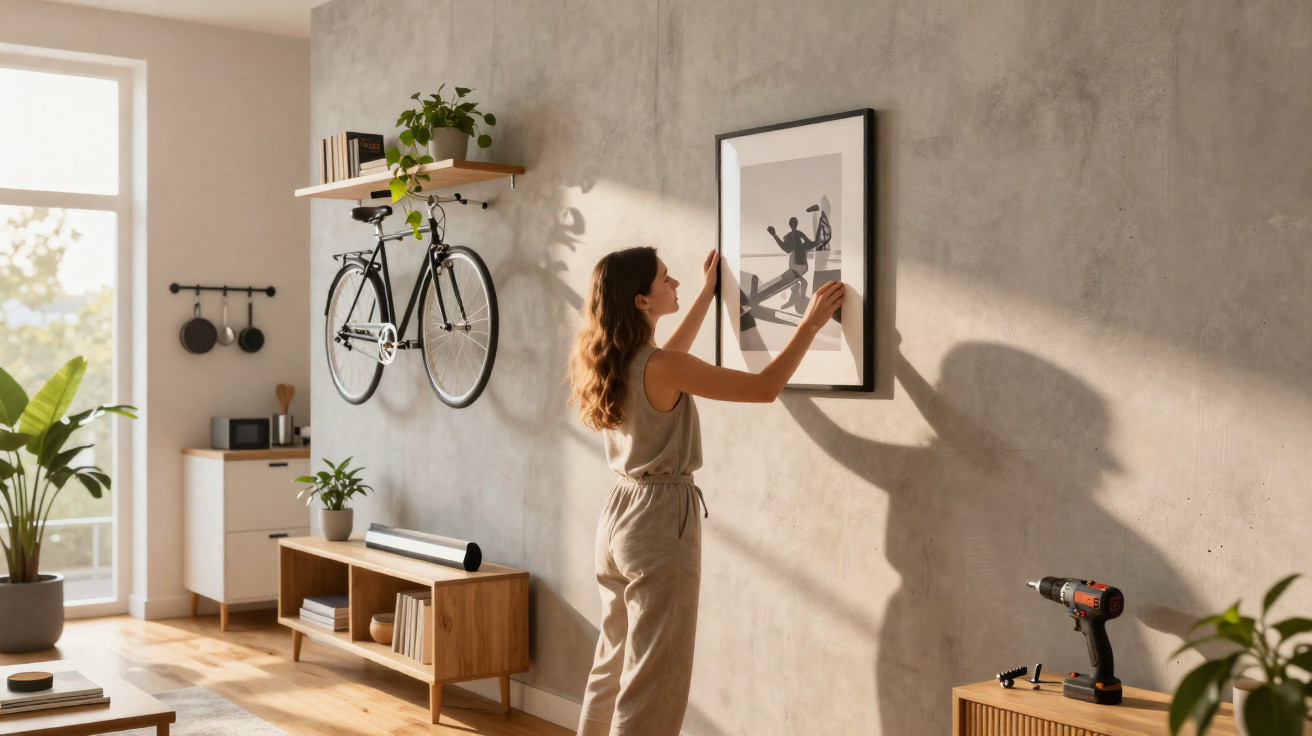
Transforming indoor spaces without drilling into walls is now a realistic prospect thanks to the emergence of smart magnetic surfaces. This practical solution enhances a property's appearance, making it possible to arrange pictures and decorative holders with complete freedom and ongoing innovation in everyday routines.
How does magnetisable cement transform home decoration?
A mortar made with mineral and ferrous particles provides a practical base for attaching accessories without mess. This contemporary approach removes the need for noisy tools, keeps painted finishes flawless and delivers considerable convenience in any modern space.
By turning ordinary masonry into a receptive surface, residents can move ornaments whenever they want to refresh the visual arrangement. This adaptability prevents permanent marks on the structure, making room personalisation far more dynamic and free from unwanted damage.
What makes it possible to hang heavy objects on a wall without drilling holes?
The combination of cement-based compounds and ferrous elements produces an attractive force capable of supporting even metal items… Read more
What are the main benefits of this technology for renovations?
Cutting down on rubble and dust during minor home alterations is among the greatest advantages for property renovators. Surfaces prepared with functional compounds remove the need for repeated plaster repairs, ensuring easier and highly economical day-to-day maintenance.
For tenants, this method preserves the condition of the walls until it is time to hand back the keys. It eliminates costly, time-consuming restoration work, allowing decorative items to be mounted without compromising the building's structure or causing contractual conflicts.
The video below from the Rust-Oleum YouTube channel shows how magnetisable surfaces work in practice:
How does the material replace holes and screws?
Rather than relying on plastic wall plugs and steel screws, the coating functions as a passive metallic base. Objects simply need suitable magnets on their reverse side to adhere directly to the vertical surface, creating a firm and highly secure fixing within the space.
This method avoids electric drills, reducing disruptive noise in residential buildings and workplaces. The wall remains protected from accidental cracks caused by mechanical impact, preserving the masonry with excellent resistance to wear.
Essential Magnetic Fixing Kit
Recommended items for practical use
Explore the basic items needed to make the most of this wall technology:
- Neodymium magnets for heavier objects;
- Self-adhesive magnetic strips for lightweight pictures and photographs;
- Adapted metal brackets for utensils and tools.
Which spaces can this innovative mortar be used in?
The versatility of this composition makes it suitable for modern offices, creative studios, fitted kitchens and children's bedrooms. Being able to change holders and organisers quickly streamlines people's routines, combining functional organisation with a clean visual aesthetic.
In educational or corporate settings, the technology makes it possible to create teaching boards and information displays without using adhesive tape. This prevents paint stains over time, ensuring communal areas retain an appearance that is consistently pleasant and welcoming.
Here are some of the coating's main practical uses in different spaces:
- Functional kitchens for hanging knives and cooking utensils without visible brackets;
- Workshops and studios for organising hand tools with complete convenience;
- Classrooms and offices for displaying modular teaching boards.
What can be expected from the future of this construction solution?
Ongoing tests of mechanical strength and load capacity aim to refine the mixture so it can be marketed on a mass scale. Engineers and architects are monitoring the development of technical trials, assessing the material's durability under a range of varying climatic conditions.
Market acceptance within construction could change how interiors are designed over the coming decades of urban development. Solutions that combine simplicity with convenience are becoming increasingly prominent, strengthening the modernisation of conventional methods with complete efficiency in renovations.

Comments
No comments yet. Be the first to comment!
Leave a Comment