
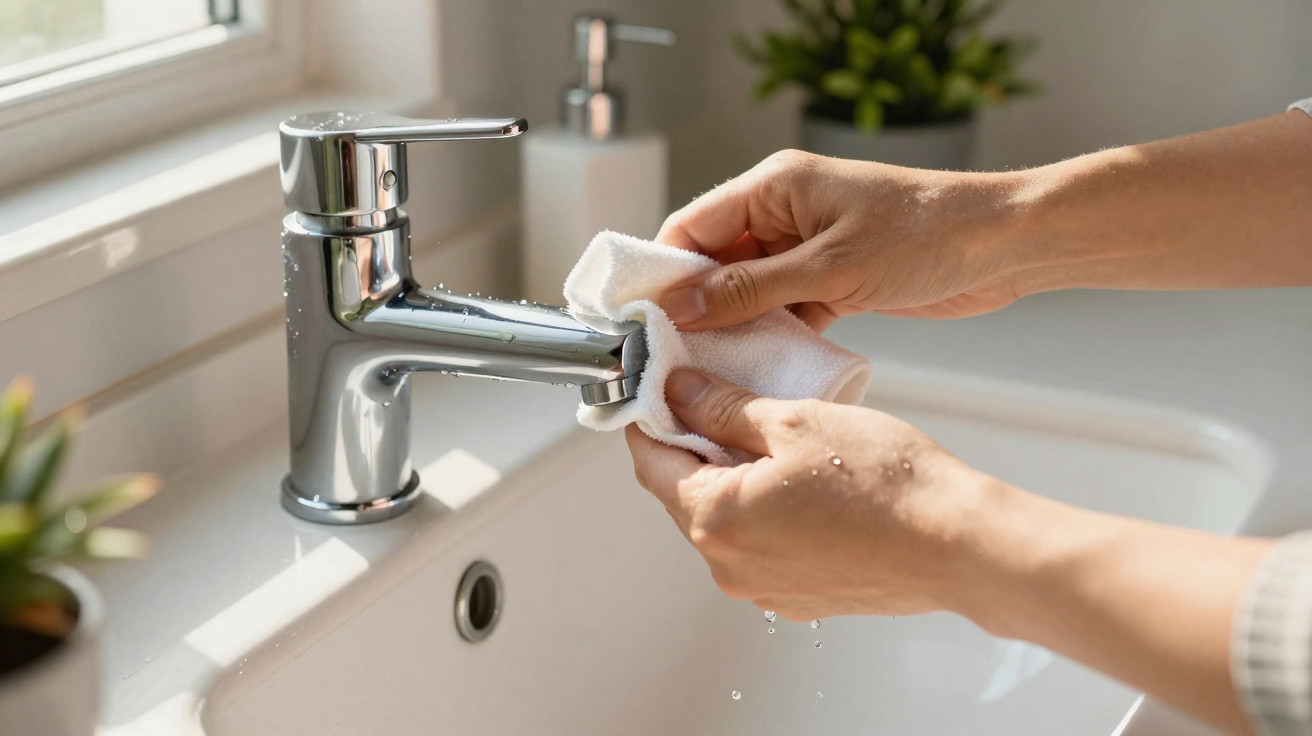
A tap can spoil the look of an otherwise spotless bathroom. The basin may be clean and the towels neatly folded, yet the white film around the spout and the faint dull marks catch the light straight away. We all know the feeling: someone arrives unexpectedly, and only then do we notice the dried splashes on the tapware. The good news is that restoring an almost-new shine requires neither an expensive wonder product nor an endless cleaning session.
One morning, when I turned on the kitchen tap, the light exposed a scatter of dried droplets across the chrome. It was hardly disastrous, but enough to create that irritating sense that the room was “not quite clean”, even once everything had been put away. I reached for a microfibre cloth, diluted white vinegar and set a one-minute timer on my phone. The outcome was not dramatic in the advertising sense; it was simply clean, shiny and reassuring. The tap looked as though it belonged in the room again. Surprisingly, that makes a real difference to the atmosphere.
The 60-second step that revives a dull tap
The answer is often an overlooked detail: most visible marks are not ingrained dirt, but limescale left behind when water dries. On chrome, black or stainless-steel tapware, this residue creates a subtle film that dulls reflections and quickly makes the surface look neglected. Run your hand over the spout and you can feel the slightly rough, almost powdery finish. This is exactly when the quick method works best: deal with it before the layers build up over several weeks. One minute is enough to remove this everyday haze.
The technique could not be simpler: lightly dampen a microfibre cloth with equal parts warm water and white vinegar, then wipe the tap from top to bottom. Hold the cloth against the whitened areas for a few seconds, then rinse using a second damp cloth and dry immediately. At a friend’s house, the bathroom mixer tap looked almost grey around its base; after two gentle passes, the chrome regained its reflection. There is no need to scrub as though you were scouring a saucepan. A gentle approach is often more effective than persistence.
Why does it work so quickly? Vinegar helps dissolve light mineral deposits, while a clean, soft microfibre cloth lifts marks without scratching the finish. Final drying does half the job, removing the last droplets that would otherwise leave limescale behind a few hours later. The real habit is not cleaning harder, but stopping water from finishing the job for us. On regularly maintained tapware, this small routine delivers a visible result in 60 seconds, stopwatch included.
The easiest routine: clean, rinse and dry
To make the task quick, keep a microfibre cloth reserved for taps near the sink or beneath the unit. Start with the lever, spout, basin join and the small section behind the tap, where splashes gather without really being noticed. Spray only a tiny amount of the vinegar solution onto the cloth rather than directly onto the tapware, particularly around seals and delicate surfaces. Next, wipe with a slightly damp cloth, then dry with a clean, dry side of the microfibre. This final action creates the instant shine you notice as soon as you enter the room.
The most common mistake is reaching for the green side of a sponge or a highly abrasive product because a mark will not shift. It is understandable: when faced with limescale, we want it gone in one go. However, these methods can cause tiny scratches that catch even more deposits and gradually dull the metal. Let us be honest: nobody truly does this every day. Twice weekly, or simply after a major cooking session and the weekend showers, is already enough to prevent the “tired tap” effect. Thirty regular seconds are better than one frustrating deep scrub every month.
Some materials still need extra care: vinegar is suitable for standard chrome and stainless steel, but it may damage certain matt, gold or brass finishes, as well as a natural-stone basin positioned beneath it. If in doubt, check the manufacturer’s instructions and use mild soapy water on sensitive coatings.
“A shiny tap does not rely on an aggressive product: above all, it relies on limescale not having time to settle.”
The right habits fit into this short list:
- use a clean microfibre cloth that is never rough or laden with dust;
- test the mixture in an inconspicuous area if the finish is unusual;
- dry systematically after rinsing;
- avoid bleach, scouring powders and metal scrapers.
The small detail that makes a room feel better maintained
A clean tap does more than improve the appearance of a bathroom or kitchen in a photograph: it changes the quiet sense of comfort you feel at home. Light reflects more clearly, the basin seems less cluttered, and it can almost feel as though you have done more cleaning than you actually have. This 60-second method is liberating in another way: it removes one small job from the mental list without requiring gloves, a bucket or any particular effort. One cloth, a little method, and the difference is obvious. All that remains is choosing a time that suits you: after brushing your teeth, before leaving the kitchen or just before guests arrive.
| Key point | Detail | Added value for the reader |
|---|---|---|
| Quick action | Microfibre cloth, diluted white vinegar, rinsing and drying | Visibly shinier tapware in one minute |
| Decisive step | Dry after every clean | Limits the rapid return of limescale marks |
| Useful precaution | Avoid abrasives and check delicate finishes | Preserves the tap’s shine without scratching it |



Comments
No comments yet. Be the first to comment!
Leave a Comment