
On a wet October morning in a small village, the season’s first real chill had arrived at last. With a flicker of anticipation, people opened their sheds and pictured the comforting crackle of an evening fire. Then came the let-down: logs bloated with damp, bark wearing a fine grey mould, and a sour odour hanging in the air. Firewood stacked months before would not light; it hissed rather than burned.
Neighbours blamed the weather. Others complained about “bad wood.” But when specialists were brought in, their assessment was harsh: poor storage, elementary guidance disregarded, and householders branded “lazy” and “ignorant.”
In truth, nobody had properly explained those rules to them.
When months of preparation become a stack of unusable logs
Most of us know that confident moment of striking a match, only for the fireplace to stubbornly refuse to cooperate. A flame catches the log, splutters briefly and goes out, leaving smoke and irritation behind. The people who carefully piled their timber in spring are now watching it smoulder, feeling both annoyed and a little responsible.
Some ring the local chimney sweep or an energy adviser in search of a miracle fix. What they receive instead is a telling-off: moisture content, ventilation, stack orientation. These terms are fired at people who supposedly “didn’t do things right.” That judgement can bite harder than the cold itself.
Consider Marie and Julien, who left the city for a rural home last year. In April, they bought three cubic metres of “seasoned oak”, stacked it tidily against a garden wall, carefully covered it with a plastic tarpaulin and got on with life. By November, however, not one log would burn as it should.
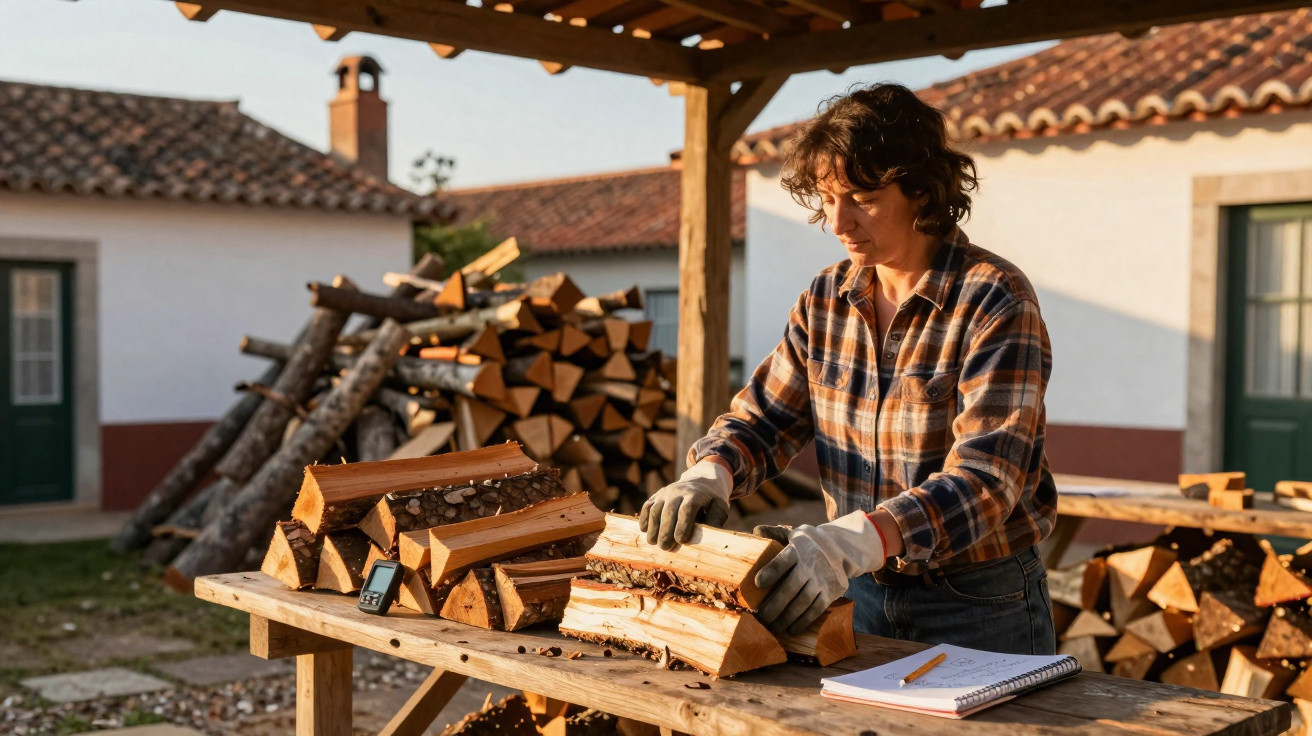
Smoke filled their chimney, while their freshly painted sitting room took on the smell of a rain-soaked campsite. A neighbour tested the wood with a moisture meter and found a water content above 30%. It was no use for efficient heating. The specialist they contacted merely shrugged, saying they had “stored it like amateurs.” Nobody had told them that tightly wrapping a stack in a tarpaulin is among the quickest ways to rot a year’s supply of logs.
These everyday household mishaps are rooted in one straightforward technical fact: firewood remains a living material even after it is “dead”. It takes in humidity from the surrounding air and gradually gives it back out. Place it beside the wrong wall, face it in the wrong direction or leave it directly on the ground, and it acts like a sponge. Rather than drying over the long summer months, it ferments and deteriorates.
Specialists often insist that “everyone knows” wood requires airflow, an elevated base and a south-facing wall. Yet not everyone was raised with a wood burner or had a grandfather show them how to build a proper stack. Condemning people for not knowing overlooks an essential issue: knowledge has to be passed on.
Storing firewood so it burns properly in winter
A successful woodpile begins well before winter, and it involves more than simply “buy dry wood”. The first step is remarkably straightforward: allow the logs space to breathe. Stack them at least 10–15 cm above the ground on pallets or wooden battens, preventing them from drawing up moisture from the soil.
Orientation matters next. A wall exposed to sun and wind dries firewood like a natural hairdryer. A north-facing spot that is shaded and confined, on the other hand, slowly starves the stack of air. Leave spaces between rows rather than cramming everything into one solid mass, and protect the top while keeping both sides completely open. A roof is best, although a gently sloping corrugated metal sheet works far better than an airless tarpaulin.
The same approach appears in most unsuccessful woodpiles. Logs are placed straight onto soil before being wrapped entirely in plastic “for protection”. Airflow is eliminated, condensation remains inside and fungi thrive. Several months later, the exterior may look acceptable, while the inside of the logs is still saturated.
Frankly, few people spend Sunday with a moisture meter, inspecting every log as though it were a laboratory specimen. They depend on what they have observed, what the supplier muttered when dropping off the load, or quick advice found on social media. When experts then roll their eyes and mention “laziness”, they overlook the fact that many households are trying their best with incomplete and sometimes conflicting guidance.
Some professionals are beginning to challenge this blame-focused attitude. Rather than fault, they would rather discuss education. One seasoned stove installer told me:
“I keep seeing perfectly good wood ruined by storage, then people feel stupid on top of being cold. If we explained storage as clearly as we explain how to pay the invoice, we’d solve half the problem.”
To avoid becoming another disappointed firewood owner, follow a few useful rules:
- Elevate logs on pallets or blocks; never place them directly on soil.
- Keep the sides exposed to the air and cover the top only.
- Position the stack towards sun and wind whenever possible.
- If the wood is not certified as very dry, order it at least 6–12 months in advance.
- Split thick logs, as smaller pieces dry more quickly and evenly.
Beyond “laziness”: sharing knowledge and avoiding another wasted winter
Failed fires and mouldy logs point to a wider issue: how practical skills are handed down. For older generations, dealing with wood was often a childhood task. They learnt almost through osmosis where it should be stored and how to handle a log to judge whether it would burn. Younger homeowners frequently have to work it all out alone, using YouTube as their only teacher while hurried delivery drivers tip the load and depart.
Calling them “ignorant” fails to acknowledge the broader picture: lifestyles are changing, energy costs are rising, and people are returning to wood heating without receiving the cultural user manual. This gap leads to money and energy being wasted, increased smoke, and a great deal of shame that people do not always voice.
| Key point | Detail | Value for the reader |
|---|---|---|
| Ventilation of the stack | Wood raised off the ground, sides open, top protected only | Logs stay dry, burn hotter, and last longer through winter |
| Timing of purchase | Order wood months in advance if not already fully seasoned | Reduces moisture problems and dependence on last-minute, poor-quality loads |
| Ending the blame game | From accusing “lazy users” to explaining clear, simple methods | Less guilt, more autonomy, and fewer costly storage mistakes |
FAQ:
Question 1 Why does my wood hiss and smoke rather than burn properly?
Hissing and dense smoke generally indicate that the wood remains wet inside. Moisture held in the log turns into steam, cooling the fire and producing extra smoke. Even wood that appears dry on its surface may be too damp if it has been poorly stored or stacked directly on the ground.Question 2 Is it really a bad idea to cover the pile with a tarpaulin?
A full, tight tarpaulin wrapped around the entire pile causes problems because it traps humidity. A tarpaulin can be suitable if it covers only the top and leaves the sides open. The aim is to shield the wood from direct rain while allowing air and wind to move through the stack.Question 3 How long must wood dry before it is ready to burn?
Based on the species and the way it has been split, wood usually requires between 12 and 24 months to dry. Softwoods dry sooner, whereas thick hardwood rounds take much longer. If a seller offers “freshly cut” wood in autumn, it’s for next year, not for this winter.Question 4 Can I still use wood that became mouldy in storage?
Mild surface mould can disappear when the wood completes its drying in improved conditions, but heavily mouldy logs often signal prolonged dampness. Burning very mouldy wood is not ideal for indoor air. Many people choose to reserve it for outdoor fires or throw away the worst pieces.Question 5 Is a moisture meter genuinely necessary, or is it excessive?
A small moisture meter is useful but not essential. Tapping logs together and listening for a clear “clack”, looking for cracks at the ends, and judging how light the log feels can all provide clues. A meter simply verifies that the wood is around the 15–20% range preferred by most stoves.






Comments
No comments yet. Be the first to comment!
Leave a Comment