
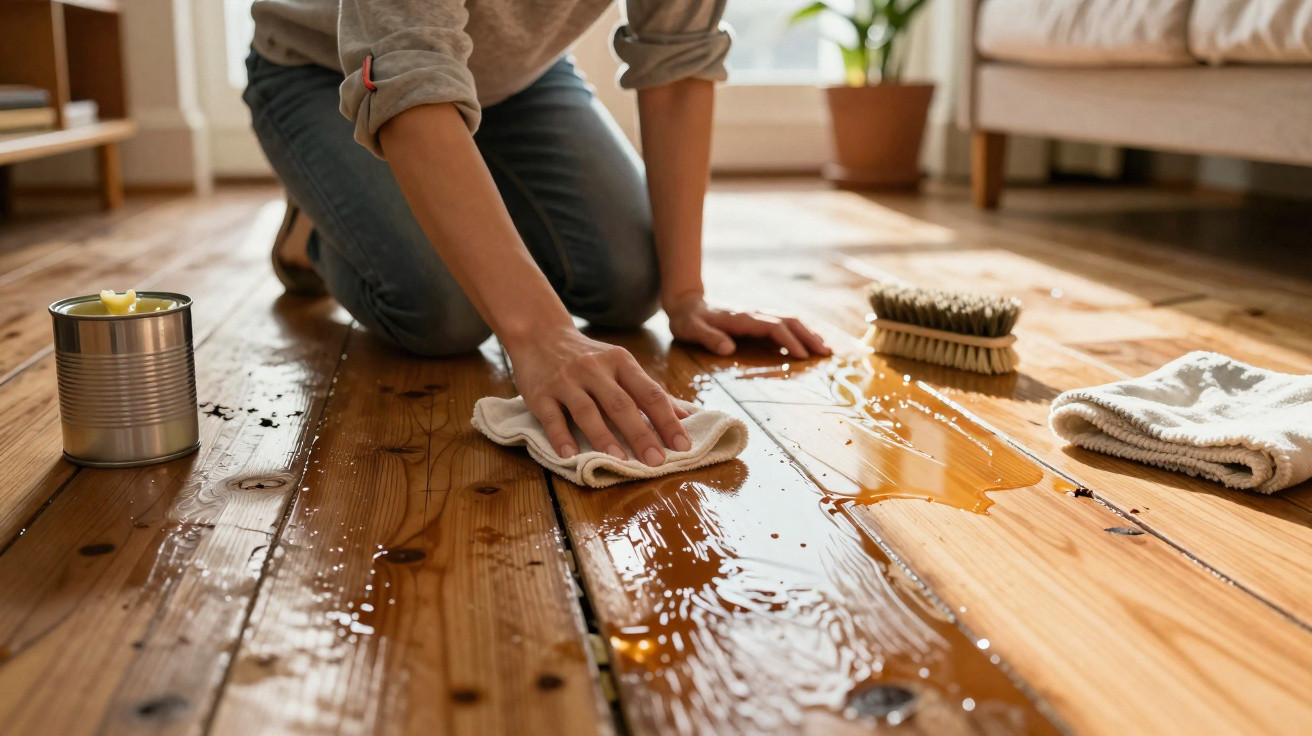
Sunlight can hit a pale scratch as though it were a spotlight. Then there is the cost of a full refinish, enough to make you shut the browser tab quickly. We all know that small pang when a much-loved wooden floor appears worn rather than cherished. Yet the answer may be found in one of the most traditional forms of home care: a method our grandparents used, seldom discussed today and, oddly, still effective.
It is morning: coffee in one hand, socked feet gliding across oak flooring that has had easier years. The boards record chairs pushed back, a dog’s excited scramble and winter grit carried in on boots. Those scratches are not characterful; they simply look untidy. In soft morning light, they can seem louder than everything else in the room.
That is when I think of an upstairs neighbour from years ago-the kind of person who repaired anything with a cloth and patience. He showed me an old-looking tin, a solid brush and one uncomplicated technique. By the end of the afternoon, the room was transformed. You noticed it beneath your feet and from the doorway. It begins with wax.
The glow that conceals the scars
Today’s floors often rely on hard coatings and instant gloss. They are quick and bright, but can feel a little… empty. The traditional approach works differently. Paste wax does not shout; it settles in. It works into micro-scratches and diffuses the light, leaving the eye to notice a mellow lustre rather than every scuff mark.
My neighbour-Mr. Harris, a brownstone whisperer-turned the job into a calm ritual. He opened the windows, tuned in a crackling radio station and ran a soft pad along the grain until the boards developed a muted, rich shimmer. After one Saturday, his sitting room could have been a frame from an old film. Chairs moved without noise. Bare feet found quietness. He never boasted; he merely nodded towards the floor, as though it had recalled what it was meant to do.
Wax endured for a century for good reason. It fills minute hollows, softens the sharp edges around damage and bends light more kindly. It creates a fine sacrificial coating too, one that can be renewed without sanding. It is particularly suited to floors finished with penetrating oil, shellac or older varnish. On durable polyurethane, it may still disguise minor scratches if applied sparingly, although it brings an ongoing maintenance commitment. This is not magic; it is a matter of optics, feel and timing.
The vintage paste wax method, step by step
Collect the following: a gentle cleaner suitable for wood, soft cloths, a white pad or an old cotton T-shirt, 0000 steel wool (extra fine), and good-quality paste wax containing carnauba or beeswax. You may also use a walnut to disguise pale scratches, a buffing pad for a drill or, for larger rooms, a compact floor buffer.
Clean the floor first, taking care not to rub grit into its finish. Where a scratch appears pale against a dark floor, rub it with a shelled walnut; its natural oils can often soften the line. Next, try the wax in an unobtrusive corner. Treat small areas and work with the grain, pressing a fingertip-sized amount into the surface. For older finishes, gently pass the 0000 steel wool along the grain before waxing to smooth the scratch edges, then remove any dust. Allow the wax to haze for a few minutes, then buff until the cloth skates across the surface. At first the difference is understated, then it becomes striking.
Two light applications are better than one thick layer. Let’s be honest: nobody really does that every day. Make the effort worthwhile when you do. Avoid silicone “shine” sprays, as their residue makes later repairs more difficult. Wax does not adhere in the same way to factory-finished floors, so apply it only where needed-blend, buff and carry on. Pet claws leave long signatures, so a quick buffing route around doorways is a sensible habit. If you are unsure, begin in a cupboard rather than the middle of the room.
Professionals use one straightforward check: if water continues to bead for over a minute, the wax is being applied to a sealed surface, so use very little-or limit the treatment to spot blending. On its first pass, the buffer gives off a hum like a train in the distance.
“Wax doesn’t fix the wood. It fixes the way the light lands on the wood,” said a restorer I trust. “That’s often all a room needs.”
- Always test a small area first, both in low light and in sunlight.
- Work in small sections and apply thin coats.
- Buff more thoroughly than you think necessary-the aim is a restrained shine.
- Keep wax away from rugs until it has cured, preventing residue from transferring.
What happens when scratches stop demanding attention
A room feels altered when its surfaces no longer compete for your attention. A waxed floor glows instead of glaring. It grounds the furniture and takes the edge off strong daylight. There is a quietness in the way a room feels when small imperfections merge into one shared history. The space appears lived-in rather than uncared for.
That is why this old-fashioned technique remains useful, whether you live in a compact flat or a large family home. Sanding is not always possible, or desirable. A small tin and an hour in the late afternoon will often return more than they cost. It is forgiving, too: if you overlook an area, you simply return and buff it.
There is space to make this part of your own routine. For most sitting rooms, once each season will do. Dining chairs leave half-moons that benefit from an occasional touch-up. When life becomes hectic, the wax takes the first impact instead of the wood. If someone asks why the floor looks new, you will have a story rather than a receipt.
| Key point | Detail | Benefit for the reader |
|---|---|---|
| - | Paste wax fills micro-scratches and softens light | Makes floors look newly polished without sanding |
| - | Use 0000 steel wool lightly on older finishes | Levels scratch edges for a smoother final sheen |
| - | Thin coats, strong buffing, targeted spots | Faster, cleaner, and reversible when needed |
FAQ:
- Will paste wax damage a polyurethane floor? It will not cause damage, but it may complicate future recoating and can feel slippery. Apply it sparingly and only to scratches, buff thoroughly, and understand that you are choosing a maintenance route that favours waxing rather than later refinishing without extensive preparation.
- Can a walnut really hide a scratch? Yes, for light surface scratches that appear pale. The oils colour exposed fibres and help blend the line. It will not repair gouges, but as a quick and harmless step before waxing, it often proves useful.
- How often should I wax? Sitting rooms: once or twice yearly. Busy hallways: when needed as the sheen fades. Damp spaces such as kitchens require caution; spot-waxing is safer than full coats near sinks and cookers.
- Do I need a machine to buff? No. A thick cotton cloth is enough for hand-buffing. A drill-mounted pad or small buffer simply makes the job quicker in larger rooms. The result depends more on pressure and patience than equipment.
- What if the scratch is deep? First colour it using a blending stick or stain marker, soften the edges with gentle with the grain strokes of 0000 wool on suitable finishes, and then wax and buff. Where you can feel the groove with a fingernail, a localised wood filler and spot repair may be the wiser option.




Comments
No comments yet. Be the first to comment!
Leave a Comment