
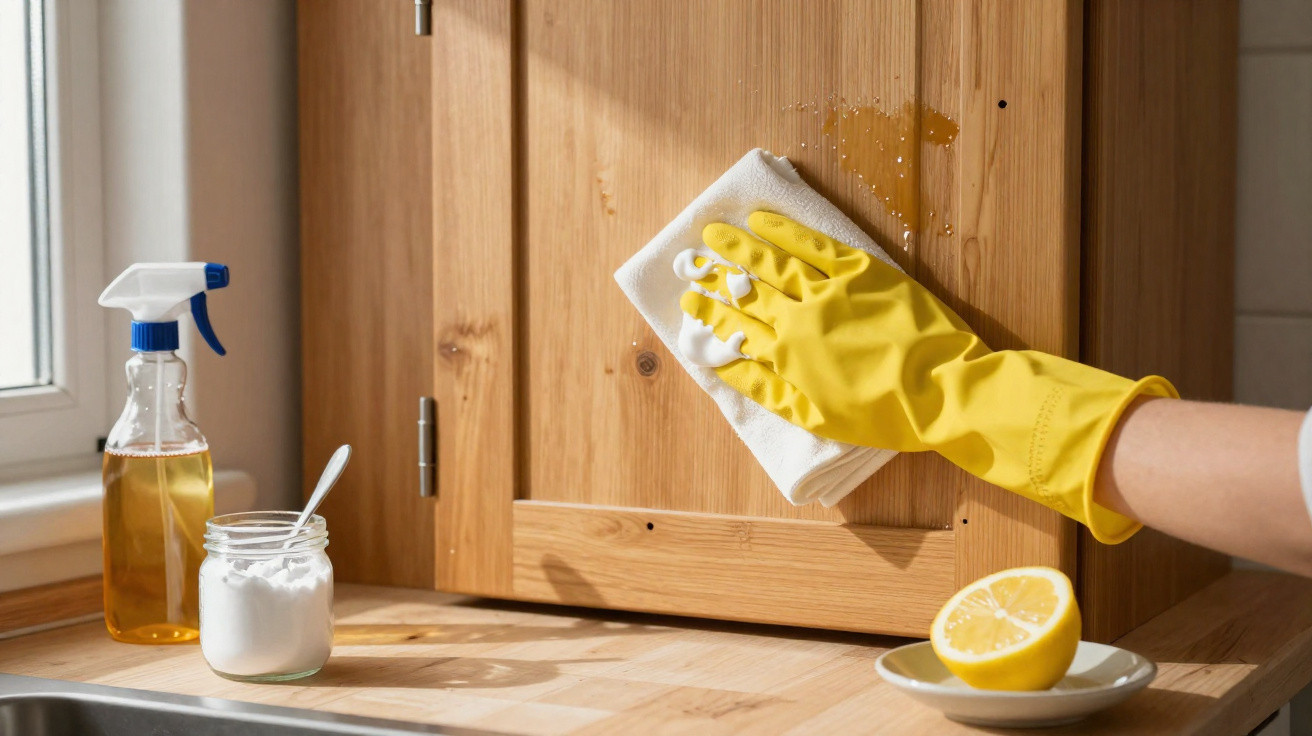
A greasy film on your kitchen cabinets, and you do not know where it has come from?
It builds up gradually before, seemingly all at once, becoming incredibly difficult to remove.
Cooking steam, airborne droplets of fat and dust combine to leave cupboard doors covered in a sticky coating that ordinary wiping rarely removes. Although many people immediately turn to powerful cleaning sprays, an inexpensive household essential can clean these cabinets equally effectively while using fewer harsh ingredients.
Why kitchen cabinets become greasy
Whenever you fry, sauté or simmer food, tiny fat particles are released into the air. Rather than simply disappearing, they land on surrounding surfaces - particularly the cupboard doors and handles nearest the hob.
After settling, these particles bind to dust and other cooking residues. Across weeks and months, this combination creates the familiar dull, faintly sticky layer that leaves cabinets looking worn and feeling unclean, even if you keep up with the washing-up.
Extractor fans and pan lids can limit the issue, but they cannot eliminate it completely. As a result, even people with tidy kitchens will eventually spot a persistent sheen on cupboard fronts that standard washing-up liquid finds hard to lift.
Grease on kitchen cabinets is less about big splashes and more about thousands of invisible particles slowly building up into a sticky film.
The low-cost grease remover: baking soda
The German media article centres on an affordable solution that you are likely to have at home already: baking soda, commonly sold as bicarbonate of soda. As this powder is both mildly abrasive and alkaline, it is particularly useful for removing fatty deposits.
How baking soda removes cabinet grime
Fat-based grease does not combine readily with water alone. Baking soda alters the surface pH and helps break apart fatty molecules, allowing them to loosen and wash away more easily.
Its fine particles also offer a mild scrubbing action. However, unlike aggressive scouring powders, it is gentle enough for most painted and laminated cupboard fronts when applied properly.
Baking soda acts like a gentle exfoliator for your kitchen: rough enough to shift grease, soft enough for everyday surfaces.
Cleaning kitchen cabinets with baking soda: step by step
There is no need for elaborate mixtures or a cupboard full of products. A basic paste is sufficient:
- Combine baking soda and warm water in a small bowl until it becomes a thick paste.
- Dip a soft sponge or microfibre cloth into the mixture.
- Work it over greasy patches in circular movements, without applying excessive pressure.
- On particularly stubborn areas, leave the paste in place for one or two minutes.
- Remove it using a clean damp cloth.
- Towel-dry the surface to prevent water marks.
For cupboard doors with heavy soiling, adding one drop of washing-up liquid to the paste increases its grease-cutting power. The soap’s surfactants, combined with the alkalinity of baking soda, help tackle older and stickier residue that has built up unnoticed for months.
Other household ingredients for cleaning cabinets
Baking soda is not the only kitchen cupboard product that can help with cleaning. The original article also identified vinegar and lemon as practical alternatives, although each has distinct benefits and restrictions.
Vinegar solution for grease and germs
White vinegar diluted with warm water can remove light grease and offers an antibacterial effect. It is commonly kept in a spray bottle for fast everyday wipe-downs.
There is an important limitation, however: vinegar’s acidity may harm particular finishes. Strong vinegar mixtures can gradually dull or damage solid wood with fragile varnish, natural stone and certain high-gloss coatings.
Lemon juice for light residue and a fresh smell
When combined with water, lemon juice also helps dissolve grease because of its naturally occurring acids. It gives the kitchen a clean, fresh fragrance and works well for regular cleaning while the greasy coating remains fairly light.
Like vinegar, lemon should be diluted and first tested in an inconspicuous spot, particularly on genuine wood and painted finishes. Some surfaces can be marked if acidic liquids are allowed to remain on them for too long.
| Home remedy | Best for | Use with caution on |
|---|---|---|
| Baking soda paste | Stubborn greasy film, older build-up | Very glossy lacquer, high-shine dark surfaces |
| Vinegar solution | Light grease, routine wiping, odour control | Natural stone, delicate varnish, some metals |
| Lemon-water mix | Light film, freshening smell | Unsealed wood, sensitive paint |
How to keep cabinets cleaner for longer
After cupboard doors are finally clean, the priority becomes delaying the return of the sticky coating. Consistent, simple habits make more difference than infrequent intensive cleans.
Easy prevention habits during cooking
Minor adjustments to your cooking routine reduce the amount of grease released into the air:
- Put lids on pans when frying or simmering.
- Turn on the extractor fan whenever you cook and keep it running for several minutes once you have finished.
- Use the back rings for frying pans, where splashes are less likely to reach cupboard doors.
- Clean up visible splashes straight away with a damp cloth, before they dry.
Wiping cupboard fronts once a week with a lightly dampened microfibre cloth removes fresh dust and light oils before they have time to set.
Using a fine oil layer as protection
The German guide also suggests a somewhat unexpected method: spreading an extremely thin layer of cooking oil over clean cupboard doors. The principle is straightforward: fresh grease does not adhere as easily to a surface that is already lightly oiled, while dust can be wiped away more readily.
Should you use this method, restraint is essential. Add a single drop of neutral oil to a soft cloth, distribute it thoroughly, then buff the cupboard front until it no longer feels slippery. The goal is an almost imperceptible layer rather than a glossy coating.
A microscopic layer of oil acts like a non-stick jacket for cabinet doors, making the next clean noticeably easier.
When household remedies may not be sufficient
Some kitchens have more demanding conditions. Frequent indoor smoking, years of deep-frying or poor ventilation may result in grime layers that are much heavier than an ordinary greasy film. Baking soda and vinegar can still be useful in these situations, but several applications may be necessary alongside a specialist degreaser made for kitchen cleaning.
The age of the cabinets is relevant too. Grease can soak into older units, particularly where varnish is chipped or foil-fronted surfaces are peeling. Vigorous scrubbing can cause further harm, so a mild option such as baking soda paste is safer than abrasive scouring pads or powerful solvent-based products.
Useful chemistry from your cupboard
Strong chemical sprays can make many people uncomfortable, yet baking soda, vinegar and lemon juice are chemicals too, each with particular properties. Baking soda is alkaline, making it effective on acidic dirt and fats. Vinegar and lemon juice are acidic, meaning they can dissolve mineral deposits and certain grime types but may also corrode some materials.
Using them together in the same cleaning stage neutralises them both and weakens their cleaning action. It is therefore generally more effective to select one method for each task instead of combining everything into one supposedly magical mixture.
Practical situations: choosing the method for the mess
In a rented flat with laminate cupboards and a light sticky coating around the hob, using a baking soda paste once and then wiping weekly with a damp microfibre cloth can keep surfaces manageable with very little effort.
For a family kitchen where pasta and sauces are prepared often but frying is uncommon, a gentle vinegar or lemon solution applied to cool cupboard doors after cooking may be sufficient. Cleaning more deeply with baking soda two or three times a year can then address any persistent areas.
Homes with young children who constantly touch every cupboard door may place greater importance on hygiene. For these households, alternating baking soda for grease with a mild, food-safe disinfectant for handles provides both visibly cleaner surfaces and greater confidence regarding germs.




Comments
No comments yet. Be the first to comment!
Leave a Comment