
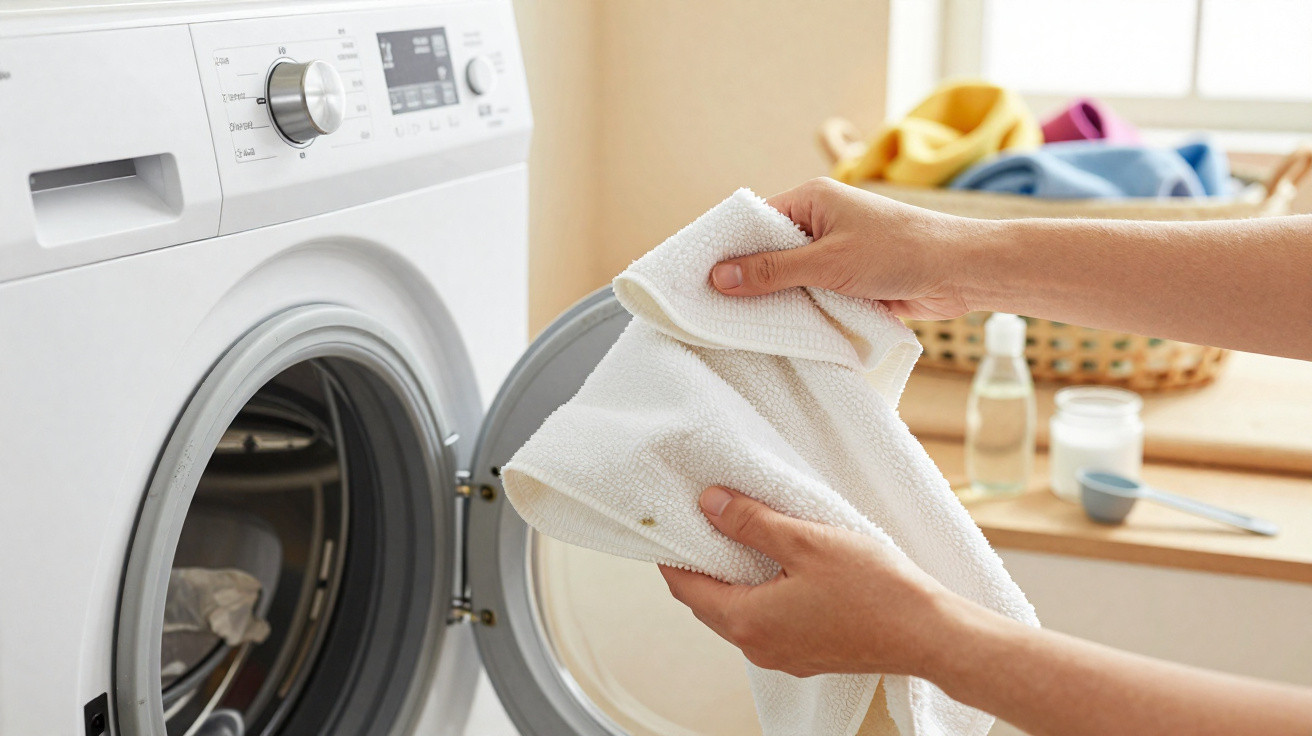
The washing machine chimed: that upbeat electronic sound designed to announce, “Job done.”
You opened the door, lifted out the washing and got the burst of “fresh” fragrance that brands are so keen to promote. Yet your favourite T-shirt felt… stiff. The towels nearly crackled between your hands, as though they had dried on a radiator in a student flat rather than in a modern machine packed with settings.
You ran a sleeve through your fingers and heard the slight rasp. It carried the scent of a spring meadow, yet it handled like cardboard. Rather than draping, the material kept its form. There was something unsettling about that contrast, like a smile that never reaches the eyes.
You might blame the weather, the washing machine, the detergent or the way the clothes were hung up. Even so, as you folded each unyielding towel, a small thought stayed with you: perhaps clean is not as straightforward as it smells.
The “clean” laundry that does not feel clean at all
There is an odd point at which your hands and nose tell different stories. Your washing smells as if it belongs in a TV advert, but your jeans fold rather than fall and your pillowcases nearly creak. Many people simply overlook that moment, telling themselves that softness is an indulgence rather than a basic indicator of a proper wash.
What happens on the airer or inside the tumble dryer is not merely a touch of “crunchiness”. Rigid material is a small warning signal from your laundry. It suggests that something remains on the fibres. Not dirt in the usual sense, but something less visible and much more widespread.
A London laundry service monitored complaints from thousands of customers over one year. Fragrance was seldom the problem; most customers said their washing “smelled nice”. The main unspoken annoyance was its feel: scratchy towels, stiff shirts and bedding that was not inviting. On closer inspection, the same trend appeared repeatedly - strong fragrance, insufficient rinsing and a gradual accumulation of product coating every fibre.
When clothes smell like a perfume counter but feel like cardboard, hard water is probably not the only issue. What you are detecting is residue: detergent that did not rinse away, fabric softener sticking on like cling film, and tiny minerals in the water binding to the tacky coating. It is a mixture that appears clean, smells clean and misleads most of us every day.
The reasoning is harshly simple. We want the comforting burst of “fresh laundry” scent, so we add a little more liquid, throw in another pod or select the strongest fabric softener. The more product we use, the more the machine must remove. Modern short programmes, overloaded drums and tired filters cannot always manage it. The washing emerges smelling fragrant, certainly, but beneath that perfume the fibres are struggling to breathe.
Residue in your washing machine: the hidden cause of stiff laundry
In most homes, the main problem is not detergent itself but the layer it leaves behind. High-efficiency washing machines use less water, while short eco programmes reduce energy consumption. These are benefits for both bills and the environment, but they also provide less rinsing power. As a result, the products you add can remain behind as an invisible film on fabric.
Then liquid fabric softener joins the equation. Those smooth drops do not simply “relax” fibres out of kindness: they cover them in a fine, waxy coating intended to make everything feel softer. With time, especially on cotton and towels, that coating accumulates. Initially it can feel luxurious, but it eventually passes an unseen threshold and begins to harden as it dries.
The water adds another factor. In many parts of the UK, hard water contains calcium and magnesium. These minerals attach themselves to leftover detergent and softener, effectively fixing them to the fabric. The outcome is a stiff, dull, board-like texture even while the scent proclaims cleanliness. Residue can also trap minute traces of sweat and skin, meaning clothes may be less genuinely clean than they appear.
There is a further consequence in the background. A coated fibre cannot absorb water effectively. That is why towels stop soaking up moisture and instead move it around your skin. It is also why sportswear can begin to retain odours. Residue makes breathable textiles behave more like plastic. The machine continues its routine, you keep folding the same rigid laundry, and the pattern goes on unnoticed.
How to stop the residue cycle and restore genuine softness
One of the easiest and most useful resets begins by removing everything. Put a load of towels or everyday cotton items through a long, hot wash without detergent or fabric softener. In a hard-water area, add a cup of plain white vinegar directly to the drum. It will not leave everything smelling like a chippy; it can help loosen the sticky film.
Once the programme ends, check the fibres. They may not be fluffy straight away, but they will often lose that firm, almost greasy rigidity. That indicates the build-up has started to break down. For the next wash, reduce the detergent amount by a third, or use only one pod even where the pack recommends two. Modern machines and detergents are more powerful than the marketing might suggest. For lightly soiled everyday items, you may be surprised by how little you need.
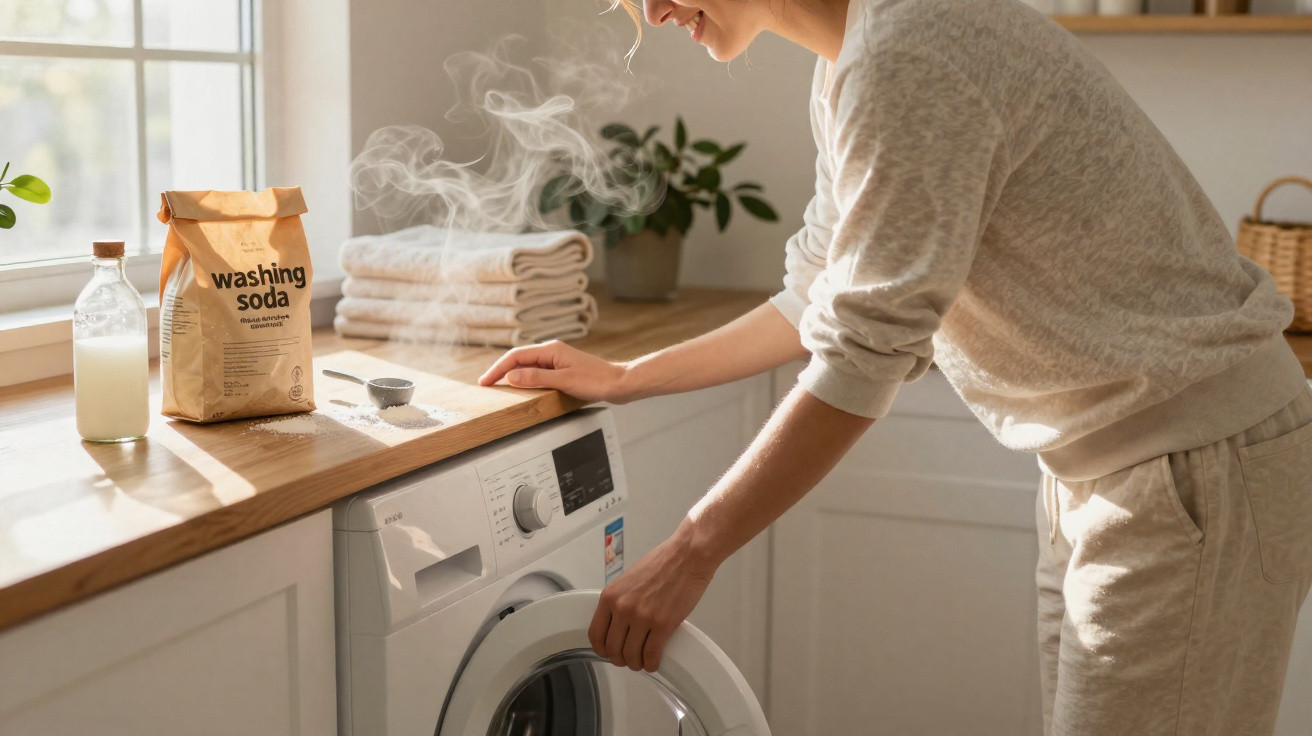
Help your washing machine as well. Each month, run an empty maintenance cycle on a hot setting with a cleaning product or a generous measure of laundry sanitiser. Clean the detergent drawer, wipe the rubber seal and clear the filter at the bottom. Let us be honest: nobody really does all that every day. Yet even doing it monthly can remove the sludge that otherwise keeps settling back onto the washing.
If this brings a slight twinge of guilt, you are not the only one. On a hectic Tuesday evening, an extra capful of detergent can feel like the quick route to “properly clean” clothes. On a chilly Sunday, a large splash of fabric softener can seem like a treat for towels. We associate heavy fragrance with care, effort and looking after our families. It is an emotional connection, not merely a practical one.
That is why cutting back can initially feel strange, almost as though you are taking a shortcut. Your laundry may have a less dramatic scent and feel less like an “Instagram laundry room”. Give it a week. See how your T-shirts begin to hang and move more naturally. Notice your towels slowly becoming absorbent again. Anyone with eczema or sensitive skin will tell you that fewer products often mean less itching, less redness and fewer unexplained rashes.
The greatest “mistake”, if that is the right word, is attempting to cure stiffness with more of the product responsible for it: extra softener, a hotter dryer or longer programmes. What fabric generally needs is not more pampering but a fresh start - an opportunity to breathe without a chemical coating sitting between every fibre and the air.
As one professional cleaner told me over a cup of tea,
“If your clothes smell of strong perfume, they’re not clean, they’re disguised. True clean doesn’t shout. It just feels right on your skin.”
That line stays with you, particularly once you begin to distinguish fragrance from freshness. True freshness is almost silent. It has very little smell, perhaps only a faint trace of cotton and air. The real difference is in the texture: a pillowcase gliding through your fingers or a hoodie folding without a crunch.
- Use less detergent than the label recommends for everyday loads.
- Do not use fabric softener on towels or sportswear.
- Occasionally run a hot “stripping” wash without products, adding vinegar in hard-water areas.
- Keep the washing machine clean: detergent drawer, seal, filter and a monthly maintenance programme.
- Select a longer rinse programme when your machine offers one, particularly for bulky loads.
When “fresh” no longer means what you thought it did
Once you have spotted the gap between smell and texture, it is difficult to ignore. You begin handling towels in hotels and guest bathrooms and quietly notice the rigidity behind the scent. You may realise that your oldest T-shirt, washed hundreds of times using modest amounts of product, often feels softer than a new one laden with finishing chemicals and shop fragrance.
On a bus or train, you may sometimes catch the intense perfume of laundry coming from someone’s jacket. It smells “nice”, perhaps, but it also hints at build-up, at modern washing machines being expected to do too much with too little water, and at our cultural attachment to anything that shouts “fresh” from the other side of the room. We have created an entire idea of cleanliness that belongs to the nose rather than the hands.
Once you start unpicking that idea, your laundry routine can subtly change. You may switch to fragrance-free detergent and discover you do not miss the artificial meadow scent. You may find yourself starting to pour fabric softener, then placing the bottle back on the shelf. You might even tell a friend about that small revelation: the moment you understood that stiff fabric was the first real sign that “clean” was not quite what you had been sold.
| Key point | Detail | Benefit for the reader |
|---|---|---|
| Laundry residue | Overdosing + short cycles = an invisible film on fibres | Understand why laundry feels stiff despite smelling pleasant |
| Fabric softener and hard water | The wax in fabric softener combines with minerals and hardens as it dries | Identify fabric softener’s role in reduced softness |
| “Reset” routine | Empty washes, vinegar, less product and a clean machine | Have a practical plan for restoring soft laundry |
FAQ:
- Why do my towels feel stiff even when I use fabric softener? Fabric softener leaves a waxy coating on fibres, which builds up over time, particularly in hard-water areas. As that coating dries, it hardens, so adding more can often make towels stiffer.
- Will using less detergent really get my clothes clean? Yes, for lightly soiled everyday washing. Modern detergents are concentrated and washing machines are efficient. Too much detergent leaves residue instead of improving cleaning performance.
- Does white vinegar damage washing machines or clothes? In moderate quantities - around one cup in the drum - white vinegar is generally safe for most fabrics and machines. It helps dissolve mineral and product build-up without stripping the fibres.
- Should I stop using fabric softener entirely? You do not need to stop altogether, but avoiding it for towels, sportswear and baby clothes often improves softness, absorbency and breathability. Many people keep it for selected items only.
- How often should I clean my washing machine to avoid residue? A monthly hot maintenance programme, together with a quick wipe of the seal and a filter check, is normally sufficient for most households. Heavy use or very hard water may require slightly more attention.




Comments
No comments yet. Be the first to comment!
Leave a Comment