
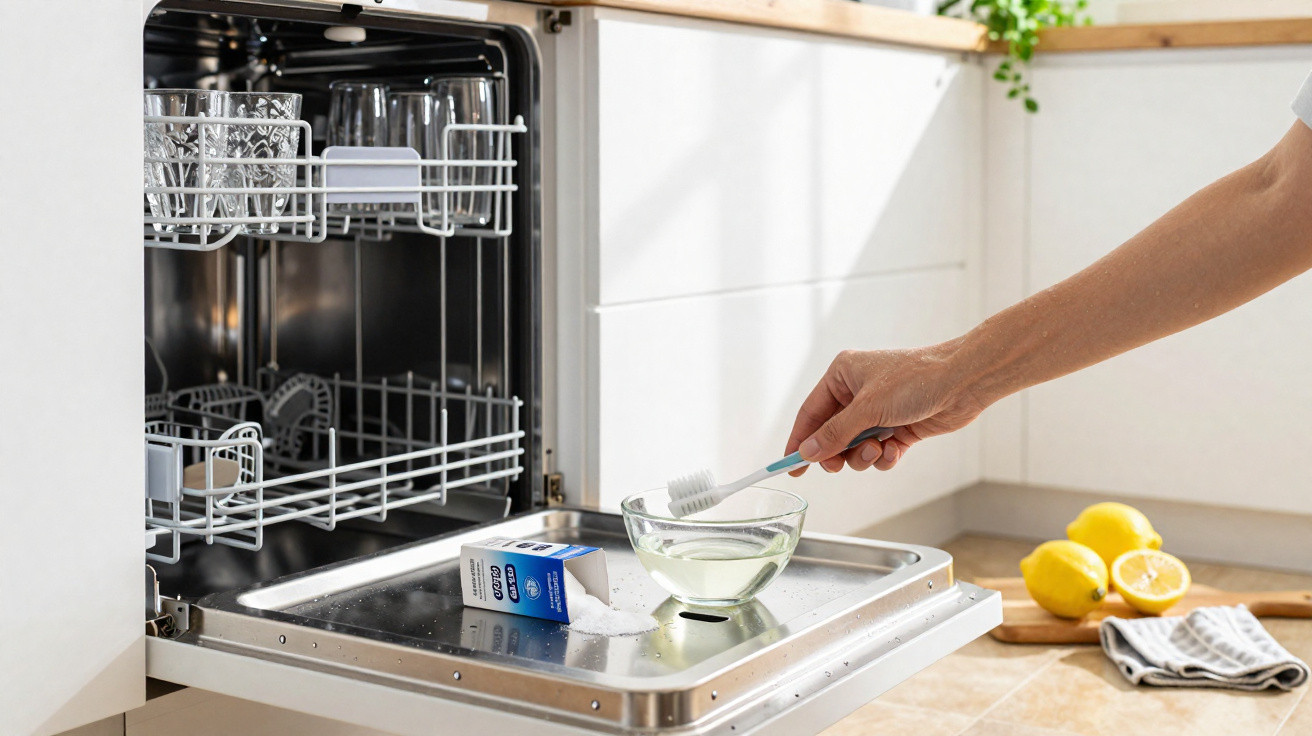
Few would expect the appliance designed to clean our dishes to become a breeding ground for germs itself. Studies indicate that virtually every household dishwasher harbours bacteria, fungi and persistent biofilms – particularly around rubber seals and in hidden corners. However, three targeted steps can substantially reduce the microbial load.
When the dishwasher becomes a home for germs
Extreme conditions prevail inside a dishwasher: very hot water, harsh detergents, fluctuating moisture levels, a high pH, salt and sharp temperature changes. While these conditions are too demanding for many microorganisms, a number of specialists thrive there surprisingly well.
Researchers have examined precisely these hardy survivors in greater detail. A 2018 study assessed 24 household appliances. Biofilms were found on the rubber seals in every one of them: slimy layers of bacteria, yeasts and fungi that form a protective coating across the surface.
Biofilms act like a fortress: their slimy layer allows germs to withstand heat, detergent and short wash cycles far more effectively.
Species from the genera Pseudomonas, Escherichia and Acinetobacter appeared especially often – groups that also include so-called opportunistic pathogens. Among fungi, yeasts from the genus Candida predominated and were detected in all of the appliances examined.
Black yeasts: inconspicuous but exceptionally resilient
The rubber seal around the door frame offers microbes an ideal surface: it is rough, continually damp and coated with traces of detergent and food. This is also where so-called black yeasts flourish. One well-known species is Exophiala dermatitidis, a fungus able to tolerate highly hot, salty and alkaline environments.
Measurements show that up to millions of colony-forming units of these fungi may be present on a single square centimetre of seal. The risk is generally low for healthy people. Those with severely weakened immune systems, however, should pay particular attention to hygiene inside the appliance and should not disregard very old, musty or visibly black deposits.
Why temperatures that are too low make the issue worse
To save energy, many households now use almost exclusively economy programmes at 30 to 45°C. Although this can reduce electricity bills, it is more likely to help biofilms survive because they are not exposed to sufficient heat.
At the same time, grease and food debris settle in filters, on the walls and inside the spray arms. These deposits provide nourishment for microbes, allowing the slimy layer to grow and become more established with every wash cycle.
- Low temperatures: only clean dishes to a limited extent and have little effect on biofilms.
- Long periods of dampness: encourage bacterial and fungal growth.
- Food residues: provide an ideal source of nutrients.
What happens when the hot door is opened
Many people open the dishwasher immediately after a cycle while it is still steaming. A burst of hot air and fine droplets then escapes from the interior. Researchers describe this as a potential “aerosol cloud”, which may carry spores and bacteria into the kitchen air.
A 2024 paper points to this spread of microorganisms, although the precise health benefit of stricter hygiene measures still requires further research. What is clear is that moist, warm surfaces – whether a sponge, washing-up brush or seal – contain considerably more germs than materials that are allowed to dry out properly between uses.
Leaving the door slightly ajar and allowing the dishwasher to dry thoroughly deprives many germs of the conditions they need to survive.
Three targeted measures for a noticeably cleaner dishwasher
1. Clean the seals thoroughly
The rubber door seal is the main hotspot. Anything caught in its gaps and folds tends to collect there. A straightforward but effective routine is as follows:
- Remove visible crumbs and deposits from the seal.
- Dip an old toothbrush into a mixture of hot water and clear household vinegar.
- Scrub the seal firmly with the brush, including its underside and the corners.
- Wipe it dry with a cloth so that no moisture remains in the folds.
Vinegar contains acetic acid, which attacks the alkaline film left by detergent residues and weakens fungal structures. Many people also use a little black soap or mild washing-up liquid to break down grease more effectively.
2. Clean the filter and base regularly
The base of the dishwasher, including the filter, is easily overlooked – yet it collects all the dirt from a wash cycle. Neglecting it gives microorganisms an abundant food supply.
- Remove the filter once a week and dispose of any larger debris.
- Rinse the filter thoroughly under water as hot as possible, using a soft brush if necessary.
- Remove streaks and deposits from the bottom of the tub.
- Finally, scatter a little bicarbonate of soda over the base – it absorbs odours and has a mild effect against fungal growth.
Anyone who regularly loads heavily soiled dishes should carry out these steps even more often. This also lowers the likelihood of unpleasant smells coming from the appliance.
3. Spray arms and an empty hot cycle
The spray arms ensure that water and detergent reach all areas. Their fine jets can, however, become blocked easily by limescale, grease or tiny food particles. This leaves dead zones inside the machine where germs can remain undisturbed.
A useful monthly routine:
- Remove the spray arms from the dishwasher according to the manufacturer’s instructions.
- Flush them through under running water.
- Carefully clear blocked jets with a toothpick or a thin wire.
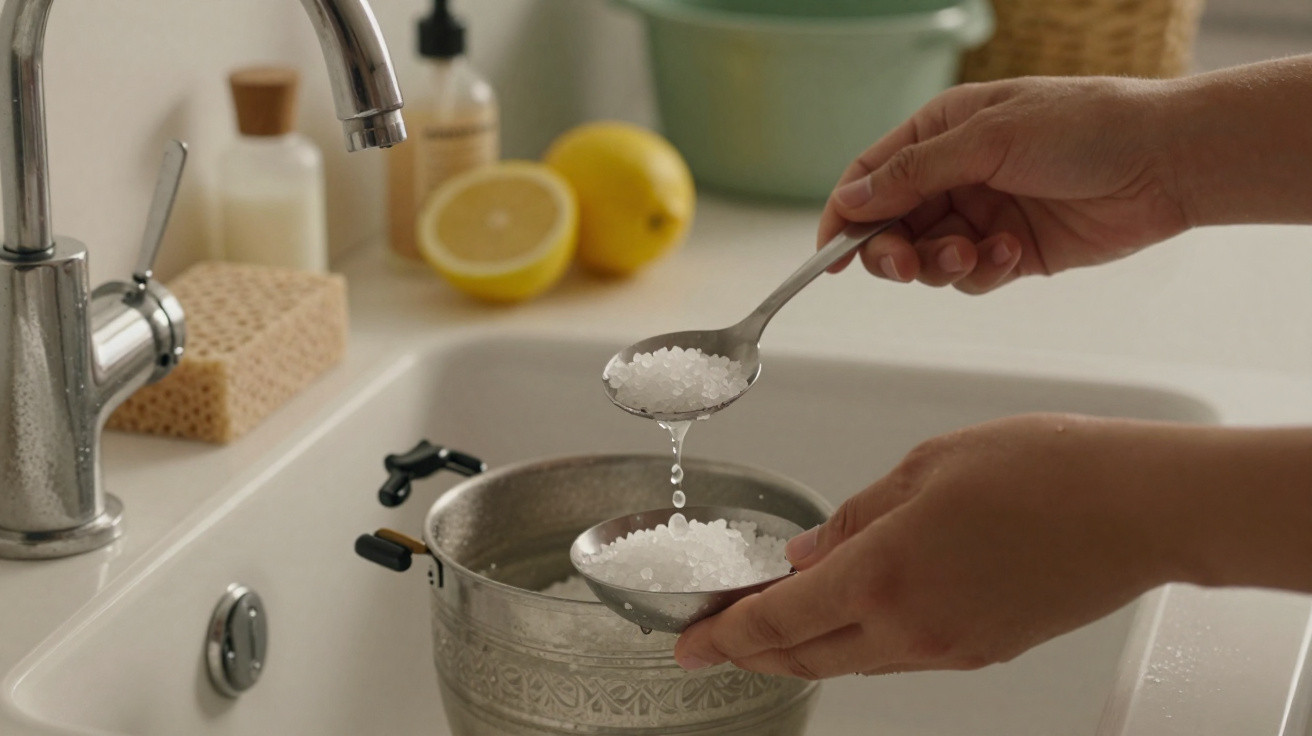
- Then run an empty cycle at no less than 60°C, ideally with around six tablespoons of citric acid inside the dishwasher to descale the pipes and metal components.
The high temperature destroys many heat-sensitive bacteria. Meanwhile, the citric acid dissolves limescale deposits where germs readily establish themselves.
How often should each task be done? A brief guide
| Measure | Recommended frequency |
|---|---|
| Clean the seal | every 1–2 weeks |
| Clean the filter and base | once a week; more often with heavy use |
| Clean the spray arms | once a month |
| Empty cycle at 60°C or above | once a month; more often if using many low-temperature cycles |
| Leave the door ajar after washing | after every wash cycle |
Who should pay particular attention to dishwasher hygiene?
For most healthy people, the germ film in a dishwasher is not a dramatic everyday danger. Even so, consistent maintenance is worthwhile where young children, older people or those with serious underlying health conditions live in the household.
People with allergies or chronic lung conditions may also be more sensitive to high levels of mould and spores indoors. Visible black deposits on seals or a musty smell from the appliance should be treated as a warning sign in these cases.
Anyone who treats their dishwasher like a household appliance “with a maintenance schedule” reduces germ levels – without any specialist chemicals.
The role of detergent, salt and rinse aid
Modern tablets and powders generally clean reliably. Nevertheless, the dosage matters: too little detergent allows grease and deposits to adhere more easily, while too much can leave residues that supply biofilms with nutrients.
Dishwasher salt keeps the built-in water softener working properly, prevents layers of limescale and therefore removes places where germs can take hold. Anyone with extremely hard tap water should not allow the salt reservoir to run empty. Rinse aid is primarily intended to produce sparkling glasses, but it also helps water drain away, which in turn speeds up the drying of the dishwasher interior.
What many people forget: behaviour after the wash cycle
What happens in the hours after a cycle is at least as important as the wash itself. If the dishwasher remains fully closed, warm, humid air becomes trapped inside – ideal conditions for microbes.
- Once the programme has finished, open the door slightly to allow steam to escape.
- Do not leave cutlery and dishes sitting wet inside the dishwasher for days.
- Scrape off heavily soiled dishes beforehand rather than washing whole food remnants through the machine.
These simple habits markedly reduce the ecosystem inside the appliance. Many people notice the difference first by smell: the typical “dishwasher odour” usually disappears after only a few weeks of regular care.
Dishwasher hygiene does not need to become a major task. Keeping seals, filters and spray arms in mind, scheduling an occasional empty hot cycle and not shutting the door tightly again straight after washing removes the comfort biofilms rely on – and helps ensure the appliance really does deliver clean dishes.




Comments
No comments yet. Be the first to comment!
Leave a Comment