
Across Europe and the US, growing numbers of people are using basic kitchen ingredients to tackle blocked pipes, reducing costs while steering clear of aggressive products that can harm plumbing and the environment.
Why salt and hot water can replace a plumber’s visit
A mild abrasive that cleans pipes from within
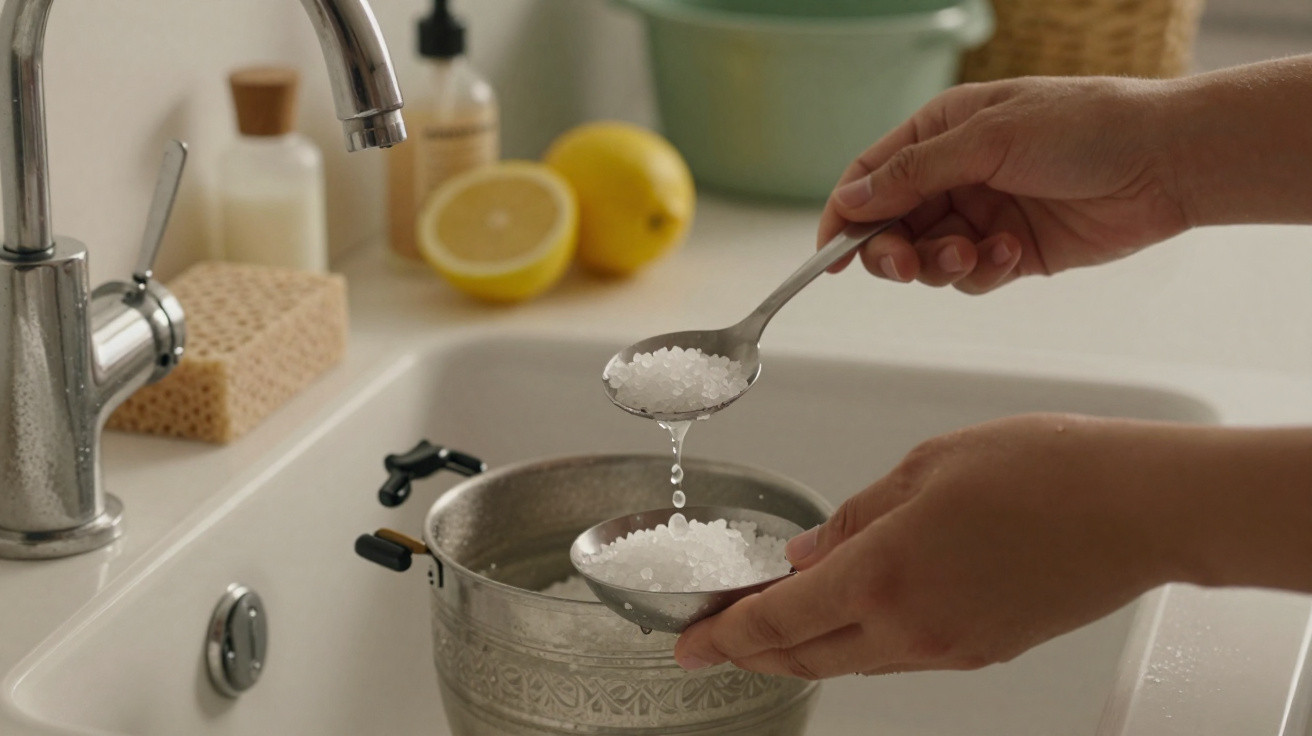
Table salt is useful for more than flavouring meals. Every grain is a small, sharp-edged crystal, so as it travels through a pipe it works much like an exceptionally fine scourer. Tipped straight into a sink or shower drain, salt can rub at grease, soap deposits and food particles stuck to the pipe’s inner surface.
Such residue commonly accumulates over many months. Cooking fat adheres to the inside of kitchen waste pipes, while shampoo, conditioner and minerals from hard water can leave a tacky coating in bathrooms. In sensible quantities, salt helps disrupt this layer without damaging the pipe material.
Salt crystals act as a low-tech cleaning tool: they scrape, dislodge and thin out the layer of grime that slowly blocks drains.
Commercial drain unblockers often contain caustic soda or powerful acids. Frequent use can damage ageing pipework in particular. Salt, on the other hand, is mechanically effective while remaining chemically gentle under normal household conditions. Used from time to time, it will not corrode most household plumbing.
The heat effect of boiling water
Boiling water acts as a natural degreaser in this process. When it reaches cooled grease or solidified soap, the heat softens and liquefies the material. The loosened mix of fat, soap and salt can then travel together through the pipe and into the larger sewer line.
High temperatures also increase particle movement in the water. This produces turbulence inside the drain, helping to dislodge smaller pieces of debris that may be sitting behind the principal blockage.
The combination of abrasion from the salt and heat from the water creates a short, intense cleaning cycle right where the clog formed.
Plumbing professionals commonly suggest pouring boiling water in a slow, steady stream. Maintaining that flow keeps the water hot for long enough to melt grease properly, rather than allowing it to cool midway and harden again farther down the pipe.
A cheap, lower-impact substitute for chemical cleaners
The financial case for this approach is compelling. Several tablespoons of kitchen salt and about two litres of boiling water cost only a few pence. A branded drain cleaner is generally much more expensive, while an emergency plumber call-out can cost hundreds of pounds.
Its environmental impact is another important consideration. Chemical cleaners can include substances that persist in wastewater for extended periods. They may also react with other compounds in sewer systems, making treatment more difficult. When used sparingly, salt and hot water fit more readily into existing water cycles and treatment systems.
For homes seeking to reduce plastic waste, replacing a plastic cleaner bottle with salt bought in a large refill bag offers an additional benefit. Looking after drains with straightforward ingredients can lessen the need for emergency repairs and help domestic plumbing last longer.
How to apply the salt and hot water method at home
Step-by-step: turning a slow drain into a free-flowing one
- Confirm that the sink or shower is draining slowly rather than being fully blocked.
- Clear away visible hair or food debris from the drain cover.
- Tip roughly five tablespoons of table salt directly into the drain.
- Allow the salt to remain for a few minutes, giving the crystals time to move farther into the pipe.
- Bring around two litres of water to the boil in a kettle or large saucepan.
- Slowly and steadily pour the boiling water into the drain, taking care not to splash.
- Leave the drain for 5 to 10 minutes, then test the flow by running the hot tap.
This technique is normally most effective for partial blockages, where water still drains but more slowly than it should. Where a pipe is completely blocked and no water passes through, the salt-and-hot-water method may need mechanical support, such as a plunger.
Essential safety steps and mistakes to avoid
Boiling water can cause severe burns, so sensible safety measures are essential. Hold the kettle or pan with both hands, keep pets and children away from the sink, and pour close to the drain opening to reduce splashing.
The amount of salt matters too. More than a few tablespoons will not make the treatment more effective, and surplus salt may remain in pipe bends, especially in narrow or infrequently used pipe sections. Carrying out the treatment unnecessarily often can increase this possibility.
A moderate amount of salt, used occasionally and with care, brings the best balance between effectiveness and long-term pipe health.
There is also a risk in combining this approach with shop-bought chemical unblockers. If a strong chemical product remains in the pipe, adding boiling water or other ingredients could produce unpredictable reactions, fumes or sudden heat. Following an unsuccessful chemical treatment, experts recommend waiting several days and flushing thoroughly with plain water before trying a natural alternative.
Other natural choices for persistent blockages
When salt and boiling water do not return the drain to normal, other common cupboard products may help. One well-known method combines salt, bicarbonate of soda and white vinegar. The salt and bicarbonate provide abrasion and a mildly alkaline effect, while vinegar reacts with bicarbonate to release carbon dioxide bubbles that can help move debris through the pipe.
Washing soda crystals, also known as soda ash, provide another option. They cut through greasy deposits more strongly than table salt, but must be handled carefully because they can irritate the skin and need rinsing away thoroughly. Many plumbers advise using gloves and ensuring good ventilation when applying them.
| Method | Main action | Best use case |
|---|---|---|
| Salt + boiling water | Abrasive + heat | Light to moderate clogs, regular maintenance |
| Salt + bicarbonate + vinegar | Abrasive + chemical reaction | Greasy and smelly kitchen drains |
| Washing soda crystals | Strong degreasing | Heavily soiled pipes, occasional deep clean |
Mechanical equipment remains useful as well. An ordinary rubber plunger uses pressure changes to shift stubborn masses of hair and soap. Drain snakes and flexible rods can reach farther into pipework to catch dense clumps. For more serious blockages, pairing these tools with natural products often gives the strongest outcome.
Why prevention beats emergency plumbing bills
Everyday habits that keep pipes clear longer
Most household blockages develop gradually. Adjusting day-to-day habits can postpone them or stop them forming altogether. In the kitchen, allow pans to cool and wipe away grease with paper before washing them, preventing fat from entering the drain. A sink strainer catches food scraps that could otherwise become lodged in pipe bends.
In bathrooms, hair is still one of the most common causes of blockages. Removing hair regularly from shower and bath strainers limits the amount that builds up in the pipes. Choosing liquid soap over bar soap may also be helpful, since bar soap often combines with hard-water minerals to create a sticky film.
Regular maintenance using salt and hot water, perhaps monthly for drains that are heavily used, reinforces these habits. It reduces early deposits before they turn into a complete obstruction.
When to stop DIY attempts and contact a professional
Although home treatments can resolve many small problems, certain signs suggest that the issue lies deeper in the system. Repeated blockages affecting several fixtures at once, toilets gurgling when the sink is used, or unpleasant odours coming from multiple drains may indicate a fault in the main waste pipe.
In this situation, repeatedly adding salt, boiling water or any cleaner may force the blockage farther along or hide the warning signs without fixing the underlying cause. Tree roots, collapsed pipes and substantial fat deposits in shared building drains need specialist knowledge and equipment.
For tenants, local rules and tenancy agreements may also set out who is responsible for significant drain repairs. Maintaining a basic record of home maintenance, including the dates and methods used, may assist in resolving disputes over neglect or insufficient upkeep.
Beyond the kitchen: what this method says about home care
Renewed use of salt and boiling water reflects a wider change in household care. Many people are reconsidering whether complicated products are necessary when simple substances can manage routine jobs well. As well as saving money, this change promotes a clearer understanding of how everyday materials work, from basic chemistry to the structure of household plumbing.
Salt cannot fix every pipe problem and has limitations of its own. However, as one part of a broader set of options that includes prevention, mechanical tools and qualified tradespeople when required, it provides a practical and accessible answer to everyday blockages that might once have led to an urgent plumber call-out.



Comments
No comments yet. Be the first to comment!
Leave a Comment