
White cotton or linen sheets, slightly yellowed and a little musty: many people see them as nothing more than old textiles. Look more closely, however, and you will find a durable, high-quality material that can be turned into stylish home accessories with a few simple steps – more sustainably, and often more attractively, than new items from a furniture shop.
Why yellowed sheets are too valuable for the donation bag
The immediate reaction is understandable: “It no longer looks fresh, so get rid of it.” With white sheets in particular, any yellow tinge can instantly make them appear unclean. Yet this impression is often misleading. In many cases, the issue is not genuine wear, but a thin discoloured layer on the surface.
There are several possible causes:
- Perspiration: salts, acids and skin oils build up in the fibres.
- Detergent residue: using too much detergent and fabric conditioner creates a film that darkens over time.
- Poor storage: damp cupboards or cellars encourage bacteria and traces of mould.
- Light: UV radiation gradually changes the fibre structure.
The good news is that much of this can be tackled at home. Even if the sheets do not return to brilliant white, that is precisely what can make them appealing for creative projects.
What looks like old laundry is often a hard-wearing premium material, far superior to today’s cheap fabrics.
Reviving yellowed cotton sheets: how to make them presentable again
Start by assessing their care needs. Treating sheets correctly can noticeably refresh both their colour and texture, helping the fabric last for many more years.
Step 1: Remove residue
A simple washing-machine method will deal with much of the discolouration:
- Pour one cup of clear household vinegar into the detergent drawer.
- Use ordinary laundry detergent, but do not use too much.
- Select a cycle of at least 40°C.
The vinegar breaks down soap deposits, neutralises odours and leaves the fabric feeling smoother again. For heavily soiled sheets, an oxygen bleach such as washing soda or percarbonate can also be used.
Step 2: Target stubborn stains
For persistent yellowing, a pre-wash soak can help:
- Fill a bucket or tub with very hot water.
- Stir in oxygen-based powder according to the instructions on the pack.
- Soak the sheets for several hours, ideally overnight.
- Then wash them at 40 to 60°C.
The right routine also matters: wash bedding every one to two weeks, or weekly if you sweat heavily. Use less detergent, skip fabric conditioner, and add vinegar or a little bicarbonate of soda to the rinse cycle instead.
Step 3: Use sunlight as a free brightener
If possible, dry your sheets outdoors:
- Sunlight has a mild bleaching effect, especially on white fabrics.
- Wind helps moisture evaporate quickly.
- Once fully dry, store the sheets in a dry, well-ventilated cupboard.
This helps prevent further discolouration and the return of musty smells.
Hidden treasures in the cupboard: what makes old linen and hemp sheets special
Many linen cupboards, lofts and inherited boxes hold a textile surprise: sheets made from linen, hemp or so-called natural-fibre blends, often woven at a time when quality and durability mattered more than low prices.
These fabrics are typically characterised by:
- A high fabric weight (often well above 180 g/m²), giving them a firm handle and an attractive drape.
- A tight weave that can withstand decades of use.
- High moisture absorption without feeling wet – ideal for table linen and home textiles.
Their yellowish colour usually results from the oxidation of cellulose and old finishing treatments. The fibres themselves are often still in excellent condition. Sorting out such pieces before filling the donation bag means you are effectively holding high-quality raw material in your hands.
Linen and hemp sheets from previous decades outperform many modern decorative fabrics in terms of quality, longevity and sustainability.
The “Teint-Nuage” trend: turning yellowing into a marbled decorative look
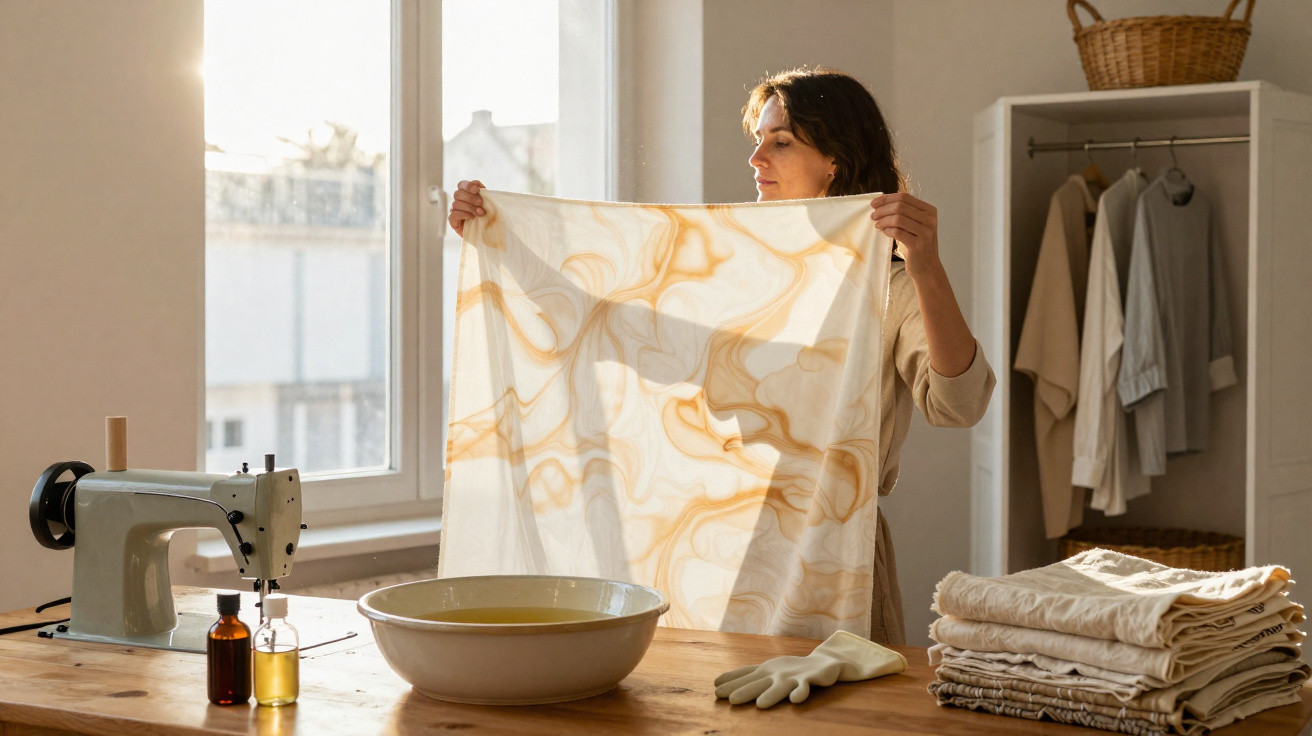
Anyone who wants to do more than simply rescue old sheets can transform their appearance entirely with a dyeing technique currently gaining momentum in DIY circles: a cloudy, marbled finish that turns patchy white fabric into a design textile.
How to create the cloud effect step by step
You do not need a professional workshop for this look. A tub, fabric dye and a little patience are enough:
- Pre-wash thoroughly at 60°C with washing soda to remove old fabric-conditioner and finishing residues.
- Loosely scrunch the still slightly damp sheet into a bundle and secure it with elastic bands or string.
- Mix the fabric dye according to the instructions, ideally choosing a certified product for use with as few harmful substances as possible.
- Briefly dip the fabric bundle, or apply dye in selected areas with a pipette, to create lighter and darker sections.
- Leave it to develop for around three quarters of an hour; add salt for fixing if instructed.
- Rinse thoroughly and wash again until the water runs clear.
The result is a one-off, softly marbled shade that conceals minor remaining marks and gives the fabric a designer feel – perfect for table linen, cushions or curtains in a relaxed country-house or loft style.
Practical ideas: what old sheets can become
If you now feel like reaching for the scissors, the possibilities are almost endless. One large sheet is often enough for several projects. Popular options include:
- Large dining-table cloth: an old double-bed sheet can become a rustic tablecloth measuring around 240 x 140 centimetres.
- Fabric napkins: use offcuts to make square napkins of around 40 x 40 centimetres that are washable and long-lasting for everyday use.
- Tea towels: linen in particular is ideal for lint-free glass-drying and polishing cloths.
- Cushion covers: whether for a sofa, armchair or floor cushion, colour-coordinated covers instantly refresh a room.
- Simple curtains: thinner linen or cotton sheets make airy window coverings for the kitchen, hallway or bedroom.
Those comfortable with a sewing machine can finish the hems neatly. For a more relaxed appearance, a simple turned hem sewn by hand is often enough. Small irregularities give the fabric character, making it feel less shop-bought and more like a one-off piece.
Greater sustainability without sacrificing style
Textile experts have pointed out for years that extending the usable life of clothing and home textiles makes a noticeable contribution to climate protection. Every sheet that is reused can potentially replace a new product from global supply chains, along with all the consequences of its production and transport.
Old sheets fit this principle particularly well: they have already been made, their environmental footprint is long behind them, and they often offer qualities that inexpensive new goods no longer provide – durability, strong seams and a pleasant feel.
| Old sheet | New decorative fabric |
|---|---|
| Usually higher quality, with a denser weave | Often thinner and produced under cost pressure |
| Already washed, with hardly any shrinkage | May shrink noticeably after the first wash |
| Hardly any additional resource use | New production and new transport routes |
| Individual appearance through dyeing and sewing | Standard off-the-shelf design |
What to consider when upcycling
Before starting a project, inspect the material carefully. Areas that have become very thin, tears along the edges or brittle fibres make the fabric unsuitable for hard-wearing uses such as seat cushions. It can still be suitable for lightweight curtains or decorative runners, however.
It is also worth checking the smell. If a musty note remains despite washing and air-drying, mould spores may be present. In that case, the fabric should not be used in a bedroom or near children, and should be disposed of properly.
When using fabric dye, follow the skin-compatibility guidance and wear gloves while dyeing. In homes with young children or allergies, it is especially worthwhile to choose certified products with lower residue levels.
Why it is worth looking in the linen chest
At first glance, a pile of yellowed bed sheets looks like work rather than the basis for a beautiful home. But anyone willing to try will soon discover that many cupboards already contain the fabric for their next table decoration, new collection of cushions or lightweight summer blind. Rather than heading straight to the furniture shop, an afternoon with a washing machine, scissors and sewing thread may be all that is needed – plus a little courage to experiment with creative cloud patterns.




Comments
No comments yet. Be the first to comment!
Leave a Comment