
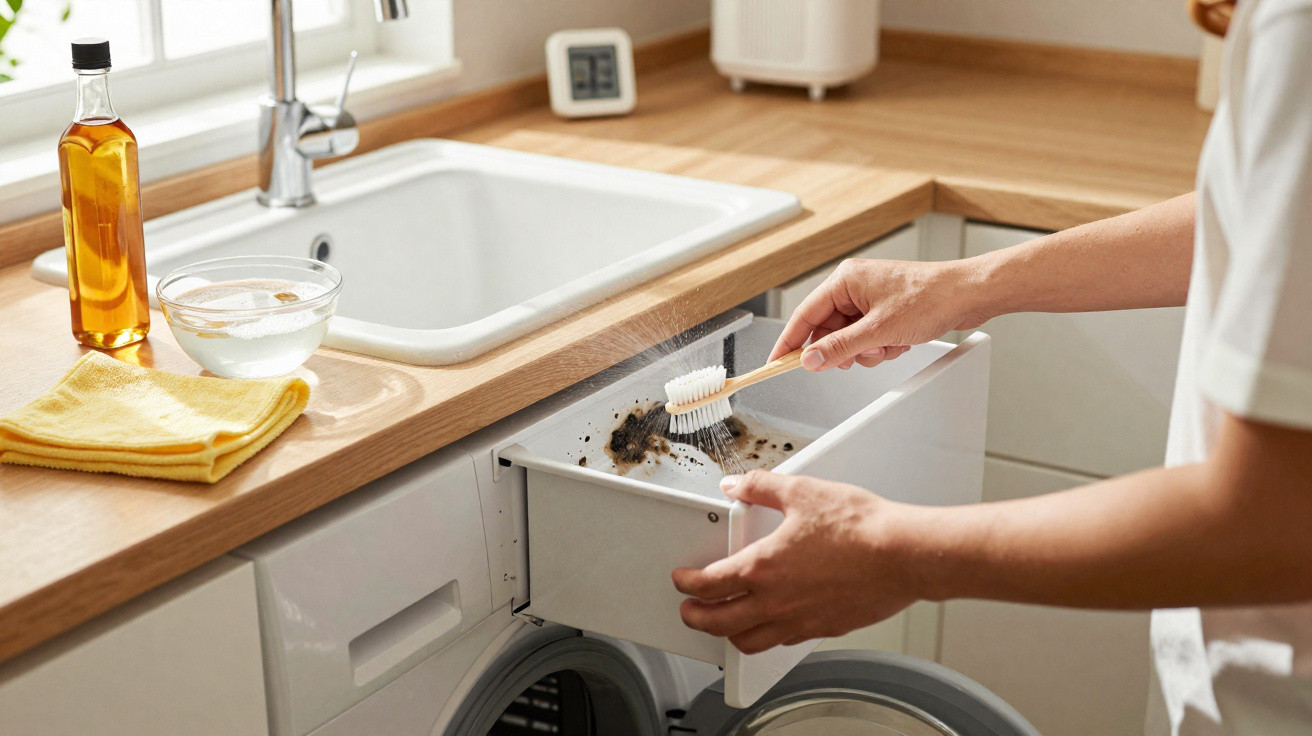
A small patch of mould can do more than spoil your day: it may gradually spread through your washing machine, onto your laundry and into the air at home. This is how to remove it effectively, why acting promptly is important, and which everyday routines help prevent it from returning.
Why mould thrives in the washing machine drawer
The detergent drawer provides almost ideal conditions for mould. It remains damp for hours after a wash, gathers sticky detergent and fabric-softener residue, and is often closed immediately once the programme ends. Limited airflow, ongoing moisture and soap deposits create perfect mould territory.
Mould in the drawer is not just ugly; it can affect the air you breathe and the clothes you wear.
As mould develops, it gives off microscopic particles known as spores. For anyone who is sensitive, these can cause sneezing, a runny nose, sore or itchy eyes and, in some cases, skin irritation. In damper homes, people may also experience congested sinuses, coughing or a stinging sensation in their eyes.
After mould has taken hold in the drawer, water may transport spores further into the appliance. They can travel into hoses, the rubber door seal and even the air in a compact utility room. When freshly washed clothes smell musty despite being “clean”, the overlooked drawer is often responsible rather than the drum.
Safety first: the cleaning error to avoid
Powerful cleaning products can seem reassuring, but they are also where many cleaning mistakes begin. A particularly common error is combining bleach with acidic products, including vinegar. Mixed together, they may produce chlorine gas, which can irritate the eyes, nose and throat even at relatively low levels.
Never mix bleach and vinegar. Stick to one type of cleaner at a time and ventilate well.
Before beginning, open a window or turn on an extractor fan. Wear rubber gloves if your skin is prone to reacting. Cleaning the drawer is straightforward; the danger lies in creating unplanned chemical mixtures, not in the scrubbing itself.
How to take out the washing machine drawer without damaging it
For anyone who has never removed it, the drawer can seem firmly fixed in place. However, this is not normally the case with modern washing machines. Most have a small release catch roughly halfway along the drawer runner, sometimes labelled “Push” or coloured differently from the rest of the drawer.
Pull the drawer out as far as it will go and find this additional part. Keep the drawer steady with one hand to prevent it from twisting. Using the other hand, press the catch while gently pulling the drawer directly towards yourself. It should come free without force. Should it resist, make sure the catch is fully pressed, then try again with a level, straight pull rather than lifting upwards.
A seven-step washing machine drawer cleaning routine using vinegar and soapy water
White vinegar is widely used at home to tackle odours and soap residue. Its effectiveness against mould depends on the mould species, but it can still help lift deposits and freshen surfaces during cleaning.
Step-by-step method
- Put lukewarm water in a bowl or sink, then add a squirt of washing-up liquid.
- Pour around two cups of white vinegar (roughly 480 ml) into the water.
- Put the drawer into the mixture and allow it to soak for 5–10 minutes.
- Scrub the flat areas and corners with a sponge, paying attention to where detergent paste has collected.
- Use an old toothbrush for runners, grooves and difficult-to-reach recesses.
- Rinse well under clean water, then hold the drawer towards the light. If dark marks remain visible, scrub those sections once more.
- Dry the drawer thoroughly with a cloth and leave it in the open air for a short time before putting it back.
The job looks tedious from a distance, but once you’ve done it, the fresher smell is immediate.
The entire task generally takes under 20 minutes. Its impact on odour can nevertheless be noticeable, particularly in smaller homes where the washing machine is located in a kitchen or hallway.
What experts say about controlling moisture
Mould professionals broadly agree on a straightforward principle: damp spaces should be dried within 24 to 48 hours. Once that period has passed, mould can establish itself much more easily. Washing machines are no different.
| Area | Drying target | Risk if left wet |
|---|---|---|
| Detergent drawer | Fully dry between wash days | Mould patches and stale odours |
| Door seal | Wiped after heavy washes | Black spots and slime build-up |
| Floor around machine | Puddles dried in under 48 hours | Hidden damp, mould on skirting and walls |
Manufacturer-approved washing machine habits that work
Most manufacturers suggest one particularly simple habit: allow the appliance to air out. Rather than shutting everything as soon as the programme ends, leave the door and detergent drawer slightly open. That narrow gap allows moisture to escape instead of becoming trapped inside.
They also recommend deep-cleaning the drawer each month and briefly inspecting the rubber seal. Although it sounds simple, these two actions reduce the three conditions mould depends on most: dampness, residue and darkness.
Quick daily habits to prevent a musty smell
- Leave the door and drawer ajar after every wash: this prevents stagnant pockets of humid air from developing.
- Clean the drawer monthly: less residue means fewer surfaces where mould can take hold.
- Dry splashes and small puddles within 24–48 hours: reducing standing water reduces mould risk.
- Use less detergent and softener: using too much leaves behind a sticky coating that adheres to surfaces throughout the machine.
When mould returns quickly
If fresh mould appears only a few days after you have cleaned the drawer, something is remaining damp. First, check whether water is collecting inside the compartment once a wash has finished. A partial blockage in the cavity that holds the drawer could be preventing water from draining properly.
Also examine the rubber door seal and the surround of the drawer carefully. If either area feels persistently wet or slimy, airflow is insufficient. Often, finding the section that never properly dries and concentrating on ventilation or careful drying is enough to stop the recurring cycle.
When stronger products or professional help are needed
For minor surface mould inside the drawer, soapy water and vinegar will usually be sufficient. If stubborn patches repeatedly appear in several areas of the appliance, consider using a specialist washing machine cleaner or a household mould product, always following its instructions with great care.
A strong musty odour in the room while the machine is switched off, or visible mould spreading to nearby walls or skirting boards, can indicate that the problem extends beyond the appliance. Ongoing damp behind or beneath the machine may harm plaster and flooring. In this situation, a plumber or damp specialist can investigate slow leaks, inadequate drainage or concealed water damage.
Helpful concepts: spores, biofilm and indoor air
Three concepts explain why these small black marks are worth addressing. The first is spores. Mould is not stationary: it releases microscopic particles that move through the air. These spores are both what you inhale and what can start new mould patches elsewhere.
The second concept is biofilm. The slippery coating inside drawers and door seals consists of detergent, minerals and microbes. Once biofilm has formed, it shelters bacteria and mould, making them more difficult to shift. Frequent scrubbing disrupts this protective layer, leaving surfaces smoother and less hospitable.
The third is indoor air quality. One small mould patch in a washing machine drawer will not damage a healthy person’s lungs, but its effect can build up in a well-sealed home with multiple damp areas. Households with babies, asthma or allergies may find that airing the drawer and drying seals offer gradual but genuine improvement in comfort.
From this perspective, cleaning the washing machine drawer is not merely about how it looks. It is one practical step towards a home that feels less damp and stuffy, along with laundry that genuinely smells fresh when it leaves the drum.





Comments
No comments yet. Be the first to comment!
Leave a Comment