
You clean the bathroom on Saturday morning, worn out, apply pine-scented disinfectant, take one final proud look… and by Monday evening it has that ‘bus station’ feel all over again.
The floor gleams and the toilet looks fine, yet the smell gives it away: someone has been in there recently. Air freshener spray helps to a point, but it lasts minutes rather than days. There is always the sense that fragrance is trying to hide something that has not genuinely been dealt with. A suspicious odour quietly returns through gaps, drains and damp towels. The rest of the house smells clean, except for the bathroom. You open the window, switch on the extractor fan and pour that blue disinfectant straight into the toilet. Nothing lasts. The nagging but straightforward question remains: how can you make the bathroom genuinely smell fresh for days without relying on artificial fragrance?
Why a clean bathroom does not smell ‘clean’
Everyone knows a bathroom in a modest home, perhaps their gran’s or aunt’s, that always smells pleasant despite having no expensive diffuser on the sink. It has a mild, almost neutral scent with a familiar hint of soap. It is not a television advert; it is real life. Then you compare it with your own bathroom, full of fragranced products that only preserve freshness for a few hours. There is a gap between the smell of cleaning products and the smell of a clean room. That gap lies in details we seldom inspect closely.
Market research by Kantar found that Brazilians are among the people who buy the most fragranced household products. Even so, many complain on social media that “the bathroom never stays smelling nice for long”. One resident of Guarulhos told reporters that she spent almost R$70 a month on air fresheners to keep her bathroom acceptable. Spray for the bin, a toilet tablet and a diffuser on the counter. The fragrance appeared, but it did not last. At her mother’s insistence, she eventually swapped her collection of scents for two household ingredients and a change in routine. Within two weeks, her spending had fallen by half. Her comment was blunt: “I discovered that the problem was not the smell, but the source of the smell”.
There is one fact that few people want to confront: a bathroom does not smell bad because it lacks perfume, but because of excess moisture and hidden organic build-up. The toilet rim, drains, grout, the underside of the bath mat and the skirting board behind the laundry basket all play a part. Chemistry works against us here: a warm, humid and enclosed space is ideal for bacteria and fungi, which release odours. Strongly fragranced products merely cover that situation temporarily. Once the scent evaporates, the original smell reappears. The answer is to tackle this invisible source of bad odours and create barriers that work for several days.
The bathroom trick that changes everything: neutralise odours at the source and ‘anchor’ the scent
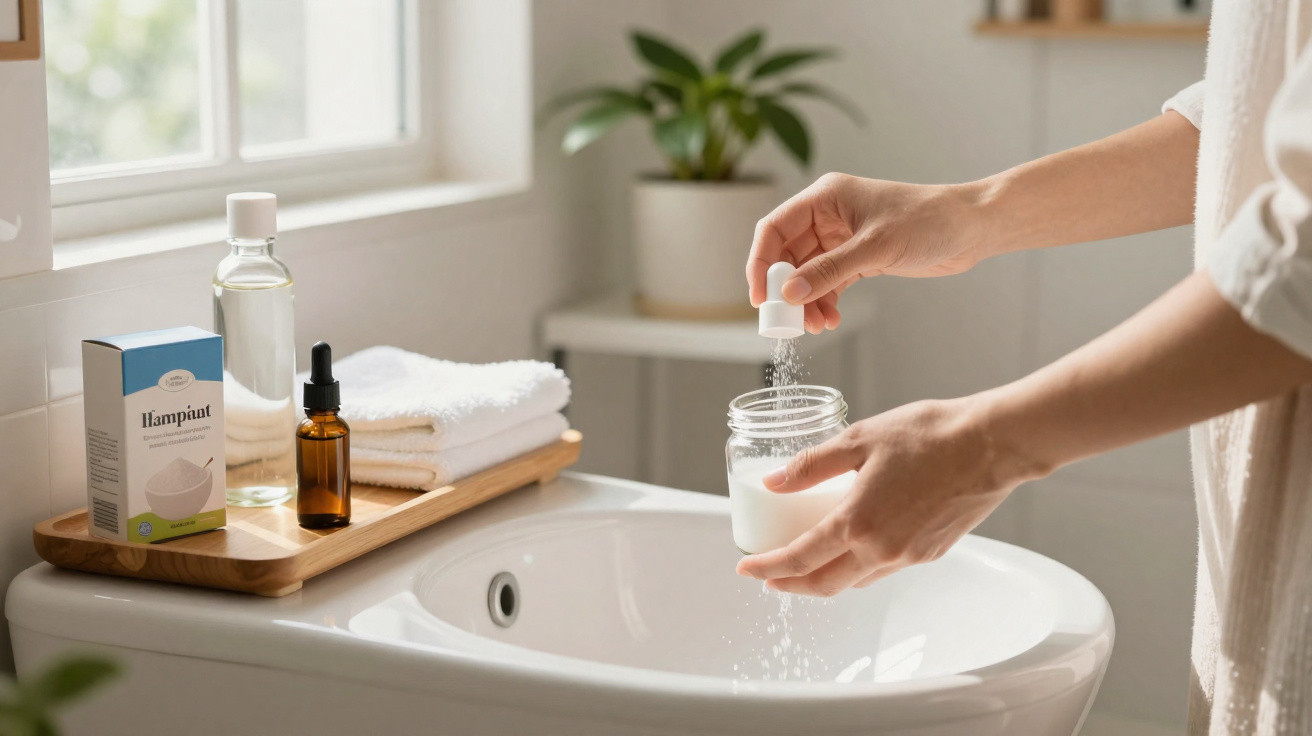
The key is not another fragrance but a very simple combination: bicarbonate of soda + white vinegar + a touch of essential oil. It is not an internet miracle recipe; it is a method. First, neutralise what causes the unpleasant smell. Then create small, steady points of gentle fragrance. The foundation is nearly always the same: one spoonful of bicarbonate of soda in the toilet at night, every other day, plus a mixture of vinegar and a few drops of essential oil placed at strategic points around the bathroom. It may seem minimal, but this subtle consistency is exactly what makes a ‘clean bathroom’ scent last.
Let us be realistic: nobody deep-cleans the bathroom every day. Real routines are busy, with a quick shower before work, children rushing around and several people sharing the same cramped space. In that situation, the most common mistake is believing that a powerful spray alone will solve everything. People clean inside the toilet, wipe the sink and overlook the places that hold odours most effectively: drains, grout near the shower enclosure, behind the toilet and the bin lid. Another trap is placing too much faith in coloured toilet tablets that turn the water blue but do nothing for smells in the room itself. The bathroom may look ‘nice’, while the air remains heavy.
“A pleasant-smelling bathroom is more about prevention than putting out fires,” says São Paulo professional organiser Ana Ribeiro, who has spent years helping families reorganise small homes.
- Put bicarbonate of soda in the toilet at night (1 tablespoon; leave it to work, then flush in the morning): it reduces odours at their source.
- Keep a small open pot of bicarbonate of soda behind the toilet or in a cupboard: it quietly absorbs smells.
- Make a spray with white vinegar + water + 10 drops of lavender or eucalyptus essential oil: spray it on drains and in the bin whenever you remove the bag.
- Change bath mats and damp bath towels more often, even when they look ‘fine’: damp fabric is an odour factory.
- Open the window for at least 10 minutes each day, even if it is only in the evening: ventilation is the cheapest air freshener available.
When the bathroom stops being a problem and becomes a quiet relief
At a certain point, the atmosphere of the home changes without anyone announcing it. You walk into the bathroom mid-afternoon after somebody has used it and notice that the air feels light. There is no overpowering perfume and no disinfectant scent competing with traces of drainage odour. There is simply a clean, almost invisible base note with a hint of lavender or soap. It is subtle, yet it changes everything. The people you live with notice it, visitors pick up on it, and children begin using the bathroom without pulling a face. It improves the feeling of care throughout the home, even if nobody says so aloud.
Once this bathroom trick becomes part of the routine, it turns automatic, much like brushing your teeth. Adding a spoonful of bicarbonate of soda to the toilet before bed stops being an ‘extra’ task and becomes a quick gesture. Topping up the little vinegar-and-essential-oil container becomes almost a weekly ritual. A bathroom that previously involved drama and a demanding deep clean every fortnight then needs only gentle, regular adjustments. Spending on air fresheners falls, the worry of an unexpected visitor eases, and the home feels naturally fresher. In the end, a bathroom that smells good for days is not about luxury; it is about well-used small secrets. Secrets worth sharing.
| Key point | Detail | Value for the reader |
|---|---|---|
| Neutralising the source of bad odours | Using bicarbonate of soda in the toilet, drains and open pots | A bathroom with odours controlled for several days, without excessive fragrance |
| Relying on natural solutions | White vinegar and essential oils in a homemade spray | Replaces costly artificial air fresheners with a cloying scent |
| A light, consistent routine | Small daily actions instead of panic-driven deep cleaning | Less hard work and a space always ready for any visitor |
FAQ:
Question 1 Can I use any type of vinegar in the bathroom?
Answer 1 White distilled vinegar is the best choice because it leaves almost no scent of its own and works well on grease and odours. Apple cider vinegar and other types can work too, but they may leave a sweet aroma that not everyone enjoys.Question 2 Does bicarbonate of soda damage the toilet or pipework?
Answer 2 No. In small amounts (1 tablespoon at a time), it is safe for porcelain and plumbing. In practice, highly acidic products and excessive use of abrasive sponges are much more likely to damage the toilet.Question 3 Will the vinegar smell take over the bathroom?
Answer 3 If the mixture is properly diluted (half vinegar and half water) and includes a few drops of essential oil, the vinegar smell disappears within minutes. The final effect is freshness, not salad.Question 4 Does it work in a bathroom without a window?
Answer 4 Yes, but it requires more discipline. The bicarbonate-of-soda and vinegar trick helps a great deal, though it is worth using the extractor fan regularly and changing wet towels and mats even more quickly because moisture becomes trapped.Question 5 How often should I replace the pot of bicarbonate of soda?
Answer 5 Generally, every 20 to 30 days. When you notice that it has become too lumpy or has lost its ability to ‘hold’ the smell, simply throw it in the bin, wash the pot and add a fresh portion.
Comments
No comments yet. Be the first to comment!
Leave a Comment