
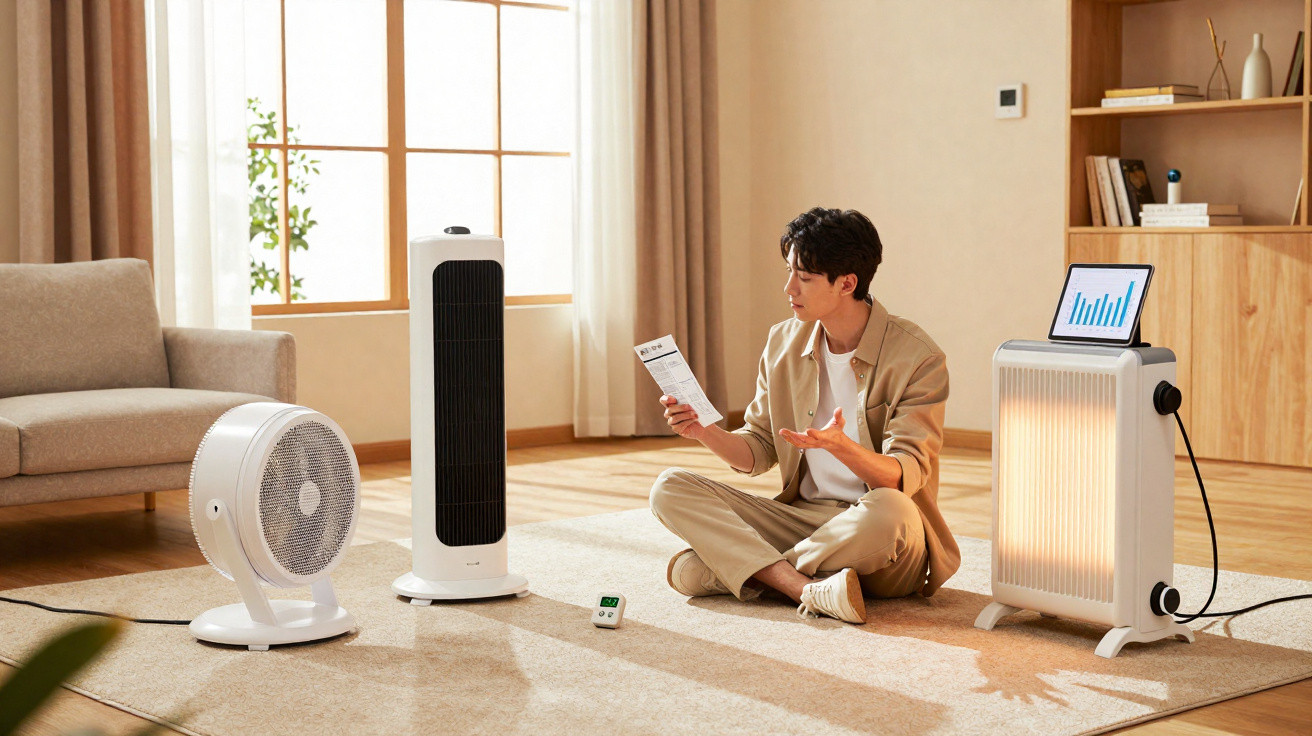
From noisy fan heaters beneath a desk to stylish oil-filled radiators in the lounge, space heaters do not all warm a home - or affect an energy bill - in the same manner. Knowing how each model operates and when it is suitable can make the difference between a comfortable winter and an unwelcome surprise when the bill arrives.
Why households use supplementary heating
A space heater is not designed to take the place of central heating; it is intended as a focused supplement. Used properly, it means heating the room you occupy rather than the entire property.
- Localised warmth: heat the bedroom, home office or bathroom instead of the whole house.
- Rapid comfort: many supplementary heaters begin producing warmth within seconds or minutes.
- Potential short-term savings: rather than turning up the central-heating thermostat, you can bring one room up to a comfortable temperature.
“Used in a single, occupied room, a well-chosen space heater can cut overall gas or electric use, not raise it.”
The key issue is deciding which technology can provide that added comfort without letting energy use get out of hand.
The main types of space heater compared
Most heaters found in shops belong to one of five groups: fan heaters, electric convectors, radiant panels, oil-filled radiators, and portable gas or paraffin stoves. Each produces warmth in a different way.
Fan heater: fast warmth, expensive running
A small fan heater passes air over a heated element, sending warm air into the room within seconds. They are commonly used in bathrooms or under desks.
- Strengths
- Heats up extremely quickly.
- Lightweight, compact and simple to carry from room to room.
- Useful in very small spaces or for brief periods.
- Weaknesses
- Draws a substantial amount of electricity while operating.
- The fan creates noticeable noise.
- Does not heat larger rooms evenly.
For warming the bathroom before a shower on an icy morning, it is effective. However, using one for hours each evening in the lounge makes it one of the costliest choices available.
Electric convector: straightforward, but not particularly economical
A convector warms the air as it rises through the appliance, setting up natural air circulation around the room. It may be wall-mounted or freestanding and generally includes a simple thermostat.
- Strengths
- Straightforward to fit and operate.
- Provides fairly even warmth in a medium-sized room.
- A thermostat helps prevent unchecked energy use.
- Weaknesses
- Takes longer than a fan heater to create the first sensation of warmth.
- Consumption can range from moderate to high, depending on the setting and insulation.
- May seem ineffective in rooms that are draughty or poorly insulated.
It is an uncomplicated choice for a spare bedroom or occasional heating, although it is not notable for efficiency by itself.
Radiant panel: focused comfort in well-insulated rooms
Radiant, or infrared, panels heat people and objects directly rather than primarily warming the air. The effect is similar to sunshine on the skin: you can feel warm even when the air remains slightly cool.
- Strengths
- Produces pleasant, even warmth without a blast of hot air.
- May be economical in a closed, well-insulated room.
- Usually slim and unobtrusive, making it easy to incorporate into the décor.
- Weaknesses
- Costs more initially than many basic heaters.
- Performs less convincingly in very leaky or open-plan spaces.
- Reacts more slowly than the immediate burst from a fan heater.
“Radiant panels shine in small, insulated rooms where you want a soft, stable temperature for several hours.”
Oil-filled radiator: gradual, consistent and often the best-balanced option
Oil-filled radiators use electricity to warm sealed thermal oil within their metal fins. That liquid retains heat and gradually gives it out into the room.
- Strengths
- Delivers gentle warmth that remains after the appliance has been switched off.
- Runs very quietly and is almost silent.
- Its thermal inertia can reduce frequent on-and-off cycling and wasted electricity.
- Weaknesses
- Takes considerably longer to warm a cold room.
- Is larger and heavier than a fan heater.
- Usually costs more to buy than entry-level heaters.
This type is well suited to lengthy evenings in the living room or a home office used every day. The slower start is the trade-off for steady, efficient warmth that does not disappear as soon as the off switch is pressed.
Gas or paraffin stove: high output, greater responsibility
Portable heaters fuelled by bottled gas or liquid fuel are still widely used in poorly insulated areas and places with limited electricity access, including workshops and outbuildings.
- Strengths
- Provides strong heat even in cold, draughty rooms.
- Does not depend on the mains, which is helpful in rural areas or during power cuts.
- Offers good heat output for the appliance’s size.
- Weaknesses
- Needs regular maintenance and careful operation.
- Creates combustion gases and moisture, making ventilation essential.
- Costs vary with fuel prices and may rise sharply in winter.
These appliances remain a specialist option for particular circumstances rather than an everyday solution for a well-insulated flat.
How the main heater types compare
| Heater type | Warm-up speed | Comfort level | Energy use trend | Typical price range | Best-fit use case |
|---|---|---|---|---|---|
| Fan heater | Very fast | Average, often “draughty” | High while running | Low | Short bursts in small rooms, e.g. bathroom |
| Electric convector | Moderate | Decent | Moderate to high | Low to mid | Occasional heating of a medium-sized room |
| Radiant panel | Moderate | Very good, even warmth | Reasonable in insulated rooms | Mid to high | Soft, steady heat in insulated living spaces |
| Oil-filled radiator | Slow | Excellent, stable | Efficient over long sessions | Mid | Long evening or all-day heating of one room |
| Gas/paraffin stove | Fast | Good | Moderate to high, fuel-dependent | Variable | Temporary heat in poorly insulated or off-grid spaces |
Which space heater best combines efficiency and savings?
In expert testing and everyday use, oil-filled radiators and radiant panels consistently emerge as the two most balanced options for modern homes. They are not invariably the least expensive models to purchase, but regular use over several months tends to make them cheaper to run.
“For long, daily use in a single room, an oil-filled radiator or a good radiant panel usually beats a cheap fan heater on both comfort and energy spend.”
There are technical and psychological reasons for this. A fan heater delivers a burst of hot air, which can encourage users to leave it running at full power. By contrast, an oil-filled heater or radiant panel supplies more even warmth, allowing the thermostat to cycle steadily and reducing the temptation to keep turning the control up.
A quick energy-bill example
Consider a 1,500-watt heater used for four hours per day across 30 days. If it operates continuously at full power, it will use 180 kWh in a month. At £0.30 per kWh, the cost is £54.
- A fan heater running at maximum for most of the time may come close to that 180 kWh total.
- An oil-filled radiator that switches on and off because of its thermal inertia could use around 120–140 kWh while providing comparable comfort.
A difference of 40–60 kWh could reduce one month’s bill by £12–£18. This can substantially offset the higher purchase price over one or two winters.
Tips for using a space heater without wasting energy
Selecting the appropriate heater is only one part of the equation. The way it is used is equally important.
- Match the output to the room: a 2,000-watt heater in a small bedroom will cycle too often and waste energy.
- Close doors and limit draughts: even simple window sealing strips can improve comfort and reduce running time.
- Use the thermostat: choose a sensible temperature - around 18–20°C in living spaces - rather than repeatedly increasing it manually.
- Set a timer: an integrated or plug-in timer stops heaters running overnight or in unoccupied rooms.
- Leave a safe clearance: keep the area around the heater clear to reduce fire risks and allow air to circulate.
Heating terms explained
Two technical concepts frequently arise when discussing supplementary heaters: “inertia” and “radiant heat”. Although they may sound theoretical, both have a direct connection to energy bills.
Thermal inertia is a device’s capacity to retain heat and release it gradually. Oil-filled radiators and certain heavy radiant panels have high inertia. After they have warmed up, they remain warm for some time once switched off. As a result, they need to draw maximum power less often.
Radiant heat directs energy at people and surfaces rather than heating the air alone. When sitting still at a desk or on a sofa, radiant warmth can keep you comfortable at a slightly lower air temperature, reducing consumption without compromising comfort.
Practical scenarios: the right heater for each setting
For a student living in a small, well-insulated studio, a modest radiant panel with an effective thermostat can keep the room comfortable without causing costs to soar. It gives pleasant, even heat while taking up little floor space.
For a family working from home in a semi-detached house, placing an oil-filled radiator in the office and another in the main living room can be sensible. They warm only the rooms being used, allowing the central-heating system to operate at a lower base temperature.
In a draughty garage used for weekend DIY, a gas or paraffin heater may still be appropriate, as long as ventilation and carbon-monoxide awareness are in place. Brief, intensive use suits the advantages of fuel-burning heaters, while the main home retains cleaner, more controllable electric heating.
“The most efficient heater is not a single magic model. It is the one that matches your room, your habits and your insulation level.”




Comments
No comments yet. Be the first to comment!
Leave a Comment