
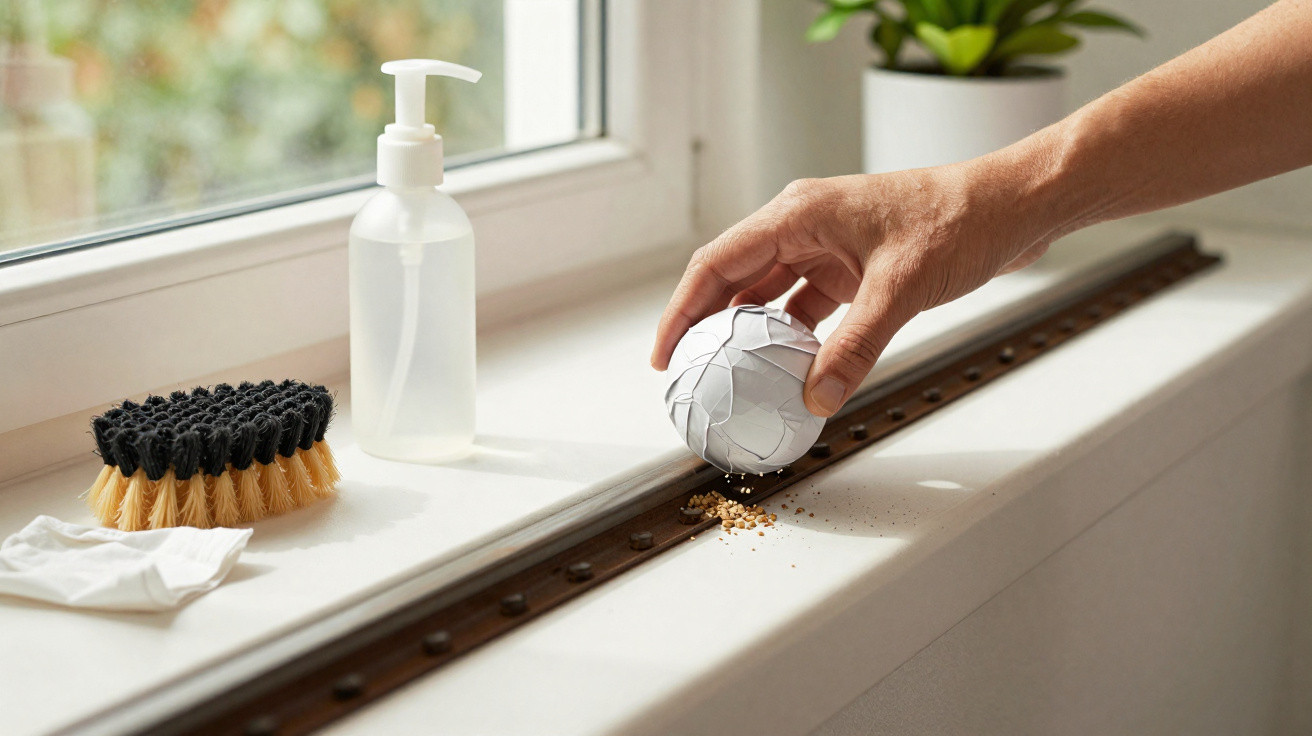
Most people clean the glass and stop there, leaving window tracks packed with dust, grime and moisture. A straightforward aluminium foil tip, currently popular on social media, gives these overlooked channels an unexpected place in household care.
Why window tracks deserve more attention
Window tracks are seldom included on cleaning lists. Positioned low down, they gather debris and usually go unnoticed until a window begins to stick. However, these slim channels influence:
- How easily windows open and shut
- The level of dust and allergens moving around indoors
- The likelihood of mould developing around the frames
- The durability of sliding parts and seals
When moisture combines with dirt, it creates a sludge that rubs against rollers and frames. In time, this may distort plastic parts, corrode metal components and leave tiny openings that allow draughts inside.
Clean window tracks help windows glide better, reduce moisture problems and cut the risk of hidden damage around the frame.
How aluminium foil became part of window maintenance
Aluminium foil has long served several purposes in the kitchen, from cooking to storing food. More recently, cleaning influencers have demonstrated how a crumpled foil ball can be used as a scrubbing tool for grills, pans and taps. The same approach is now being applied to window tracks.
Pressed into the grooves, a ball of foil acts as a firm, textured cleaning tool. It moulds itself to the narrow track shape and gets into corners that cloths and sponges often cannot clean effectively. The foil grips and pulls away compacted dust, dried mud and insect debris.
What aluminium foil does in window tracks
Aluminium is comparatively soft beside many window-frame materials, particularly PVC and painted aluminium. When it is used gently rather than with excessive force, it works as a mechanical cleaner instead of an abrasive scourer.
As the foil ball is worked along the channel, it:
- Loosens compacted grime from grooves and corners
- Releases sand grains that create friction around rollers
- Forces out damp residue that otherwise attracts further dust
- Makes the surface smoother, helping the sash to slide
The big advantage of foil is its ability to shape itself into the narrow channel of the track, where standard cleaning tools simply do not reach properly.
Keeping tracks cleaner generally allows window panels to move with less resistance. This places less strain on handles and fittings, potentially reducing the need for small repairs later.
Step-by-step: cleaning window tracks with aluminium foil
The technique circulating on social media is uncomplicated, although it is most effective when done in the proper sequence.
1. Prepare the area
Open the window completely to expose the whole track. Remove larger pieces of debris, including leaves, insects or plaster crumbs, with your fingers or a small brush. Doing this first stops sharp particles from scratching the surface during scrubbing.
2. Add a light cleaner if needed
If the tracks are visibly grimy, spray a small amount of warm water or diluted white vinegar into the channel. This softens dried-on dirt and lets the foil ball move more smoothly. Do not saturate the area, particularly around wooden frames, as this can cause swelling or warping.
3. Shape the foil
Tear off a section of kitchen foil and scrunch it into a compact ball that is slightly narrower than the track. A firmly compressed ball provides more control and pressure than a loose one.
4. Scrub using short movements
Set the foil ball in the track and move it backwards and forwards along its entire length. Use brief strokes over stubborn patches and apply light pressure in the corners. If some sections are especially tight, reshape the ball to fit them.
Work slowly along the entire track. Rushing often leaves pockets of dirt that will spread again with the next rain or gust of wind.
5. Wipe and finish
After loosening the grime, vacuum the track or sweep out the particles with a small brush. Wipe the channel with a dry cloth afterwards. For a more thorough finish, pass a lightly damp microfibre cloth along the track to collect any residue left behind.
Why aluminium foil can improve window sliding
Many householders find that windows slide more freely immediately after this treatment. The result is not traditional lubrication; rather, the foil removes tiny obstructions that cause friction.
Fine sand particles behave like miniature wedges beneath rollers or plastic guides. Once they have been cleared away, contact between the moving parts and the track becomes more even. The window then reacts more readily to light pressure on its handle or frame.
| Problem | Likely cause in the track | Effect of aluminium foil cleaning |
|---|---|---|
| Window sticks halfway | Built-up dirt mound or dried paint | Breaks up and removes the obstruction |
| Grinding noise when sliding | Sand and grit trapped near rollers | Dislodges grains from grooves and corners |
| Musty smell around frame | Damp dirt and stagnant water | Clears residue so the track dries faster |
How often window tracks should be cleaned
Your cleaning routine should reflect the conditions around your home. Properties near busy roads, construction sites or the coast usually accumulate dust and salt more quickly than homes on quiet, leafy streets.
- In average conditions: a detailed clean each month keeps tracks under control.
- In dusty, humid or coastal locations: cleaning every fortnight often stops sludge from building up.
- Following storms or heavy rainfall: a brief inspection removes fresh debris before it sets hard.
Regular, small sessions usually work better than a once-a-year deep clean that needs aggressive scrubbing and harsher chemicals.
Some householders combine the foil technique with a mild cleaner, such as a baking soda paste, once a month. The paste deals with stains and slight oxidation, while the foil removes trapped particles from tight corners.
Safety, suitable materials and what to avoid
Aluminium foil is appropriate for most standard PVC and painted aluminium frames, though a few precautions can help preserve their finish.
- Try it first on a small concealed area if your frames have delicate coatings or lacquered wood.
- Do not use excessive pressure, which could leave marks on soft plastic.
- Avoid this approach on badly corroded metal tracks until the damage has been assessed by a professional.
- Never combine foil with harsh chemical cleaners that could react with aluminium.
For wooden windows where timber is exposed inside the track, many technicians advise using soft brushes and slightly damp cloths rather than foil, followed by quick drying to minimise swelling.
Beyond cleaning: window tracks and home efficiency
Window-track cleaning is rarely discussed in relation to energy efficiency, but neglected channels may contribute to small gaps and misshapen seals. These minor faults can increase draughts, making heating or cooling systems work harder. Clean, correctly aligned tracks help windows close more tightly, particularly sliding windows and patio doors.
In older installations, thoroughly cleaning a track can expose damaged seals, loose screws or warped frames that dirt had concealed. Identifying these problems early can often keep repair costs lower than waiting for the mechanism to fail completely.
Other habits that support the aluminium foil method
For anyone wishing to maintain the results for longer, several quick routines can reinforce the benefits of cleaning with aluminium foil:
- Brush along the tracks during your weekly dusting routine.
- Remove condensation from window edges on cold mornings.
- Examine the weep holes or drainage slots at the bottom of the frame so water can drain away.
- Check seals once or twice yearly for cracks and gaps, replacing any damaged sections.
In this way, an ordinary foil ball becomes one element of a wider routine for looking after the windows already fitted in your walls. It requires no gadgets or specialist products, only a small change in how you use items you already have.



Comments
No comments yet. Be the first to comment!
Leave a Comment