
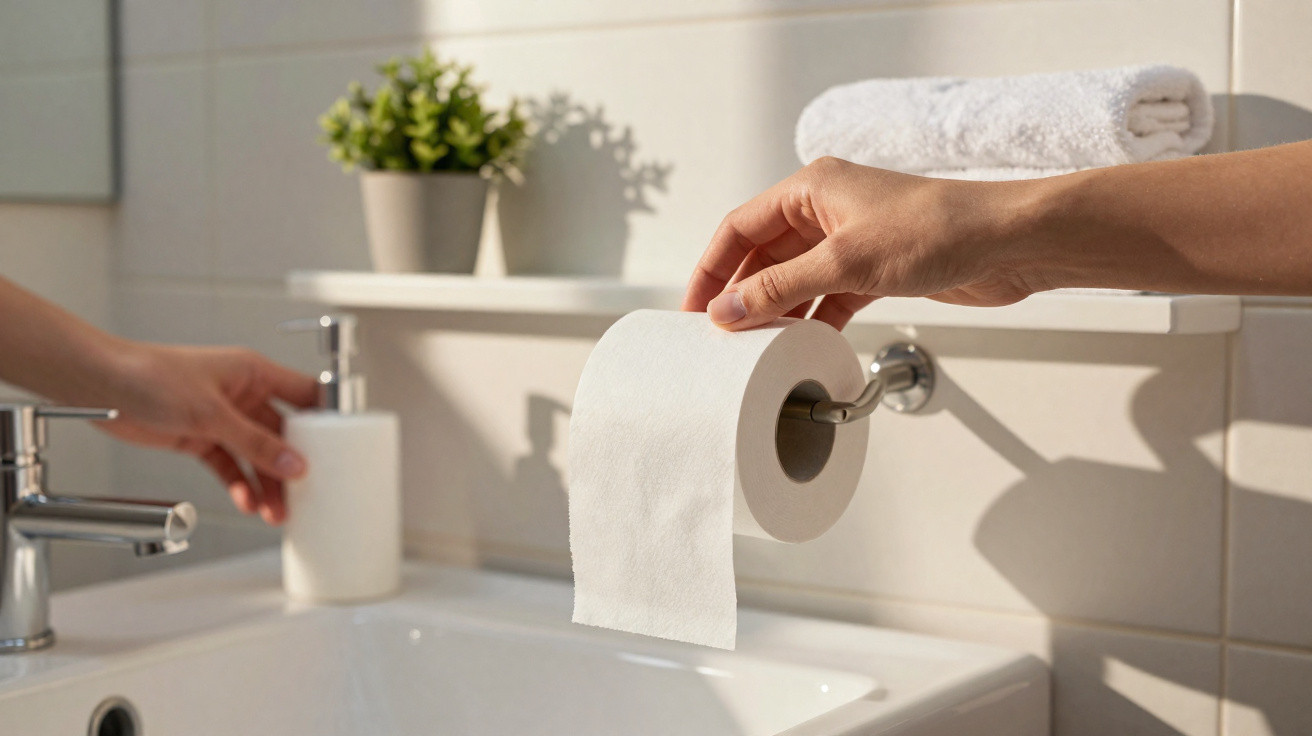
Leaving the toilet paper with the sheet running over the top of the roll makes it easier to pull and tear off paper without bringing your fingers as close to the wall or holder. This is the main hygiene argument for the position known as “over”. The reasoning is credible, but there is no strong evidence that this orientation by itself significantly reduces the spread of germs in the bathroom.
Why can placing the sheet over the top reduce contact with the wall?
When the loose end faces outwards, it sits farther from the wall and can be reached straight away. In the opposite arrangement, where the sheet hangs behind the roll, some people may touch the wall or the holder itself while searching for the end.
Touching fewer surfaces while using the toilet paper creates fewer opportunities to transfer micro-organisms from hands to nearby objects. This principle, rather than any different quality of the paper itself, is what supports the preference for the over position.
- The end of the paper is easier to see;
- It can be pulled without reaching behind the roll;
- Fingers are generally kept farther from the wall;
- There is less need to handle the holder;
- The paper in use remains easier to reach without touching other surfaces.
Is there evidence that this toilet paper position actually reduces germs?
There are no robust studies showing that simply reversing a toilet paper roll results in a measurable reduction in infections or bathroom contamination. The case mainly rests on reducing unnecessary contact with potentially contaminated surfaces. For that reason, claiming that the “over” position guarantees hygiene would be an exaggeration.
Why do bathroom surfaces require so much attention?
Light switches, door handles, taps, flush buttons and holders are touched repeatedly, so they can collect micro-organisms from hands. With toilet paper, the aim is to prevent both the roll and its loose end from coming into contact with damp or dirty surfaces.
The direction of the paper offers little benefit if the rest of a hygiene routine is overlooked. Some habits have a far more direct effect:
- Wash hands properly after using the toilet;
- Clean the toilet paper holder regularly;
- Avoid storing new rolls near the toilet or on the floor;
- Keep the paper protected from splashes and moisture;
- Replace any rolls that have become wet or contaminated.
Does the roll position also make everyday use easier?
Yes. With the sheet facing upwards and forwards, it is usually easier to find the loose end, pull the required amount and tear the paper using one hand. This arrangement also makes the paper less likely to drag along the wall, particularly if the holder has been fitted very close to it.
Hygiene depends far more on hands than on the paper direction
Positioning the roll with the sheet over the top is a sensible choice because it makes the paper easier to access and may prevent some contact with the wall. It is a minor practical and hygienic advantage, especially in shared bathrooms, but it should not be presented as a proven barrier against germs.
To meaningfully reduce contamination in the bathroom, the decisive factors remain washing hands thoroughly, keeping frequently touched surfaces clean and storing rolls in a dry place. The paper direction can help avoid unnecessary touching, but it is only one detail within a much broader hygiene routine.



Comments
No comments yet. Be the first to comment!
Leave a Comment