
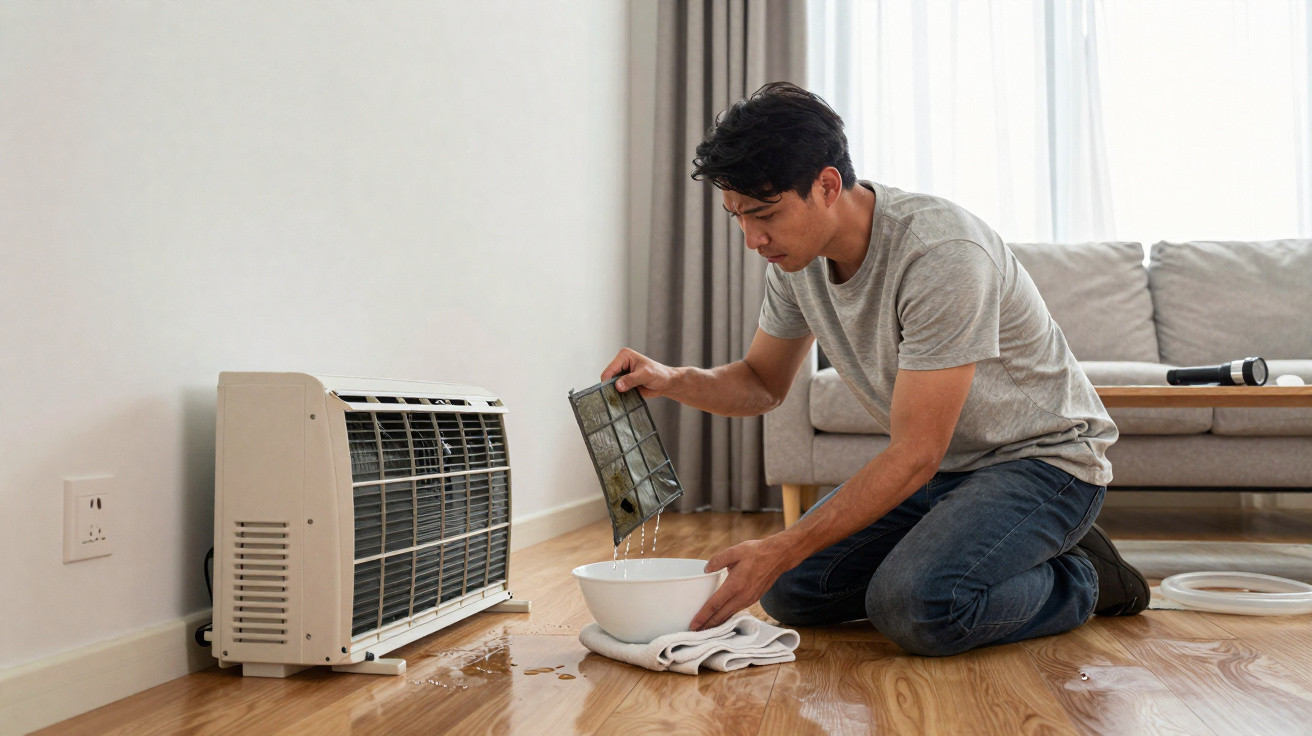
One afternoon, when her air conditioner began dripping onto the living-room floor, Fernanda assumed the unit had finally broken down. She switched it off and noticed droplets running from the indoor section, precisely where they should not be. Before considering a complete replacement, however, it is worth knowing that a water leak may be linked to particular parts, including the drain, filters or even the way the unit was installed.
Why can an air conditioner start dripping inside the house?
As it operates, an air conditioner removes moisture from the air, creating condensation water. Under normal circumstances, this water collects in a tray before being channelled outside through the drainage system.
If there is a fault along this route, water may build up and eventually run back into the room. A partially blocked drain is one possible cause, though it is not the only one. Heavily soiled filters and installation-related issues can also lead to water appearing where it is not expected.
Can a dirty filter be connected to the leak?
Filters carrying too much dust restrict the proper flow of air through the unit. Depending on operating conditions, this may encourage parts of the indoor unit to freeze. Once that ice melts, a larger volume of water can reach the drainage tray and cause it to overflow.
Fernanda therefore chose to inspect the filters before deciding there was a serious fault. Cleaning these parts regularly matters both for the appliance's operation and for maintaining good air circulation, always in line with the manufacturer's instructions.
How can the drain and installation affect the issue?
The drain must allow condensation water to flow properly outdoors. Dirt, a blockage, a bend or another issue in the pipework may cause water to return to the tray and overflow.
- Drain: look for indications of a blockage or poor water flow.
- Filters: check whether they are excessively dirty and clean them as directed in the manual.
- Installation: incorrect levelling or positioning can prevent water from draining properly.
- Tray: a build-up of dirt may disrupt condensation drainage.
It is not advisable to take apart internal sections of the unit without technical knowledge. As well as risking damage to the appliance, unsuitable work can cause electrical or drainage problems.
When is it best to call a professional?
If cleaning the filters does not solve the issue, if the unit continues to form ice, if the leak persists or if there are signs of a drainage-system fault, the best course is to arrange a technical inspection. A professional can assess the drain, tray, installation and other aspects of the appliance.
Fernanda realised that a few drops on the floor did not necessarily mean that the entire air conditioner needed replacing. Finding where the water is coming from is the first step. Since the cause may range from straightforward maintenance to an installation fault, stopping use when there is a significant leak and seeking suitable assistance can help prevent damage to both the appliance and the home.





Comments
No comments yet. Be the first to comment!
Leave a Comment