
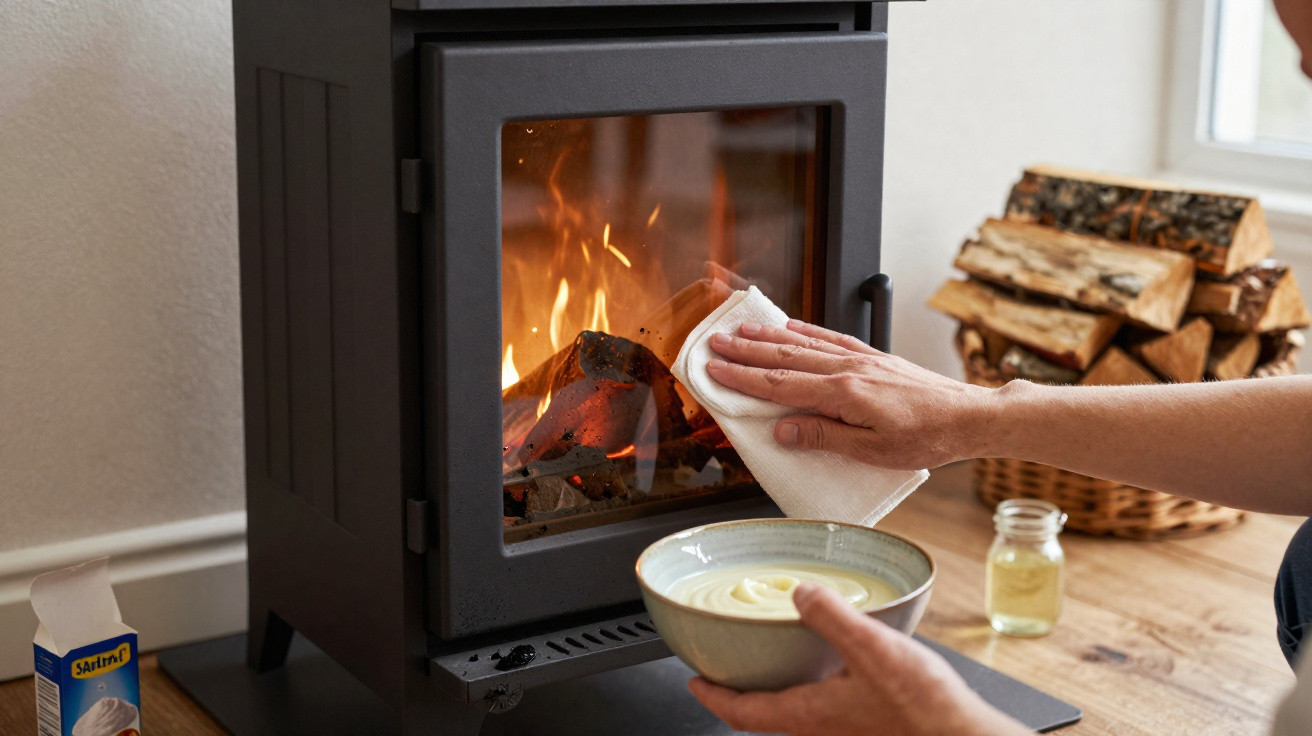
With a simple household trick, the glass can become transparent again.
Anyone with a wood-burning stove or pellet stove in the living room will recognise the issue: after only a few evenings, a grey-black coating forms on the glass. Instead of a clear view of the flames, there is simply a smeary film. Many people then reach for harsh specialist cleaners or laboriously scrub with ash. Yet a surprisingly straightforward natural mixture can restore the view of the fire in just moments.
Why stove glass turns black so quickly
Before reaching for the cleaning bucket, it is worth briefly considering the cause. Understanding why the stove glass becomes sooty can greatly reduce future cleaning sessions.
- Damp or poor-quality wood: Firewood with a high moisture content produces more smoke. That smoke contains more fine particles and tar residues, which settle on the glass as a dark film.
- Incomplete combustion: If the fire burns too cool or receives too little oxygen, it creates more soot particles that cling to the inside of the glass.
- Incorrect air setting: When the air supply is reduced too much, there is insufficient oxygen for clean combustion. The result is blackened glass and unpleasant-smelling flue gases.
- Constant operation at a low setting: Running the stove continually at minimum output produces large amounts of deposits, both on the glass and inside the firebox.
“Most sooty stove glass is not a cleaning problem but a settings problem: wood quality and air supply largely determine how clearly you can see the flames.”
The secret cleaning trick: clean stove glass without ash, naturally
Many stove owners swear by rubbing the glass with damp ash. It works, but it is abrasive, messy and often leaves streaks behind. A much more pleasant option uses two cupboard staples: clear household vinegar and bicarbonate of soda, or conventional baking powder containing bicarbonate of soda.
Why this combination works so well
- Household vinegar loosens grease and soot: The acidic cleaner softens dark combustion residues and releases them from the glass.
- Bicarbonate of soda provides gentle abrasion: The powder lightly lifts away the coating without scratching the glass, unlike wire wool or harsh scouring products.
- The chemical reaction also helps: When vinegar and bicarbonate of soda meet, the mixture foams. This fine bubbling action helps to dislodge stubborn particles.
“Vinegar plus bicarbonate of soda: a two-ingredient mix that tackles even thick soot layers in minutes – without specialist cleaner.”
Step by step: how to make sooty stove glass clear again
Step 1: Mix the cleaner
Before you begin, the stove must be completely cold. The glass should feel comfortably cool to the touch.
- Put two parts clear household vinegar into a bowl or cup.
- Add one part bicarbonate of soda or an equivalent baking powder.
- Stir briefly; the liquid will begin to foam slightly, which is intended.
After a few seconds, the foam will subside, but the cleaning effect remains.
Step 2: Apply the solution
- Dip a soft sponge or lint-free cloth into the mixture.
- Spread the liquid generously over the inside of the glass.
- Work in small, circular motions to loosen the coating evenly.
- For thick soot layers, leave the mixture to work briefly; one to three minutes is often enough.
Step 3: Wipe and dry
- Take a clean, slightly damp cloth and carefully wipe away the loosened dirt.
- Polish the glass with a second, dry cloth until no streaks remain.
- For those seeking an especially spotless finish, use an old cotton towel or a microfibre cloth at the end for extra shine.
“When you can clearly see the firebox again after the first wipe, you know the mixture has done its job.”
Natural alternatives if you have no bicarbonate of soda at home
The vinegar-and-bicarbonate method is very convenient, but it is not the only option. Many households have other products on hand that reliably remove soot and greasy films.
- Black soap: Dissolve a small amount in warm water, apply it with a sponge, allow it to work briefly and wipe thoroughly afterwards. The soap breaks down grease and leaves a light protective film.
- Rubbing alcohol: Put some on a cloth and rub it over the cold glass. It is ideal for fresh marks and fingerprints, though less effective on thick soot crusts.
- Hot water and newspaper: Dip a crumpled ball of paper into the water and rub it over the glass. The paper’s rough texture provides a mild scouring action, which is often sufficient for light dirt.
How to keep stove glass clean for longer
Every cleaning session takes time and effort, so it is worthwhile slowing down soot build-up. A few habits can keep grime at bay far more effectively.
Improve fuel and stove operation
- Use dry hardwood: Ideally, use wood such as beech or oak that has been stored for two years and has a moisture content below 20 per cent. Resinous softwood creates considerably more soot.
- Bring the stove up to temperature regularly: Especially after lighting, do not reduce the air supply too early. A strong fire burns off residues and reduces deposits on the glass.
- Use air controls sensibly: Follow the manufacturer’s instructions for air settings and do not leave the primary and secondary air controls permanently at their lowest setting.
- Do not burn rubbish or treated wood: Painted boards, pressed wood and waste paper release particularly greasy residues.
Plan regular quick cleans
Wiping the glass briefly every few days can save hours of scrubbing later. Thin films are much easier to remove than baked-on crusts.
- Check the glass before lighting the first fire of the day.
- Remove light hazing with a little vinegar water and a cloth.
- Only use the bicarbonate of soda method when there is a thick, hard layer.
“A quick wipe during the heating season prevents the dark layer from properly taking hold in the first place.”
Benefits of the natural cleaning method
Many glass cleaners for wood-burning stoves are extremely strong and spray harsh chemicals into the room. That is not necessary. This simple household mixture offers several advantages.
- Better for people and pets: Vinegar and bicarbonate of soda are generally harmless when used normally. There are no irritating fumes or burning sensations in the airways.
- Gentle on materials: Its lightly abrasive action is enough to remove soot without scratching the glass or damaging seals.
- Affordable and readily available: Both ingredients are inexpensive and are often already stored in the kitchen or cleaning cupboard.
- More environmentally friendly: After use, only water and harmless salts remain, with no problematic residues.
Practical advice for using stoves and cleaners safely
Although these are household products, it is still worth considering safety and handling. A few rules should always be followed when cleaning stove glass.
- Allow the stove to cool completely: Glass and metal retain heat for a long time. Clean only once there is no remaining sensation of warmth.
- Remove ash first: Large amounts of ash in the firebox can be stirred up while wiping and stick to the glass again.
- Wear gloves: Vinegar can dry the skin, while bicarbonate of soda may sting small cuts. Thin household gloves are entirely sufficient.
- Avoid scratching tools: Metal scrapers, wire scouring pads and cream cleaners can permanently damage the glass.
Anyone who pays closer attention to their stove will soon realise that clean glass is not merely a matter of cleaning product, but the outcome of overall heating habits. Those who use dry wood, light the stove properly and give the glass a quick regular wipe will enjoy a clear view of the fire much more often on winter evenings – without a thick soot layer, chemicals or hours of intensive cleaning.





Comments
No comments yet. Be the first to comment!
Leave a Comment