
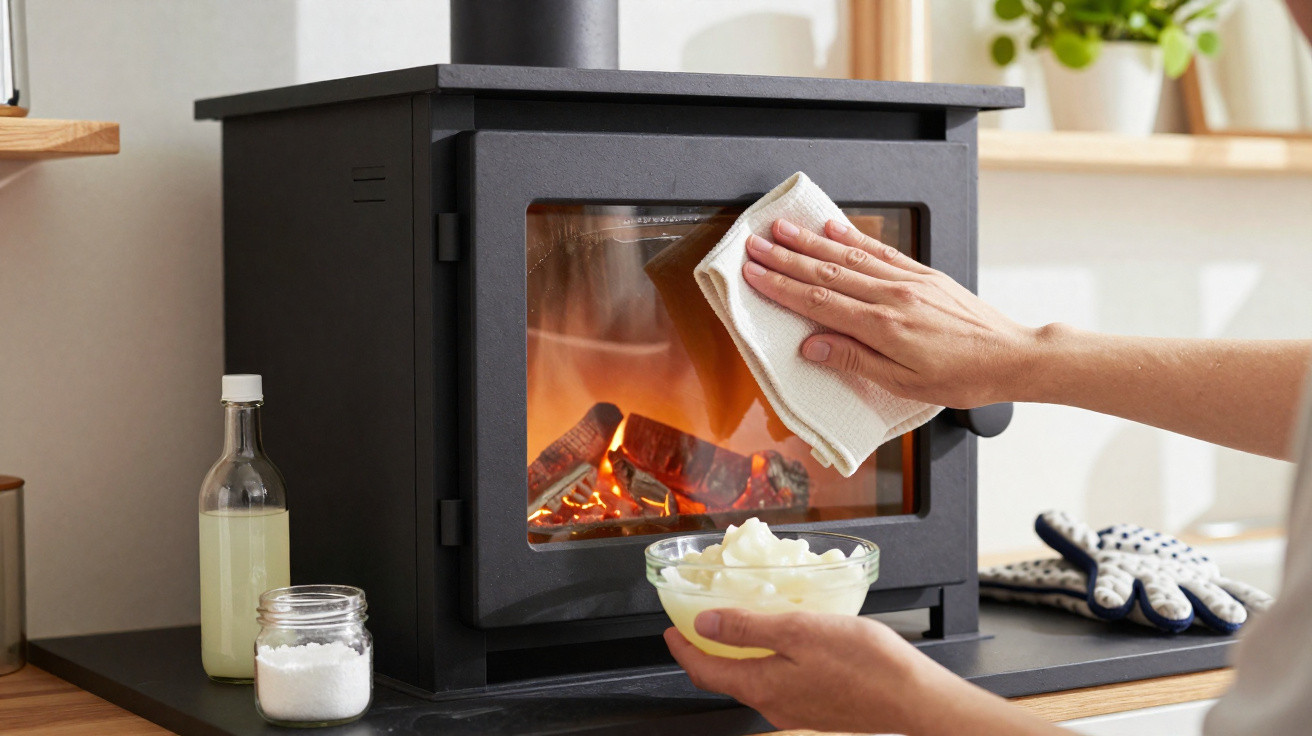
More households in the UK and US are choosing wood burners and pellet stoves to heat their homes, but the inviting sight of the flames can soon disappear behind a persistent coating of soot. Rather than relying on dirty ash or aggressive chemicals, an easy kitchen-cupboard solution is gaining popularity because it is inexpensive, quick and remarkably effective.
Why stove glass blackens so fast
Before altering the way you clean stove glass, it is worth knowing why it becomes dirty so rapidly. The brownish-black film is not simply “dirt”; it consists of soot, tar and unburnt particles produced by the fire.
- Damp or low-quality fuel: Wood that has not been sufficiently seasoned holds plenty of moisture. This moisture must evaporate before the logs can burn at a high temperature, cooling the fire and creating extra smoke. More smoke leads to more deposits on the glass.
- Cool, incomplete combustion: When a fire does not become properly established, it burns incompletely. The stove therefore produces more fine particles, which stick to the glass rather than travelling up the flue.
- Air controls set too low: Restricting the air supply causes logs to smoulder instead of burning properly. This oxygen-starved burn will quickly turn the pane black.
- Using the stove in “slumber” mode: Many owners reduce their stove overnight to “save wood”. Although this lowers fuel use, it also promotes a build-up of tar and soot on the glass and along the flue walls.
Any setting that keeps the fire cool, slow and smoky will cloud your glass faster than you think.
The simple stove glass cleaning trick without ash
The traditional approach involves using damp wood ash as an abrasive cleaning agent. Although effective, it is untidy, may scratch the glass when tiny stones are present and can require several attempts. A lesser-known alternative uses two everyday kitchen items: ordinary white vinegar and baking soda.
Combined, these ingredients remove soot surprisingly quickly while avoiding the grey paste created by ash and water.
Why vinegar and baking soda are so effective
- Vinegar works as a degreaser: White vinegar has mild acidity, helping to break down the sticky, tar-like film left on the glass after prolonged burning.
- Baking soda provides mild abrasion: Its fine particles are gentle enough for stove glass but sufficiently textured to remove soot and residue.
- The fizz helps release grime: As the two ingredients react, their gentle bubbling disturbs the deposited layer, making it easier to wipe away.
The mix of vinegar and baking soda gives you a low-cost, low-tox cleaner that eats through soot in seconds.
How to clean stove glass in minutes: step by step
Step 1: make the mixture
Clean the glass only once the stove is fully cold. Check the pane by touching it first; if it feels even slightly warm, leave it longer.
- Put two parts white vinegar in a small bowl or container.
- Gradually add one part baking soda to keep the fizz under control.
The mixture will foam briefly. When the bubbling has died down, it should form a paste that is easy to spread.
Step 2: apply it to the glass
- Dip a soft cloth or a non-scratch sponge into the paste.
- Apply it to the inside of the glass in small circular movements.
- On particularly stubborn areas, leave the paste for one or two minutes before gently scrubbing.
For very old, baked-on marks, a second treatment can be helpful, though everyday soot generally comes away almost immediately.
Step 3: rinse and dry
- Use a clean, damp cloth to wipe away any remaining white residue.
- Buff the glass with a dry microfibre cloth or an old cotton T-shirt for a clear, streak-free result.
Once you can see the firebox bricks clearly through the glass, you’ve removed more than enough soot for an efficient burn.
Natural alternatives when your cupboard is empty
If you have run out of vinegar or baking soda one evening, several other straightforward options can do the job. None requires a specialist stove-cleaning spray.
- Black soap or liquid castile soap: When diluted in warm water, it removes greasy deposits without damaging seals or coatings.
- Household alcohol: Products such as rubbing alcohol can rapidly dissolve tar-like residue; ensure the room is ventilated while you use them.
- Hot water and crumpled newspaper: Moisten newspaper and either dip it in a little fine ash, if you are prepared to use ash, or use it with hot water alone. This method is better for light dirt between more thorough cleans.
Quick comparison of popular methods
| Method | Mess level | Best for |
|---|---|---|
| Vinegar + baking soda | Low | Regular cleaning, moderate to heavy soot |
| Damp ash on newspaper | High | Old-school users, light to moderate soot |
| Black soap solution | Low | Delicate glass, eco-conscious households |
| Chemical spray cleaner | Medium | Occasional deep cleans when deposits are extreme |
How to reduce soot build-up on stove glass
Glass that remains clean for longer is not only more attractive; it generally indicates that your stove is operating more efficiently and releasing fewer particulates into the chimney.
- Use well-seasoned wood: Choose logs with a moisture level below roughly 20%. Many suppliers in the UK and US now state this clearly on their labels.
- Choose hardwoods where possible: Oak, beech and ash burn more cleanly and at higher temperatures than softwoods including pine and spruce, which may release resin and soot.
- Allow the stove to reach operating temperature: Once lit, give the fire plenty of air for at least 10–20 minutes so that the firebox can heat up properly.
- Do not keep it slumbering constantly: Extended low burns overnight can be appealing, but they substantially increase deposits on the glass and in the flue.
- Clean small amounts regularly: During periods of heavy use, wiping the glass once or twice weekly stops thick layers developing and needing vigorous scrubbing.
Cleaner glass usually points to a hotter, more efficient burn – which means more heat in your living room and less smoke in your chimney.
Why households are moving away from chemical stove cleaners
Supermarket shelves offer numerous specialist “stove glass” sprays claiming quick results. They can be effective, but many contain caustic substances that may irritate the skin and lungs, particularly in small living rooms or cabins with poor ventilation.
Vinegar and baking soda cost very little, give off no powerful fumes and are much kinder to the gaskets and metal fittings around the stove door. For households with children, pets or people with asthma, replacing a harsh spray with a mild homemade mixture can noticeably improve indoor air quality during the heating season.
What soot and creosote mean for your home
The mark on the glass is only the visible evidence. Related deposits collect inside the flue as creosote, a tar-like material that may become a significant fire risk when left untreated. The vinegar method cannot clean the chimney, but it can provide an early indication: if your glass is black each morning, the flue is likely accumulating deposits faster than it ought to.
Professional chimney sweeps in the UK and US advise regular wood-burner users to have their chimneys swept at least once annually, and potentially more frequently when stoves are used every day. Combining a sound glass-cleaning routine with regular sweeping greatly reduces the likelihood of chimney fires and smoky back-draughts.
Everyday routines that make the trick easy
In everyday use, the simplest option is to incorporate cleaning into routines you already follow. Some stove owners store a small container of pre-mixed vinegar alongside a box of baking soda beside the log basket. As they prepare the first weekend fire, they wipe away the previous day's soot while the stove remains cold.
Others schedule a weekly “stove check”: removing ash, inspecting the door seals, checking the glass colour and giving it a quick vinegar-and-baking-soda clean. Spending those few minutes helps keep the flames visible, the stove running efficiently and the living room closer to the cosy, postcard-like setting they imagined when they first bought their burner.





Comments
No comments yet. Be the first to comment!
Leave a Comment