
The frying pans stood in a row beneath fluorescent lighting, like troops awaiting inspection. There was polished copper, streamlined black non-stick, and weighty cast iron that seemed made for a mountain cottage. A young couple hovered between a £90 “healthy ceramic” pan and a £19 steel version that appeared almost dull beside it. Its sales tag trumpeted “non-toxic coating”, “stone effect” and “latest generation”. The inexpensive steel pan advertised nothing at all. It simply waited there: slightly matt, comfortingly weighty, and free of marketing claims around its handle.
They paused, then chose the pricier pan.
Beside them, an older woman quietly placed the £19 steel pan in her trolley and left.
She may well have selected the healthiest frying pan in the aisle.
The healthiest frying pan can be the least glamorous option
Ask ten people to name the healthiest frying pan and most will indicate one with a glossy coating and a label designed to suggest wellbeing. We have been taught to link “non-stick” with “healthy”, as though effortless washing-up automatically meant safer cooking. But the answer repeated across nutrition and toxicology discussions is often rather unexciting: an uncoated carbon steel or stainless steel pan, without elaborate chemical layers.
No marble-look finish, no iridescent coating, no wonder surface.
Only metal, heat and food.
Spend a few minutes in any cookware department and the same pattern appears. A young parent studies a box promising “eco-ceramic”, “stone-inspired coating” or even a “titanium shield”, as if choosing the outer shell of a spacecraft rather than something for frying an egg. Then comes the price: £60, £80, and occasionally more than £100.
A few shelves lower sits a pile of £20–£30 carbon steel pans, the sort professional kitchens buy in quantity. There is no eye-catching packaging, only a cardboard band and the reassuring weight that seems to say: I am built to last.
Here is the curious part: many supposedly “healthy” non-stick coatings are still being developed, while long-term research into their newer chemical combinations remains incomplete. Even where rules prohibit the worst substances, makers can replace them with related compounds that have been studied less. A straightforward metal pan avoids the issue altogether. There is no coating to scratch, no layer to deteriorate, and no unseen film to transfer into your omelette after several years.
That is why so many chefs, dietitians and careful parents arrive at the same almost mundane conclusion: the healthiest frying pan is frequently a simple, uncoated carbon steel or stainless steel pan costing no more than a takeaway.
Making a simple steel pan naturally non-stick and healthy
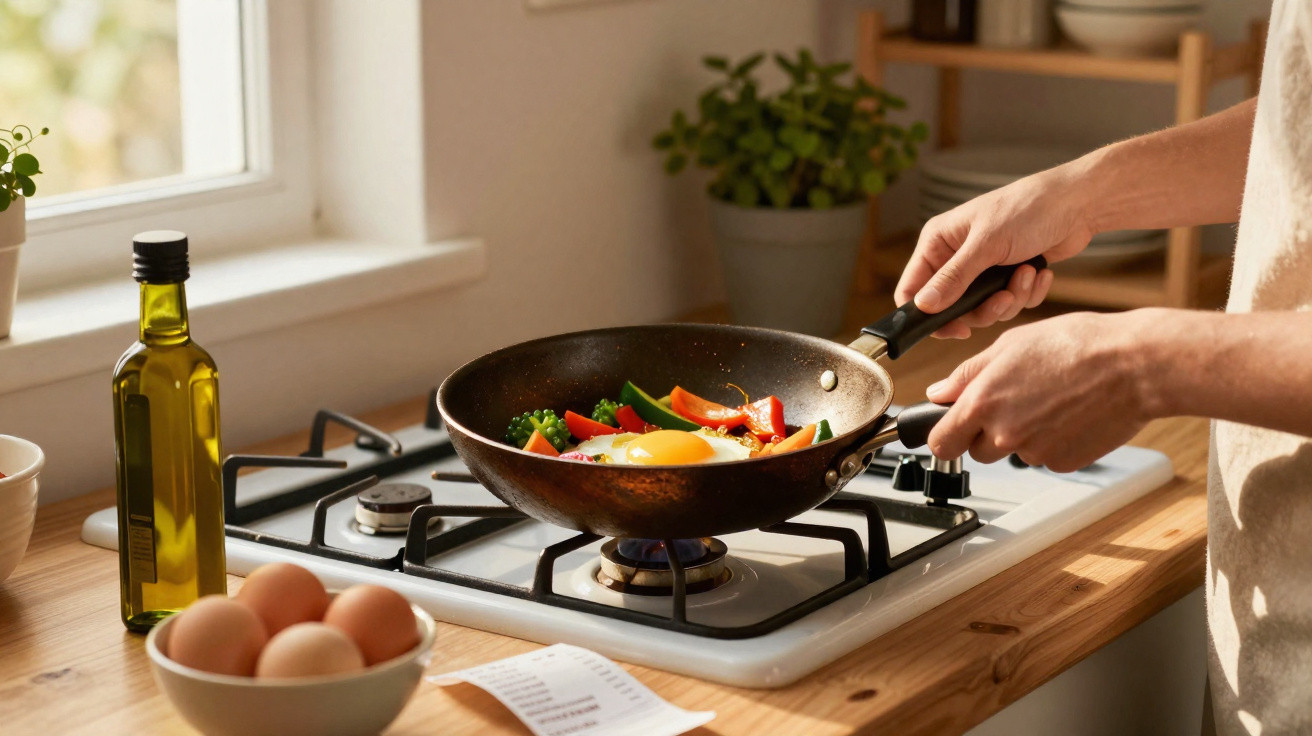
With carbon steel, the useful trick is seasoning - not with salt and pepper, but by baking a protective oil layer into the metal. Wash the pan, dry it, apply a very thin coating of neutral oil, and heat it until its surface darkens a little and becomes satin-like instead of glossy. Repeat this several times and a natural buffer develops between your food and the bare metal.
The first few pancakes might catch slightly. By the fifth, they should not.
After several weeks, the pan begins to feel like a familiar tool that has learnt how you cook.
Many people buy a steel pan intending to use it well, only to give up after their first egg sticks disastrously. We all know that point when you promise never to leave reliable Teflon again. Carbon steel does require some learning, but the process is brief. Warm the pan first, add a little fat, allow an extra 30 seconds, and food starts releasing rather than fusing to the surface.
In truth, no one manages perfect technique every day. On some mornings you are barely awake, the pan has not heated properly, and the egg sticks. Still, after seasoning it and cooking with it a dozen times, you and the pan generally begin working in step.
Its health appeal comes down to a simple formula: no synthetic coating, less chance of unknown particles, and cooking that remains uncomplicated. A dietitian I interviewed put it bluntly:
“People obsess about miracle non-stick pans, but what touches your food every day should be as simple and stable as possible. A basic steel pan that costs less than a dinner out will probably serve you longer and more safely than a luxury ‘smart coating’ that dies in three years.”
Once the pan is yours, the real difference lies in how you use it:
- Cook over medium heat rather than constantly using maximum heat
- Use a light coating of oil or butter instead of pouring in too much
- Allow food to sear before moving it, so that it releases on its own
- Wash it using hot water and a soft brush, avoiding aggressive scouring
- Dry it thoroughly, then apply a drop of oil if it will not be used for a while
It may seem slightly old-fashioned, but this small ritual discreetly improves both your cooking and your peace of mind.
Health, budget and everyday habits finally align
Carbon steel and stainless steel are notable because they bring together three things that do not often coincide: health, affordability and longevity. Normally, the option that is better for you costs extra or demands a daily routine that falls apart within a week. In this case, the least expensive pan on the shelf is often the one that ages most gracefully, cooks more evenly and keeps obscure acronyms away from your evening meal.
There is no need to turn the kitchen into a laboratory. You simply accept that a slightly heavier pan requiring modest care can repay you quietly for years.
There is an emotional irony too, because this choice runs counter to two decades of marketing. Fancy handles, ceramic shimmer and “space-age” coatings offered a future in which nothing stuck and nothing wore away. In many homes, the reality is a cupboard filled with scratched, faintly peeling pans that feel a little worrying, yet remain in use “because it would be a shame to throw them out”. A £25 carbon steel pan, darkened a little through seasoning, may not look as impressive on social media, but it can replace those pans one at a time.
Each time you pick it up, you know precisely what is being heated: unadorned metal, a fine layer of oil and a little patience from you.
This type of decision can spread. One person buys a steel pan because a friend recommended it. They discover how to preheat it correctly, cook with slightly less extreme heat and pay attention to the fat they choose. They find that vegetables caramelise more effectively, meat browns more deeply, and dinner does not require three plastic-coated gadgets. One modest cookware change influences cooking routines; those routines can influence health, as well as a sense of control.
A frying pan will not transform the world, but the right one can gently alter the everyday story you tell yourself whenever you stand at the hob.
| Key point | Detail | Value for the reader |
|---|---|---|
| Select uncoated metal | Carbon steel or stainless steel, with no synthetic non-stick layer | Limits exposure to deteriorating coatings and unknown chemicals |
| Season and preheat | A light oil coating, proper preheating, and allowing food to release naturally | Produces a practical, near non-stick surface without additives |
| Buy once, use for years | An affordable pan that handles high heat and improves over time | Reduces spending, waste and the mental effort of continually replacing pans |
FAQ:
- Is carbon steel really safe for everyday cooking? Yes. Carbon steel is mainly iron with a small amount of carbon, much like cast iron but lighter. Once seasoned, chefs and nutrition professionals consider it suitable for daily cooking, and it does not depend on synthetic non-stick coatings.
- What if I’m sensitive to nickel or metals? If you have a nickel sensitivity, stainless steel may sometimes cause problems because certain grades contain nickel. Carbon steel or properly seasoned cast iron are usually more suitable choices, although you should consult your doctor or an allergist if unsure.
- Will food stick more than on a classic non-stick pan? Initially, it can, particularly with delicate foods such as eggs or fish. As the seasoning develops and you become accustomed to preheating and using a little fat, sticking reduces dramatically and everyday cooking becomes easy.
- Can I use a steel pan on an induction hob? Most carbon steel and stainless steel pans perform very well on induction hobs because they are magnetic. If you are uncertain, check the label or test the pan with a magnet before buying.
- How long can a carbon steel pan last? With simple care - no dishwasher, no long soaking, quick drying and an occasional dab of oil - a carbon steel pan can last for decades. Like cast iron, many home cooks hand them down, with the seasoning improving over time.




Comments
No comments yet. Be the first to comment!
Leave a Comment