
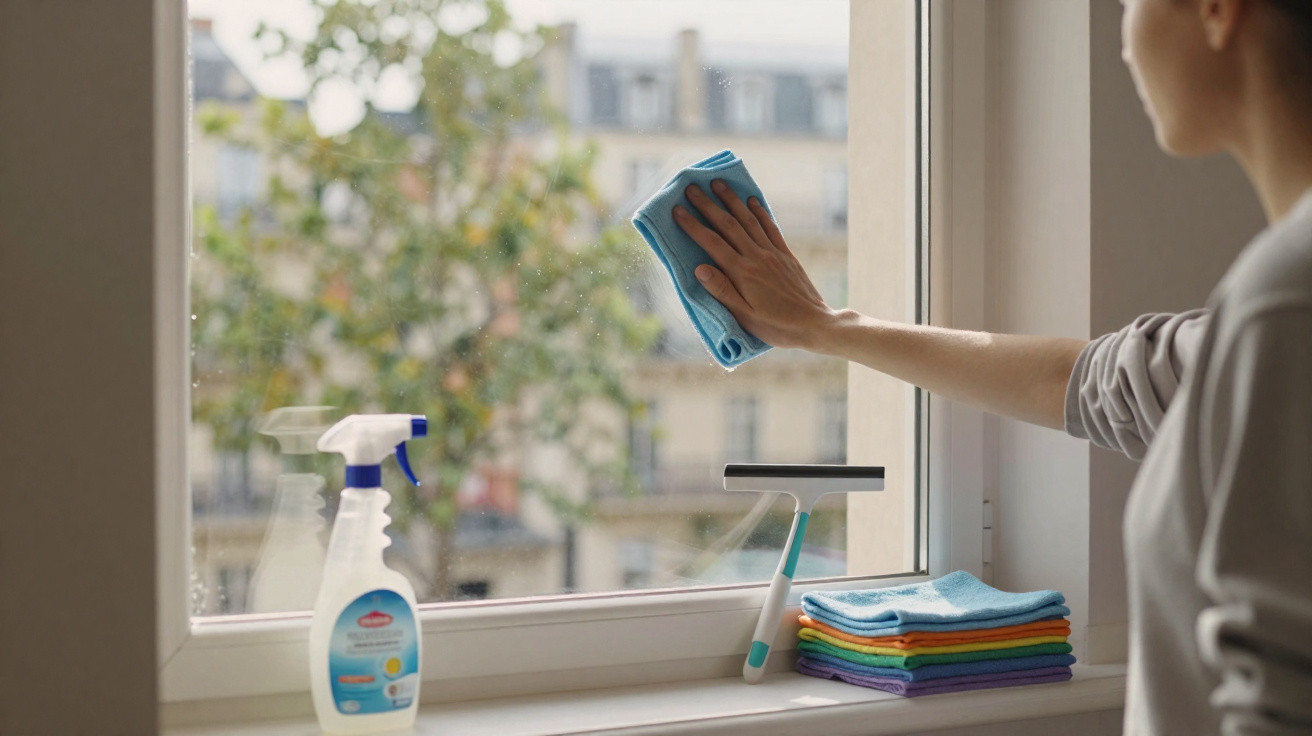
When low sunlight suddenly floods a room, marks on the glass become impossible to miss. A three-pass method claims to put an end to them.
The home and décor website behind this tip, which has also been picked up by specialist online publications, sets out a precise way to clean windows on an overcast day so that unsightly streaks no longer appear when the sun sits low in the sky. It is a straightforward yet tightly structured routine, based on three consecutive passes carried out at a particular time.
Why low sunlight exposes so many marks on windows
When the sun is high, imperfections on window panes often go unnoticed. As soon as the light becomes low and slanting, however, even the smallest residue shows up. The original publication explains that this is due to the way light reflects off glass.
“At the end of the day or in winter, low sun acts like a horizontal spotlight, revealing every tiny mark, every dried droplet and every poorly rinsed detergent deposit.”
In these circumstances, a standard quick clean with a cloth and window cleaner is not enough. Criss-cross strokes, circular motions and overly wet cloths can leave behind a fine film. It remains unseen in diffused light, but becomes glaringly obvious as soon as sunlight enters from the side.
To prevent this effect, the method outlined by the website involves working in overcast conditions, using controlled movements and splitting the job into three clearly separate stages.
One essential rule: clean windows only in overcast weather
At the centre of the method is one rule: do not wash windows in direct sunlight. The publication points out that sunshine speeds up the evaporation of water and detergent. As a result, the product dries before it can be wiped away properly, leaving hazy patches and water marks.
The recommended time is therefore:
- during properly overcast weather, with no direct sun on the pane;
- early in the morning or later in the afternoon, when temperatures are milder;
- ideally, at a time when the room can be aired easily to help the glass dry.
Soft light makes it easier to spot genuine dirt, such as dust, greasy marks and squashed insects, without being misled by excessive reflections.
The three-pass window-cleaning method: a precise sequence
The core of this tip is a sequence of three targeted passes. Each one serves a distinct purpose, helping to minimise residual marks. The important point is not to combine the stages and to work promptly.
First pass: controlled wet pre-cleaning
The first stage is intended to remove the bulk of the grime. The publication describes a damp but controlled clean that avoids soaking the window.
- Fill a bucket or spray bottle with lukewarm water and a small amount of washing-up liquid; a few drops are enough.
- Dampen a microfibre cloth or a clean sponge, then wring it out thoroughly.
- Wipe the glass from top to bottom, without trying to achieve a perfect finish at this stage.
The aim is not shine, but the removal of dust, pollen, fingerprints and outdoor pollution. This step prevents abrasive particles being rubbed across the glass later, when they could scratch it.
Second pass: cleaning with window cleaner
Once the worst of the dirt has been removed, the actual wash can begin. The website specifies that this phase should be carried out quickly and systematically.
- Apply window cleaner, or a homemade water-and-white-vinegar solution, to a small area without soaking the glass.
- Work in vertical strips from top to bottom, using a second clean microfibre cloth or a squeegee.
- Wipe away any excess immediately rather than allowing the product to air-dry.
“It is this second pass that dissolves greasy marks and invisible residues left by previous cleaning. Working in small sections limits drips and streaks.”
The publication stresses the need to use a cloth reserved for washing. Fabric already impregnated with detergent, fabric conditioner or furniture polish will leave a film that becomes visible again in sunlight.
Third pass: streak-free drying
The final stage makes all the difference when low sun enters the room. It is no longer about washing the pane, but drying and polishing it.
- Take a completely dry, lint-free microfibre cloth used solely for this stage.
- Wipe the window in straight lines, changing direction from one side of the glass to the other so flaws are easier to identify; for example, work vertically indoors and horizontally outside.
- Pay particular attention to the edges, corners and bottom of the pane, where water tends to collect.
This third pass removes the final droplets, ultra-fine traces of cleaner and faint cloudy patches that are not yet visible in soft light. They would be revealed immediately by the first low-angle ray of sun.
Common mistakes that cause streaks in low sunlight
The source publication highlights several everyday habits that can undermine an otherwise careful clean. It identifies a number of familiar pitfalls.
- Using kitchen roll, which sheds fibres and breaks down on the glass.
- Rubbing in circles, which spreads the cleaner instead of removing it.
- Failing to change cloths between washing and drying, thereby putting moisture and residue back onto the pane.
- Applying too much product, making complete drying very difficult.
- Cleaning in direct sun or on hot glass, which causes rapid, uneven drying.
“The recommended method uses little product, several separate cloths and soft light. These three factors drastically reduce the appearance of new streaks.”
The website also notes that some textiles, particularly heavily worn old cotton tea towels, can shed fibres or no longer absorb effectively. It is better to set aside good-quality microfibre cloths for windows and wash them without fabric conditioner, as this reduces their absorbency.
Which products to use without overdoing it
The tip promoted by the publication does not depend on a “miracle” product, but on the method itself. Its recommendations remain conventional:
- a little washing-up liquid in the water for the first pass;
- a shop-bought window cleaner or a water-and-white-vinegar mix for the second;
- no product at all for the third pass, only a dry microfibre cloth.
Homemade white-vinegar mixtures have the benefit of cutting through grease and reducing limescale marks. They may, however, leave a slight smell, which can be reduced by airing the room for a few minutes after cleaning.
Advice in France for avoiding marks on windows
In France, practical guidance from consumer associations and professional cleaning companies broadly matches this three-stage approach. The main principles are shared: work away from direct sun, move quickly, use a limited amount of product and take care over drying.
French window-cleaning professionals likewise favour squeegees used with a lightly soapy solution, followed by wiping the edges and seals with dedicated cloths. This method is similar to the second and third passes described by the source publication.
For a householder in France, the principle remains the same as elsewhere:
- plan the cleaning for a time when the room is not in full sunlight;
- keep microfibre cloths exclusively for windows and machine-wash them separately;
- consider using a professional window squeegee to speed up the second pass;
- take time to check the result by moving around the room and viewing the glass from different angles.
Consumer associations also point out that maintaining frames and seals contributes indirectly to clean glazing: dirty or mouldy seals can leave black or greenish marks as soon as it rains.
Two additional steps to keep windows clean for longer
Beyond the three-pass method, a few simple habits can make the result last. The publication particularly mentions more regular cleaning, which prevents the build-up of greasy film from cooking fumes or heating.
In practice, a light but frequent wipe with a barely damp cloth and a little vinegar is more effective than waiting until the glass is heavily soiled. The detailed three-pass method for overcast weather can then be kept for larger seasonal cleans in spring and autumn.
Another useful measure is to air the room thoroughly during and after cleaning. This speeds up drying, reduces condensation and prevents fresh water marks forming on a newly cleaned window.




Comments
No comments yet. Be the first to comment!
Leave a Comment