
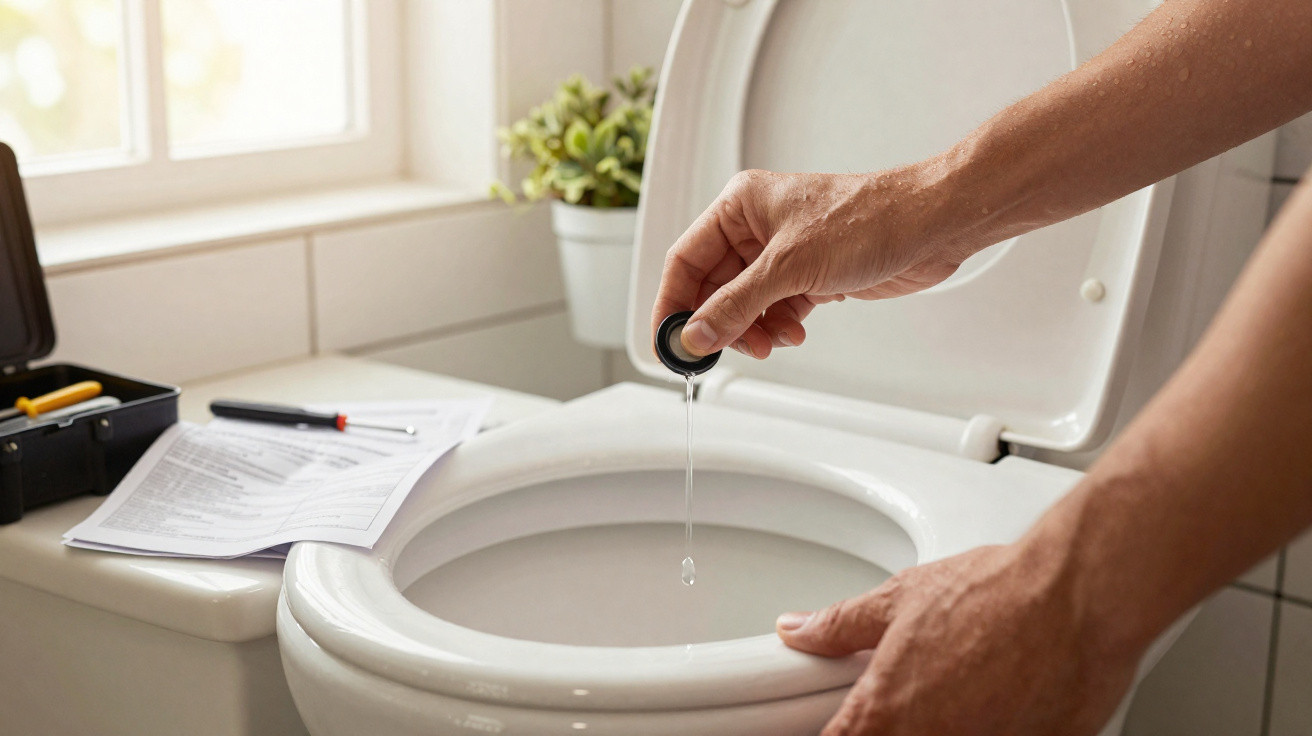
It is 2.17 am, the flat is quiet, yet a thin trickle of water is still murmuring through the toilet. You turn over in bed, tell yourself it can wait until tomorrow, then picture the meter running without a break. We all know that moment when a minor household noise suddenly becomes intensely irritating. The good news is that this fault does not necessarily mean a plumber’s bill. In many instances, the culprit is hiding at the bottom of the cistern: a simple flush valve seal, available for around £5. A few minutes, slightly wet hands and a little method may be all that is needed. The detail that makes all the difference is beneath the lid.
This thin trickle of water can cost far more than you think
A toilet flush that runs continuously does not always make much noise. Sometimes, there is only a faint ripple in the bowl, a clear line of water running down the porcelain. Even so, this subtle movement nearly always points to the same issue: the cistern is no longer sealing fully, so water escapes and the mechanism keeps refilling. The sealing washer, fitted to the flush valve or flap depending on the model, is often the first part to suspect.
For Claire, in Lyon, the leak seemed so slight that she allowed it to continue for several weeks. One morning, after adding a few drops of food colouring to the cistern, she saw blue-tinted water appear in the bowl without flushing. The diagnosis was clear. Depending on the size of the leak, a faulty toilet flush can waste several dozen or even hundreds of litres each day. And that water is certainly not free.
Limescale, harsh cleaning products and years of repeated pressure all cause the seal to deteriorate. It may become hard, misshapen or coated in a rough deposit that allows water through. It is not especially dramatic, but the mechanism is straightforward: if the rubber part no longer sits properly against its seat, the cistern cannot hold water. A gap of just a few millimetres can sometimes cause a permanent leak.
The under-£5 part to inspect before calling a plumber
Start by carefully lifting off the cistern lid, then close the small water supply valve on the wall near the toilet. Flush the toilet to empty the cistern and inspect the mechanism. On many models, gently unclipping or slightly twisting the flush valve gives access to the circular seal at its base. Take the old seal to a DIY shop: this is the easiest way to ensure you buy the correct diameter.
When the mechanism is easy to reach, replacing it rarely takes longer than 15 minutes. First clean the area where the seal sits, using a soft sponge and a little white vinegar if limescale has built up. Let us be honest: nobody really does this every day, which is precisely why deposits eventually accumulate. Avoid using a knife, screwdriver or overly corrosive products: scratching the sealing surface can keep the leak going.
Before replacing the lid, slowly turn the water supply back on and check whether the level stops below the overflow. If the water keeps rising, the problem may be the float, either set too high or no longer working properly.
“For most minor toilet leaks, it is better to check the water level before replacing the entire mechanism,” advises a plumbing-department assistant encountered in a large DIY store.
- Check whether water is flowing into the bowl without flushing.
- Test it by adding a few drops of food colouring to the cistern.
- Inspect the condition of the seal, flush valve and float.
- Replace the seal if its surface is hard, cracked or distorted.
A small repair that prevents waste and unpleasant surprises
Fixing a leaking toilet flush does more than restore quiet to the bathroom. It also puts you back in control of invisible water use, the kind that adds up day after day without anyone really noticing. A seal costing a few pounds can prevent a much larger expense, particularly in a household where the water meter is already rising quickly. If the mechanism remains temperamental after this replacement, the float or valve will then need checking.
There is something reassuring about this small repair: you open a cistern, finally understand what happens behind the button, and find that an ordinary component can solve a very real problem. Keeping a compatible seal in a drawer is not excessive, especially in an older home. And if you have experienced this leak yourself, what you learned may help a neighbour, a relative or that colleague who still thinks the sound of their toilet flush is “normal”.
| Key point | Detail | Added value for the reader |
|---|---|---|
| Flush valve seal | This rubber component can harden or become distorted over time. | A repair often possible for around £5. |
| Food-colouring test | A few drops in the cistern reveal a leak into the bowl. | A straightforward diagnosis without dismantling the entire mechanism. |
| Water level | A level that is too high may indicate a poorly adjusted or worn float. | Prevents replacing a part that is not at fault. |




Comments
No comments yet. Be the first to comment!
Leave a Comment