
They give in at the underarms first: small golden crescents that seem to mock detergent, turning a once-crisp essential into a “maybe next time” spare.
The shirt is draped over a chair back as though it knows it has done wrong. Held up to the light, the yellow shadows stare back at you, evidence of long days and packed commutes. Everyone has faced that choice: throw it away or see whether there is one final remedy in the cupboard. You run a quick wash, then a longer cycle. Yet the marks remain, like a code only laundry experts understand. The answer is more understated than you might expect.
Why white shirts develop yellow underarm stains
Sweat gets most of the blame, but that explains only part of it. The real issue is the interaction between perspiration and the aluminium salts in antiperspirant, helped along by time, heat and one or two trips through the tumble dryer. An almost invisible pale mark can then become a persistent yellow halo.
Remember the shirt you wore throughout summer. At first it seemed perfectly fine; then faint shadows emerged, followed by a darker edge after a hot wash and a rushed tumble dry. A survey from a major laundry brand placed underarm stains among the three leading reasons people discard a white shirt too soon. What rarely gets said is that the problem can be solved when you address the chemistry rather than simply the colour.
This is the process: sweat proteins and lipids combine with aluminium compounds from antiperspirants, attaching themselves to cotton fibres. Ordinary detergent cannot release that bond on its own. Heat effectively bakes it in. Chlorine bleach oxidises certain components while making others darker, which explains why the stain may look more yellow after a “deep clean”. It is not simple dirt; it is a chemical reaction that requires an opposing reaction.
How to remove yellow underarm stains from white shirts
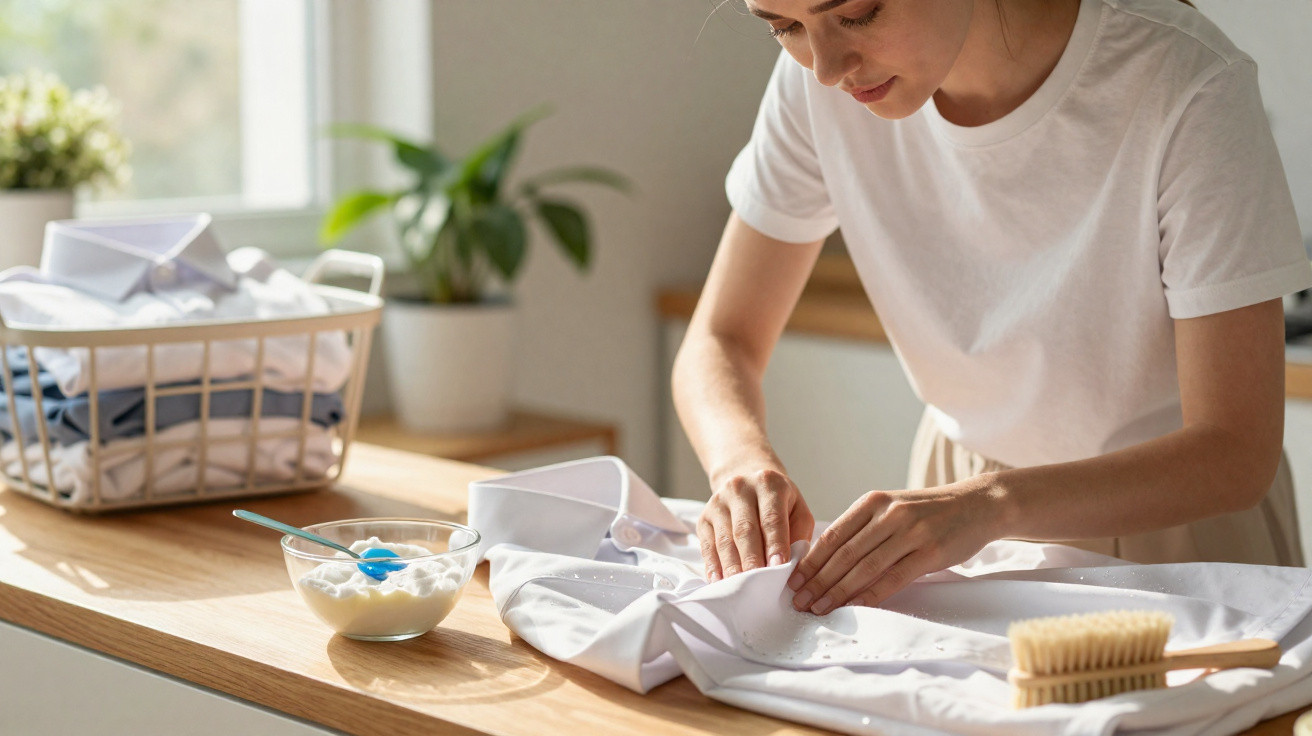
The solution is a three-ingredient pre-treatment paste made from items found beneath most kitchen sinks: 3% hydrogen peroxide, baking soda and clear washing-up liquid. Combine 2 parts baking soda with 1 part peroxide and 1 part washing-up liquid to make a spreadable paste. Using a soft toothbrush, gently work it into the yellowed fabric, leave it for 30–60 minutes while keeping it damp, then rinse and wash warm with an oxygen booster. The solution is a straightforward kitchen-sink paste that breaks the sweat–aluminium bond.
Realistically, no one carries out that process every day. Use it when marks begin to appear or before putting shirts into storage. For older halos, repeat the treatment and increase the contact time to 2 hours, misting it again with water to prevent the paste from drying into a crust. Wash white cotton on a warm-to-hot cycle using an enzyme detergent and a scoop of oxygen bleach (sodium percarbonate). Avoid chlorine bleach on these marks: it fixes the yellowing and may damage the fibres. With delicate garments or blends, test the treatment first on the inside of the hem.
Two common mistakes can undo otherwise good work. Vigorous scrubbing, as though you were buffing metal, may roughen the fibres and create a fluffy patch that turns grey more quickly next time. As heat fixes stains, air-dry the garment first so you can assess the result. Never mix chlorine bleach with sweat stains or with ammonia-based products. A few sensible adjustments can stop the problem returning: replace antiperspirant with aluminium-free deodorant, or allow antiperspirant to dry fully before getting dressed; rinse the underarm area in cool water after particularly sweaty days; and wash shirts promptly.
“Stains aren’t dirt. They’re chemistry. Treat the chemistry, and the white comes back.”
- Paste recipe: 2 tbsp baking soda + 1 tbsp 3% hydrogen peroxide + 1 tbsp clear washing-up liquid
- Contact time: 30–60 minutes for fresh stains; up to 2 hours for set-in marks
- Boost: add oxygen bleach to the wash for white cotton
- Avoid: chlorine bleach on protein/aluminium stains; high heat before they have disappeared
- Test: carry out a colourfastness check on a hidden area for non-cotton blends
Lessons from the laundry basket
Imagine finding a second-hand Oxford shirt with a price tag still attached and two unforgiving yellow crescents beneath the arms. After 20 minutes spent mixing, brushing and waiting, it comes out of the washing machine looking as if it owes you an apology. That is the pleasure of it: rescuing something that seemed beyond saving with nothing more than a bowl and spoon.
A home economist I met recommends a 1-hour enzyme soak as a follow-up for particularly stubborn cases. Dissolve oxygen bleach in warm water, immerse only the underarm section, then launder as usual. For wool or silk, leave peroxide out entirely and use cool water, gentle detergent and patience instead. If you pay attention, the fabric will tell you what it can withstand.
At times, the best approach is prevention disguised as a routine. Put antiperspirant on at night so it adheres to your skin rather than the fabric. Keep mornings uncomplicated. If you need to reapply during the day, first blot your underarms with a damp paper towel. Small habits bring rewards when stains are keeping score.
The quiet pleasure of restoring a white shirt
There is a calming quality to saving a shirt you had assumed was lost. It is about more than saving money. It is the sense of reclaiming a small piece of control, watching bright white return where a shadow had taken hold. The garment gets another season, perhaps two.
Pass the method on to a friend who treats the tumble dryer as a magic wand. Give a gentle prompt to a partner who uses chlorine bleach for everything. Smile at the evening you wasted scrubbing with toothpaste because an online forum claimed it worked on trainers. Once the shirt dries bright white, you will have a small tale worth repeating.
Yellow halos are not a personal failing. They simply show that life is busy and routines can become chaotic. Once you understand the chemistry, the drama disappears. Swap panic for a paste, a timer and a better wash cycle. The next time a white shirt comes off the drying rack without a mark, that modest private victory will stay with you all day.
| Key point | Detail | Benefit for the reader |
|---|---|---|
| Root cause | Sweat proteins + aluminium salts + heat bind to cotton | Explains why marks remain after normal washing |
| Effective method | Peroxide–baking soda–washing-up liquid paste + oxygen bleach wash | Clear, repeatable steps that genuinely reverse yellowing |
| What to avoid | Chlorine bleach on these stains; high heat before removal | Prevents set-in damage and wasted effort |
FAQ:
- What causes yellow underarm stains on white shirts? They occur when proteins and lipids in sweat react with aluminium salts from antiperspirant, then oxidise and attach to fibres during wear and washing. Heat intensifies the colour and strengthens the bond, so standard detergent becomes less effective.
- Will baking soda or peroxide damage my shirt? For white cotton, a paste of 3% hydrogen peroxide and baking soda is usually safe. Always test blends and delicate fabrics on an inconspicuous area first. Do not use peroxide on wool or silk, which are better treated with cool water and a gentle, enzyme-free detergent.
- Can I use regular bleach to fix yellowing? Chlorine bleach may make aluminium-sweat stains appear worse and can weaken cotton over time. Choose oxygen bleach (sodium percarbonate) for the wash instead. It removes discolouration without chlorine’s harsher effects.
- Does lemon juice or vinegar help? Mild acids may brighten slightly dull areas, but they do not effectively break the sweat–aluminium bond. In sunlight, they can also put stress on fibres. Should you use them, rinse thoroughly and never mix them with peroxide or bleach.
- How do I stop stains from coming back? Let antiperspirant dry before dressing, or use aluminium-free deodorant; wash shirts soon after heavy wear; air-dry them to check the result; and pre-treat marks as soon as halos emerge. A quick rinse beneath the arms after hot days also makes a significant difference.




Comments
No comments yet. Be the first to comment!
Leave a Comment