
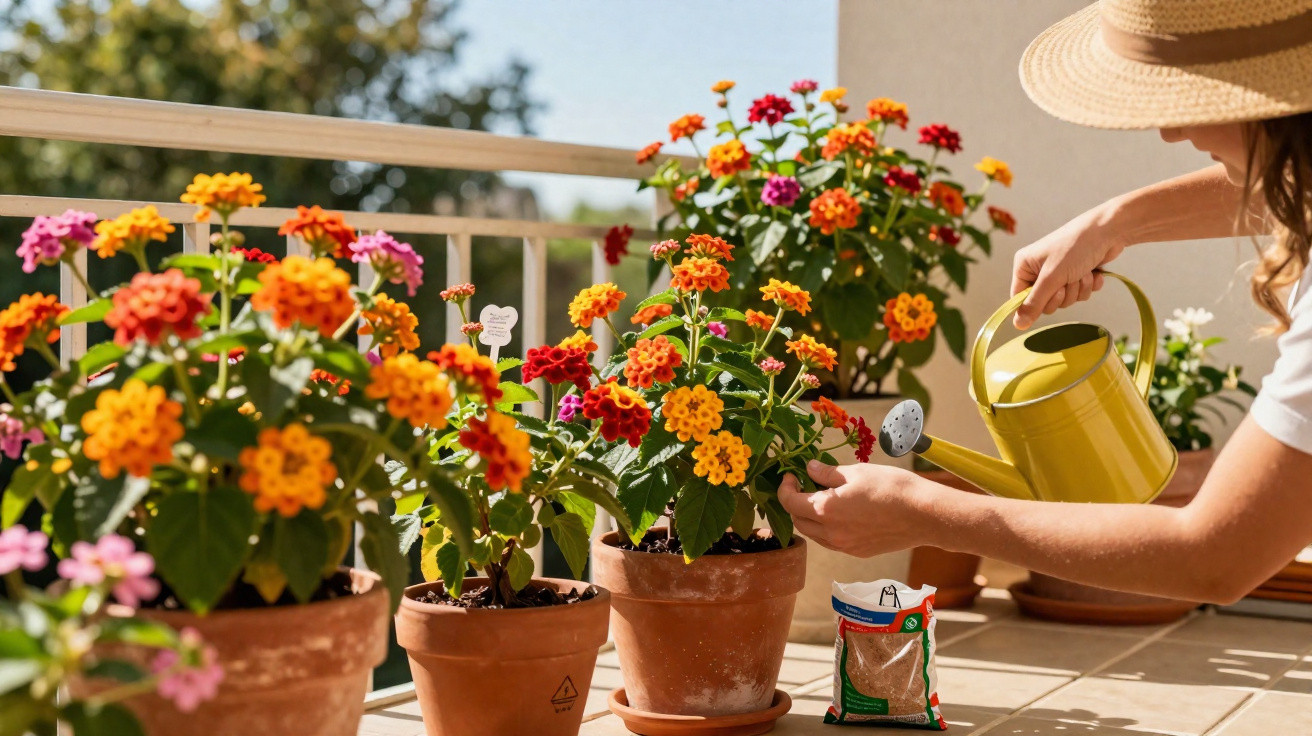
A shrub that keeps producing fresh flowers almost without pause, shrugs off heat and fills both balconies and gardens with colour – it sounds like magic.
That is exactly what Lantana, commonly known in German as Wandelröschen, can offer. This tough shrub produces new blooms for months, changes colour as it flowers and is remarkably straightforward to look after. Give it a protected place for winter and this overlooked queen of the garden can provide enjoyment for many years.
Why Lantana is regarded as an “immortal” shrub
In its native Central and South America, Lantana grows as a perennial, sometimes woody shrub. In tropical areas, it spreads quickly and persists permanently. Although it cannot survive frost outdoors in the UK, it can continue growing for many years in a container if overwintered correctly. This is why it has gained its near-“immortal” reputation.
“Lantana flowers from spring until autumn, putting on a constantly changing display of colour.”
Its flower clusters are particularly fascinating because they shift in colour over time. They often open yellow, then turn orange before developing rich red or pink tones. As a result, the plant can look as though it has been redecorated several times in a single day.
Position: where Wandelröschen thrives best
To place this long-flowering plant correctly, think of its natural habitat: warm, sunny and reasonably airy. These conditions are easy to recreate on a balcony or patio.
- Light: Choose a full-sun or very bright spot, ideally with many hours of direct sunshine.
- Warmth: Sheltered places beside house walls or pergolas are ideal.
- Wind: A gentle breeze is not an issue, but avoid constant draughts and cold gusts.
- Pot or border: In Central Europe, it is mainly grown in a container, either as a standard or a potted shrub; plant it in the ground only in very mild areas and with winter protection.
On balconies, bush-form plants work well in troughs or larger containers. Standards, by contrast, make a striking feature by an entrance or on a patio.
Planting Lantana correctly: getting off to the right start
When bringing home a Lantana from the garden centre, establish the right growing conditions from the outset. Its roots are sensitive to waterlogging, yet the plant also dislikes compost that dries out completely.
Drainage is essential
Lantana is generally kept in ideal growing media under nursery conditions. At home, this is not always the case. A layer of coarse material at the base of the pot is therefore vital:
- Fill the bottom of the container with expanded clay pellets or coarse broken terracotta.
- Keep the drainage hole clear so surplus water can run away.
- Add good-quality potting compost above it, preferably mixed with a little sand or fine expanded clay.
This creates an open, free-draining growing medium that retains moisture without leaving the roots sitting in wet conditions.
Planting step by step
- Pick a container that is slightly larger than the root ball.
- Add the drainage layer, followed by an initial layer of potting compost.
- Remove the plant from its nursery pot and gently loosen the root ball.
- Position the Lantana at the same depth as it was in its previous pot.
- Fill around it with compost and firm it lightly.
- Water thoroughly, while ensuring that no water remains standing in the saucer.
Care: keeping Wandelröschen flowering for months
Lantana displays its flowers from May and, in some cases, until October. To extend this period as much as possible, it needs regular watering and feeding, though neither should be overdone.
Watering: never let it dry out entirely
Although Lantana is considered relatively drought tolerant, it visibly suffers when short of water. The flowers drop first, followed by limp, drooping leaves.
- Keep the compost evenly and lightly moist during summer.
- Allow the top layer of compost to dry slightly between waterings.
- Tip away any standing water in the saucer after 10–15 minutes.
- During hot spells on balconies or patios, water a little more often but in moderate amounts.
“If the root ball has dried out completely, Lantana reacts sensitively and needs time to recover.”
Feeding: fuel for this flowering machine
Producing flowers continuously requires energy. A structured feeding routine rewards you with a full display of blooms:
| Period | Feeding |
|---|---|
| April to September | Add liquid fertiliser for flowering plants to the water once a week |
| Start of the season (March/April) | Alternatively, work slow-release fertiliser into the top layer of compost |
| From October | Stop feeding and allow the plant to enter its resting period |
Pruning and shaping: keeping the shrub compact
In balcony troughs, Wandelröschen is often treated as an annual, so major pruning is unnecessary. Those keeping the plant for several years should reach for the secateurs in late winter.
Pruning in spring
New shoots usually begin to emerge in March or April. This is the right moment for a hard prune:
- Cut all shoots back to around 10 to 15 centimetres.
- Remove weak, thin or inward-growing branches completely.
- For standards, prune the crown into a defined shape so that it remains rounded and dense.
During summer, many home gardeners encourage the next flush of blooms by regularly removing spent flowers by hand or with secateurs. This takes a few minutes each week, but rewards them with an almost uninterrupted succession of flowers.
Overwintering: protecting this long-flowering plant from cold weather
Lantana cannot tolerate frost. If it is growing outdoors, whether in the garden or a pot, act before the first cold nights arrive.
The right winter quarters
A bright, cool room is ideal, for example:
- an unheated conservatory
- a bright stairwell
- a cellar room with a window
- a frost-free hobby room at around 10 degrees
The ideal temperature is approximately 10 degrees with good ventilation. If no bright place is available, Wandelröschen can also be kept in a darker location, but it should then be cooler – roughly 5 degrees. Very little water is needed at this stage: keep the compost only moist enough to prevent the root ball from drying out completely.
From February, its water requirement increases slightly again. Gradually acclimatise the plant to warmer temperatures, begin feeding it again for the first time, and move it outdoors after the Ice Saints in May.
Toxic to pets, a paradise for insects
One factor that many people overlook when buying it is that every part of Lantana is considered toxic, including its decorative berries. Anyone with cats, dogs or young children at home should choose its position carefully.
- Place containers beyond the reach of young children and pets.
- Wear gloves while pruning and avoid contact between plant sap and skin.
- Collect fallen leaves and berries promptly.
“For butterflies, wild bees and many other insects, however, Lantana is a true magnet offering plenty of nectar.”
Especially in urban balcony gardens, the shrub can become a valuable food source when other flowers have long since faded.
Practical design ideas with Lantana
As Wandelröschen flowers so persistently, it is exceptionally well suited as the focal point of containers and troughs. It looks especially harmonious alongside plants that enjoy similar conditions:
- With Mediterranean herbs such as rosemary or thyme, positioned nearer the edge of the pot.
- With trailing companions such as trailing petunias or verbena, which soften the rim of the container.
- As a standard above lower, densely foliaged ground-cover plants in a container.
Those with little time for intensive care are better off choosing robust varieties and using larger containers. Greater volumes of compost dry out more slowly and are more forgiving if a watering is missed.
What many people do not know: risks and opportunities in the garden
In warmer countries, Lantana is sometimes classed as an invasive species because it can spread unchecked. In our climate, this effect is prevented by the weather. At the same time, gardeners benefit from its positive qualities: a long flowering season, strong appeal for pollinators and flexible use in containers.
For families with young children, a compromise may be worthwhile: grow Lantana only on elevated balconies or patios that children cannot access freely. Those mainly hoping to attract butterflies and bees can combine the shrub with other nectar-rich flowering plants to create a small insect buffet.
The formula is simple: prune it properly once in spring, water it regularly and overwinter it well, and Lantana will deliver colour, scent and life to the garden for years – without fuss, but with impressive stamina.






Comments
No comments yet. Be the first to comment!
Leave a Comment