
A spotless shower can feel like a modest indulgence, but hard water and soap residue soon leave glass looking milky. Hotels do not somehow remove it every morning. Instead, they use a simple method that lets water run away and keeps the glass seemingly invisible for weeks. It is neither a gadget nor a miracle, but something easily found at home.
A supervisor once took a tiny unlabelled bottle from a cleaning caddy and applied it to the shower glass with a soft cloth, with the precision of a watchmaker lubricating a mechanism. She was not cleaning the surface. She was treating it.
Everyone knows the feeling: the shower screen looks acceptable while wet, but once dry it becomes... cloudy. Within minutes, she had finished, switched on the tap, and watched water gather into tidy beads and roll away as though the glass had been waxed. There were no streaks or chalky haze. The answer was not a cleaning product at all.
The five-star hotel trick explained
The understated reality is that luxury hotels do not tackle limescale daily; they prevent it from adhering in the first place. They apply a hydrophobic coating to the glass, similar to one used for a car windscreen or a specialist bathroom sealant. The answer is not a cleaner - it is a coating. Water forms beads and runs off, carrying minerals away with it. That means less residue, less scrubbing, and a shower that can appear newly fitted for weeks.
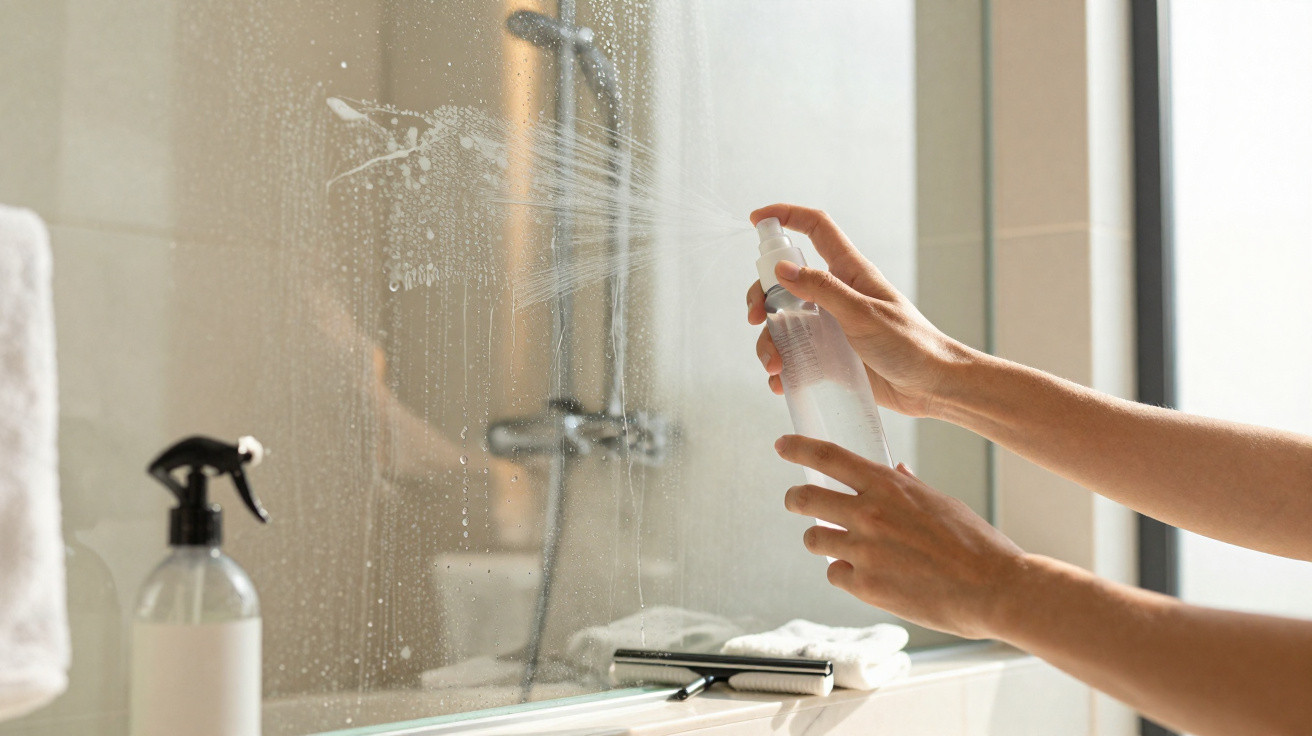
At a Knightsbridge property, a head housekeeper showed me a process requiring fewer than ten minutes per suite. First clean and dry the glass, then place a few drops of dishwasher rinse aid or professional glass repellent onto a microfibre cloth and buff until it cannot be seen. That is all. In a city where more than half of homes contend with hard water, it is an unobtrusive lifesaver. The coating extends the gap between deep cleans from days to weeks. Frankly, nobody truly keeps up with that task every day.
The science behind it is pleasingly straightforward. Hydrophobic molecules reduce the surface energy of glass, preventing water from spreading into a clinging sheet that dries to a chalky finish. Droplets instead collect and slide away, leaving minerals with less opportunity to settle. It is much like rainwater on a waxed car bonnet. Rinse aids contain non-ionic surfactants, whereas car-style repellents use silicones that provide a longer-lasting bond. Both options are safe for glass. Do not use them on floors or natural stone, however, as they may make surfaces dangerously slippery or cause staining.
How to keep shower glass clear for weeks at home
Do the preparation once, then enjoy the result. Thoroughly clean the glass with limescale remover or warm white vinegar and a soft pad. Rinse it and dry it until it squeaks, including the edges and corners. Then apply the treatment: lightly mist dishwasher rinse aid diluted 1:1 with water, or choose a silicone-based rain repellent or bathroom glass sealant. Spread it in overlapping passes with a microfibre cloth, before buffing the glass until clear. Dry first, then coat. When using a professional sealant, allow the curing time stated on its label. A single coat can provide weeks of protection.
Upkeep is minimal. A brief cool rinse after showering helps, as does a quick swipe with a squeegee whenever you remember. Even without either step, the coating substantially reduces build-up. Typical errors include applying too much product, using an abrasive sponge, or spilling the treatment over tiles and the shower tray. Use a light touch and keep windows open during application. If your bathroom has natural stone, cover it with a towel before starting. This small precaution avoids unpleasant slippery surprises.
Housekeepers describe the technique as though it were a private handshake. The effort is done once, while the benefit arrives each morning. A modest routine that creates a five-star finish at home.
“We don’t chase shine, we set it up,” a London head housekeeper told me. “Treat the glass like a windscreen and the shower cleans itself.”
- Microfibre cloths (two: one for application and one for buffing)
- Dishwasher rinse aid or a rain repellent/glass sealant
- A spray bottle for 1:1 rinse-aid dilution
- A small squeegee for swift post-shower passes
- Nitrile gloves and a towel to shield stone and floors
Keep the routine simple and the glass clear
After watching water bead up and glide off the shower screen, it is difficult to return to the old way. The shower seems more peaceful, and the glass no longer takes light from the room. You can establish your own schedule: apply a coat every three to six weeks according to water hardness and use, supported by quick rinses whenever life permits. If a hectic week gets in the way, the coating still provides protection. Tell a friend who dislikes scrubbing, or share it with the person keeping the household running. Keep it off the floor. This hotel method is not secret because it costs a lot; it is secret because it is so uncomplicated.
| Key point | Detail | Benefit for the reader |
|---|---|---|
| Hydrophobic coating | Apply dishwasher rinse aid, rain repellent, or a dedicated glass sealant to clean, dry glass | Weeks of transparent glass with very little maintenance |
| Preparation matters | Deep-clean and dry fully before coating; buff to a clear, invisible finish | Better adhesion, longer durability, and fewer streaks |
| Safety & scope | Avoid floors and natural stone; ventilate the room; test a small area first | Benefits without slips, stains, or unexpected problems |
FAQ:
- Is dishwasher rinse aid safe on shower glass? Yes, on plain glass it is suitable when used sparingly and buffed dry. Keep it away from natural stone, painted metal, and floors.
- How long will a coating last? Usually three to six weeks. Steam, hard water, and how frequently you shower can make that period longer or shorter.
- Can I still use vinegar for maintenance? Yes, but use it lightly and not on the same day that you apply the coating. Never mix vinegar with bleach, and be gentle so that the layer is not stripped too quickly.
- Will this stop my mirror fogging? That is a separate issue. For mirrors, shaving foam or a purpose-made anti-fog treatment works well. Some hotels also use heated mirrors.
- What if my screen is acrylic, not glass? Apply a small amount of rinse aid using a soft cloth and avoid solvent-based car products. Try it first on a discreet corner before treating the entire screen.


Comments
No comments yet. Be the first to comment!
Leave a Comment