
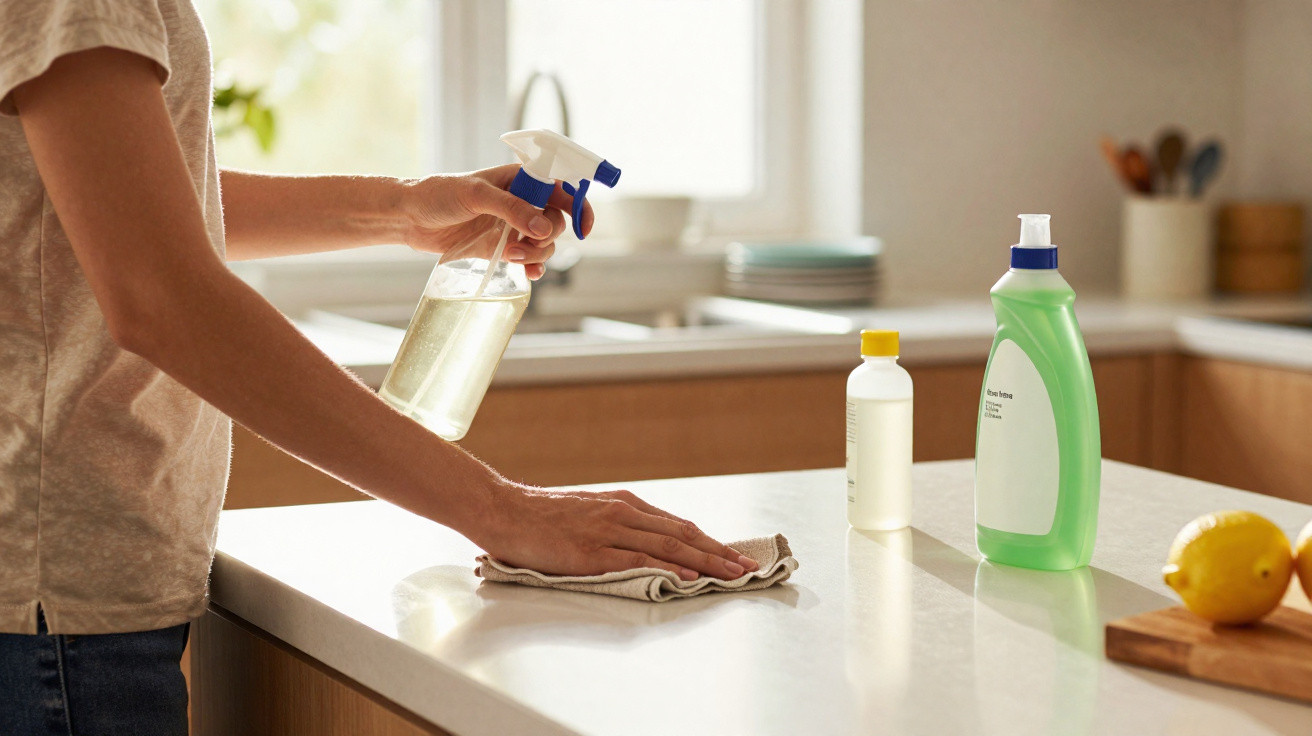
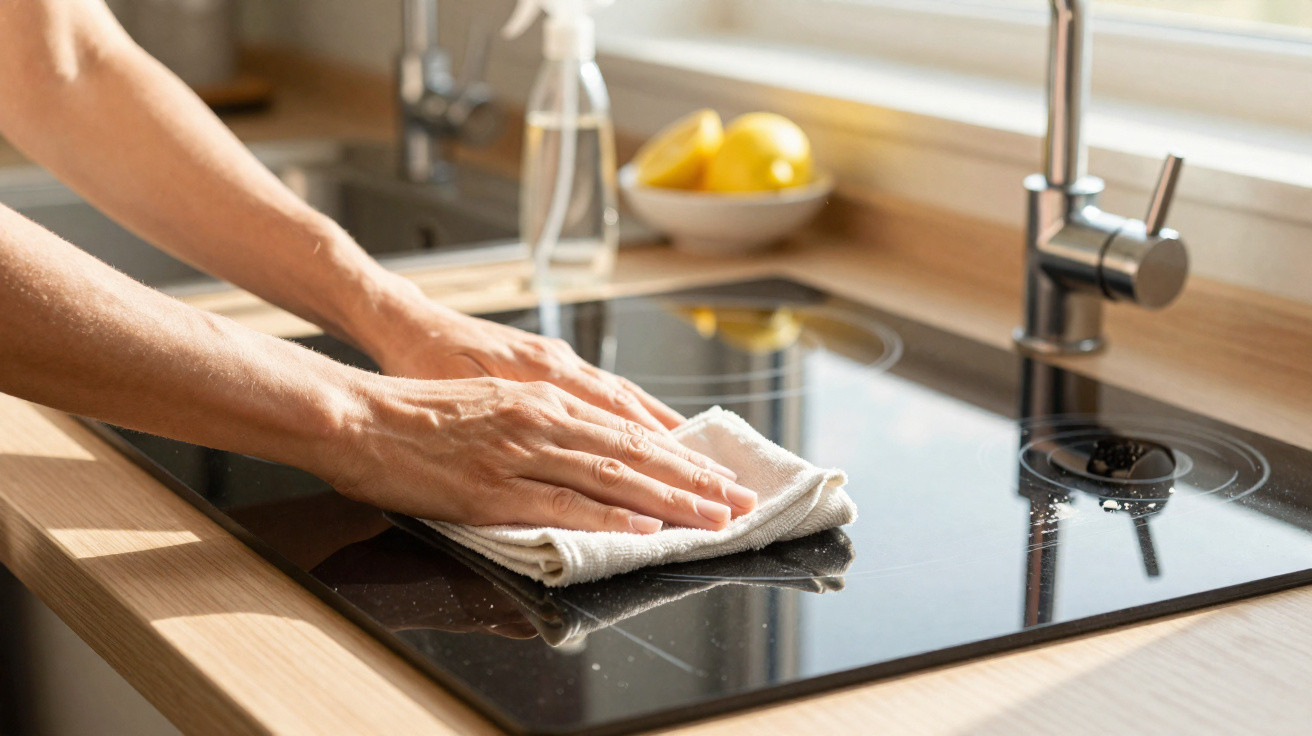
I had already tested the citrus spray beneath the sink, followed by the “streak-free” glass cleaner and then the miracle-promising paste. The worktops looked acceptable, but nothing more. On impulse, I combined one spoon of vinegar with a squeeze of washing-up liquid in a jug of warm water, then tried it on the taps. In three unhurried wipes, the chrome changed from dull to reflective. The hob rings shed their grease without that blue chemical mist. Even the stainless-steel sink was rid of the grey coating I had come to think of as “normal.” It was unexpectedly gratifying, rather like popping bubble wrap with a cloth. The hall mirror became clear, the microwave door turned see-through again, and tannin marks around mug rims vanished in a single wipe. I was left holding the cloth, genuinely surprised at how effortless it was. It almost seemed unfair.
The small cleaning mix that shifts grime
At first, I was simply curious. The second attempt brought disbelief. By the third, I was in the middle of a quiet cleaning dash that my 7 a.m. self would appreciate the following day. It turns out that a gentle acid and a mild surfactant work together on grease, limescale film and fingerprints as though they were made for it.
I began with the kettle spout and hob controls, before moving on to the fridge door, where little fingerprints seem permanent. After two wipes, the controls were smooth and squeaky-clean. That pearly coating which makes stainless steel appear worn disappeared from the fridge door. I then sprayed the sink and gave it a minute to sit. Wiping it down was as easy as spreading butter on warm toast: no gritty drag, only a smooth glide.
Behind the marketing claims, the reasoning is straightforward. Vinegar contains acetic acid, which helps soften mineral deposits and release soap scum. Washing-up liquid is a surfactant: it reduces the surface tension of water, allowing oil to lift into the water rather than spread across the surface. Instead of being stuck to the steel, tiny droplets of grease remain suspended in the rinse water. That is the simple science behind a gleaming tap.
How vinegar and washing-up liquid compare with shop-bought cleaners
The cleaning aisle suggests that every surface needs its own specialist bottle: one for chrome, another for glass, one for grease and another for daily use. That means plenty of plastic, as well as plenty of guilt. This mixture offers versatility instead, covering windows, hobs, taps, sinks, bins, microwave interiors and greasy kettle lids in one session. It cannot tackle every job, but it handles the everyday dirt that makes a room seem tired.
I timed it once, because that is the sort of person I am. It took nine minutes to clean the hob, sink, splashback, fridge handles, bin lid and the inside of the microwave door. The only additional item was a dry cloth for the final polish. My kitchen seemed five years newer. The vinegar odour disappears within minutes, while the shine remains.
This is not magic; it is simply suitable chemistry for a suitable task. Acid breaks down the dull layer left by hard water, while surfactants encourage grease and food residue to leave the surface. Warm water helps the soap dissolve and distribute evenly. A microfibre cloth holds on to the released dirt rather than moving it elsewhere. Together, these factors explain why one simple jug can outperform a cupboard full of specialist products for everyday cleaning. The advantage lies in the combination.
Make it, use it and love it
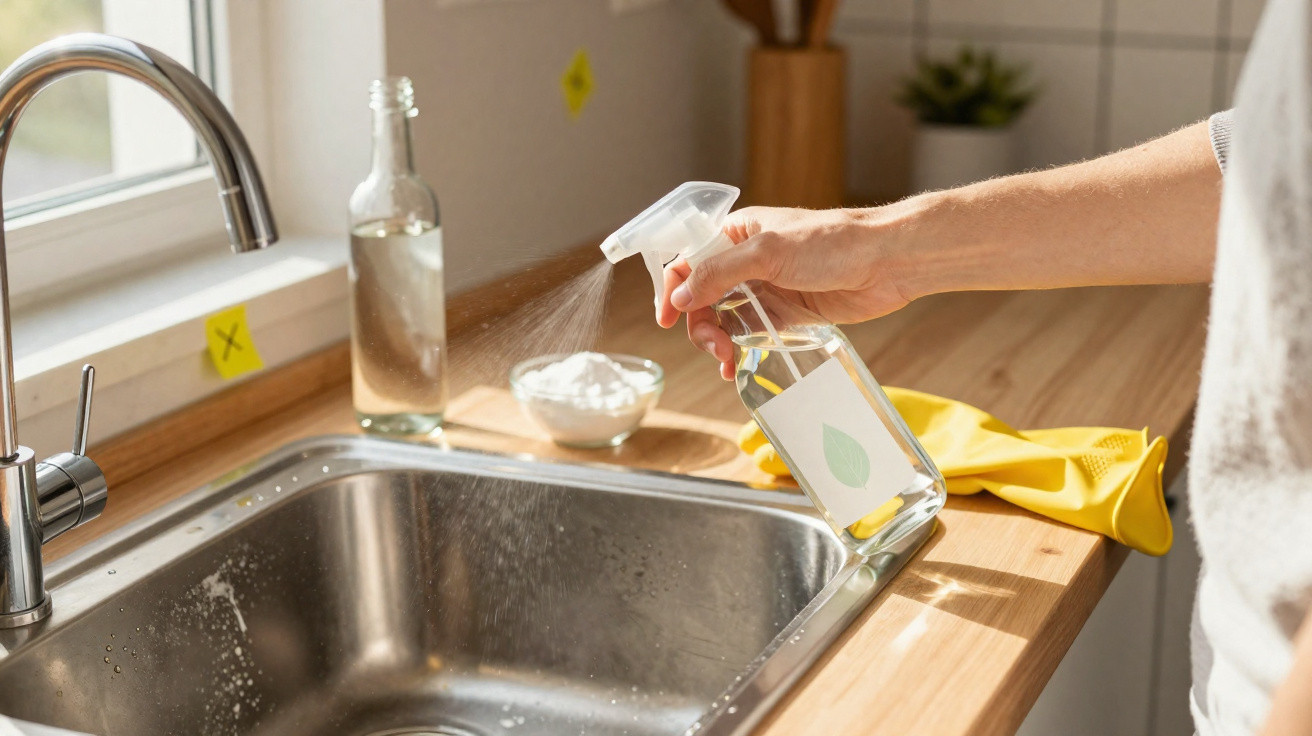
This is the mixture that proves useful. Add 500 ml of warm water, 1 spoon (roughly a tablespoon) of white vinegar and a small squeeze of washing-up liquid to a spray bottle or jug. Swirl rather than shake it, unless you want a foam party. Apply it to cool surfaces, leave it for 60–90 seconds, then wipe with a damp microfibre cloth. On mirrors and glass, finish with a dry cloth to achieve a streak-free result.
The usual errors are easy to avoid. Too much soap does not mean more cleaning power; it creates residue. Do not miss out the waiting time, as the vinegar needs a minute to soften the film. Avoid spraying hot hobs, since the mixture will evaporate too quickly. It is also unsuitable for certain materials: do not use it on natural stone, including marble, granite and limestone, or on waxed wood. Realistically, nobody does that every day. Still, two minutes of more considered wiping is better than twenty minutes of scrubbing later.
We have all seen a kitchen appear clean until sunlight reveals every streak. This is a solution that fits into a rinsed jam jar.
“I stopped buying three different sprays. My taps have never looked this clean, and my grocery bill thanked me,” said a reader who tried the mix for a week.
- Ratio: 500 ml warm water + 1 spoon vinegar + a small squeeze of washing-up liquid
- Best uses: taps, sinks, hob surrounds, fridge doors, microwaves and glass
- Do not use on: natural stone, cast iron, unsealed grout, phone or tablet screens
- Never mix with: bleach or products containing chlorine
Why this is unlike a traditional cleaning day
Most people do not want another job to do at home. This small habit makes cleaning a rapid reset rather than a weekend project. One bottle can sit beneath the sink and be reached for as readily as a tea towel. It removes the barriers to getting started: little effort brings a clear reward. The kitchen can look finished on an ordinary Tuesday evening, not only on a designated chore day. That sense of progress carries over too: bathroom tap, cleaned; shower screen, sprayed and wiped while the kettle boils. It is not about achieving perfection. It is about noticing a gleam as you pass and choosing to maintain it.
| Key point | Detail | Benefit for the reader |
|---|---|---|
| - | One spoon of vinegar + a squeeze of washing-up liquid in warm water lifts grease and mineral haze | Quick results using products you already own |
| - | Use on taps, sinks, hobs, splashbacks, glass and microwave doors | One mixture can replace a shelf of bottles |
| - | Avoid natural stone, cast iron and unsealed grout; never combine it with bleach | Helps protect surfaces and keeps cleaning safe |
FAQ
- Can this replace my glass cleaner? For routine smudges and fingerprints, it can. Spray sparingly, wipe, then polish with a dry cloth for a sharp finish. Heavier nicotine film or outdoor dirt may require another pass.
- Will vinegar damage my worktops? It is suitable for laminate, sealed ceramic and stainless steel. Avoid marble, granite, limestone and all natural stone, as acid may dull or etch these surfaces over time.
- Does it disinfect? It works well on everyday dirt, but not for serious sanitising. When disinfection is needed, choose a suitable product and keep it separate-never combine it with vinegar or anything containing chlorine.
- What ratio should I use? Begin with 500 ml of warm water, 1 tablespoon of vinegar and a small squeeze of soap. If streaks appear, use less soap. For stubborn limescale, wait 2–3 minutes before wiping.
- How can I make it smell better? Put a drop of essential oil or a strip of lemon peel in the bottle. The vinegar smell fades quickly, while a subtle citrus scent leaves it feeling fresh.


Comments
No comments yet. Be the first to comment!
Leave a Comment