
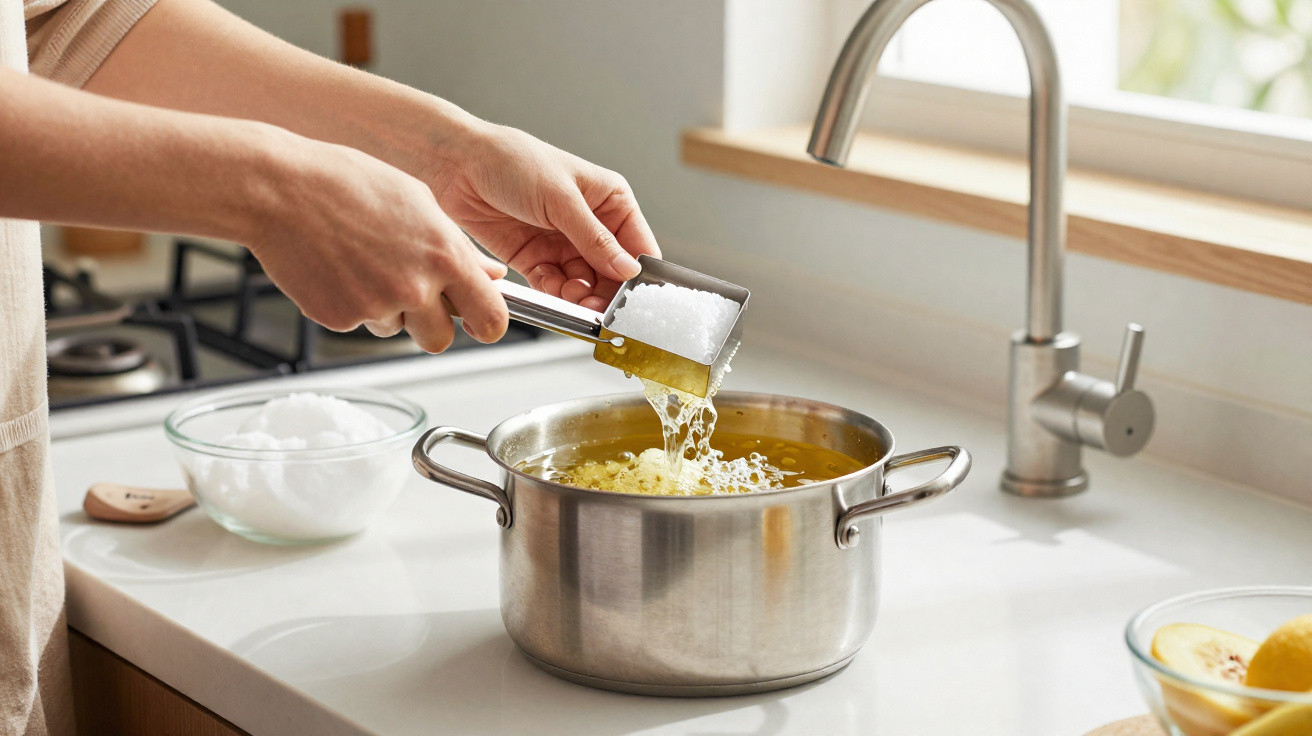
More home cooks are swapping takeaways for sizzling traybakes and deep-fried favourites, and specialists say the old habit of “wipe it when you see it” simply isn’t enough for cooker hoods any more.
Why kitchen hood filters are suddenly a hot topic
Cooking is a larger source of indoor air pollution than many people assume. Research from housing and health bodies shows that frying, grilling and high-heat roasting can send fine particles and fumes soaring within minutes. If the hood filter is blocked with grease, that pollution stays in the air you breathe instead of being trapped in the metal mesh where it should be.
Meanwhile, higher energy bills mean any struggling fan motor or inefficient appliance costs more to run. Filters clogged with grease make the extractor work far harder than it needs to, and they also leave a flammable layer of residue sitting above the hob.
Regularly degreasing the hood filter is now one of the simplest low-cost steps to cut indoor pollution, reduce energy use and lower fire risk in everyday homes.
Professional oven and extractor-hood cleaning can easily run into the hundreds. Many off-the-shelf sprays rely on harsh solvents that can irritate skin, trigger asthma and add extra chemical fumes to the air. That’s why an old-fashioned cleaning hack has come back into focus: boiling a baking soda solution to loosen grease from the filter with almost no scrubbing.
How the boiling baking soda method actually works
At first, the idea can sound like social-media sleight of hand: drop a filthy filter into a steaming pot and pull it out looking clean. But the clips are backed by fairly simple chemistry.
The science doing the heavy lifting
Baking soda (sodium bicarbonate) is a mild alkali. Dissolved in very hot water, it helps break down fatty acids in cooking grease, turning them into a softer layer that dissolves more readily in water. Bringing the mixture up towards boiling speeds everything up, particularly on thin metal mesh where grease collects in tiny openings.
Because the process relies largely on heat plus alkalinity, there’s typically no need for abrasive scourers, strong perfumes or heavy petroleum-based solvents. For many homes, that’s a welcome alternative to the eye-watering, cough-inducing experience of traditional oven cleaners.
The method trades muscle power and harsh chemicals for time, heat and a pantry staple most people already own.
A practical step-by-step that real people can follow
Professionals who recommend this approach usually stick to a similar method, adjusting slightly for hob size and local water hardness. In broad terms, it works like this:
- Take out the hood filter and shake or wipe away any loose debris, crumbs, or thick sticky clumps of grease.
- Fill a large saucepan or deep roasting tray with water, leaving enough headroom to prevent overflow once the filter is added.
- Heat the water on the hob until it reaches a strong simmer or a gentle boil.
- Add baking soda gradually, one spoonful at a time, to prevent a sudden foamy surge.
- Place the filter into the hot solution, positioning it so most of the surface remains under the water.
- Leave it to simmer for a few minutes while the water turns cloudy as grease loosens.
- Remove the filter with tongs or heatproof gloves, then rinse thoroughly under a hot tap.
- If stubborn patches remain, repeat the soak or turn the filter over, then let it air-dry fully before refitting.
The amount of baking soda varies with the size of the pot and how dirty the filter is, but cleaning advisers often recommend around 3 to 5 tablespoons for a large, heavily soiled filter. If the build-up is light, you can usually use less.
Why zero-scrub cleaning is gaining traction in busy homes
The popularity of this method isn’t just down to novelty online. It lines up with wider changes in how people want to look after their homes.
Health, air quality and the “quiet pollutant” above the hob
Indoor air specialists increasingly treat kitchen ventilation as a key health issue. When hoods aren’t maintained, they struggle to clear fumes from gas hobs, aerosolised oil from air fryers, and smoke from food that’s charring. Over time, this can worsen asthma, irritate eyes and nasal passages, and contribute to longer-term breathing problems.
And because filters sit overhead, grease can accumulate out of sight for years. Once a grease-heavy mesh stops trapping particles properly, people are more likely to notice stale smells than the less visible pollutants.
A five-minute habit at the sink can have more impact on your everyday breathing than a new scented candle, air freshener or gadget air purifier.
For renters and people living in flats-where opening windows can mean letting in traffic pollution and noise-having the extractor actually do its job can make a real difference, particularly in winter when homes tend to stay shut.
Cost of living pressure and chemical fatigue
Higher living costs are prompting many households to rethink what sits under the sink. Every extra specialist product is another item on the bill. Baking soda, on the other hand, is already common in kitchens, fridges, utility rooms and baking cupboards across the UK and the US. Using one inexpensive staple for multiple tasks appeals to anyone trying to spend less without accepting lower hygiene.
There’s also a broader shift in attitudes towards indoor chemicals. Parents of young children, pet owners and people with respiratory conditions often prefer to avoid aerosols and heavy synthetic fragrances. Online, there’s growing interest in “low-tox” routines-not always fully natural, but gentler and clearer about what’s being used.
A boiling bicarbonate soak for the hood filter fits neatly into that preference: it isn’t completely chemical-free, but it steers away from the harsher end of the cleaning aisle while still producing obvious results.
How often should you degrease your hood filter?
Kitchen engineers and fire-safety advisers don’t always see eye to eye, but they broadly agree on this: cooker-hood filters need cleaning more often than most people think. The right schedule depends on what you cook and how frequently.
| Cooking style | Suggested cleaning interval | Why it matters |
|---|---|---|
| Heavy frying and daily cooking with oils | Every 3–4 weeks | Fast grease build-up blocks airflow and raises fire risk. |
| Mixed home cooking, some roasting and sautéing | Every 6–8 weeks | Keeps suction efficient and odours in check. |
| Light cooking, mostly boiling or microwaving | Every 3–4 months | Grease still accumulates slowly, especially near gas hobs. |
| Short-term lets and shared houses | At each tenancy change or term break | Unknown usage patterns and higher hygiene expectations. |
Landlords, student accommodation and holiday-let operators increasingly include hood cleaning in routine upkeep, sometimes requiring photographic evidence for safety records. A quick, low-cost approach based on boiling water often suits those settings better than repeatedly buying commercial sprays.
Risks, limits and when to skip the boiling bath
Like most viral cleaning tips, boiling baking soda is not a solution for every situation. Used incorrectly, it can cause minor injuries or damage certain parts.
Material checks and safety basics
Before you put anything into a pot, technicians recommend checking the cooker-hood instructions. Many standard aluminium mesh filters tolerate brief boiling well. Some painted or coated components, carbon filters, and built-in light covers do not.
Other important considerations:
- Boiling water can cause serious burns; use sturdy tongs or heatproof gloves, and keep children and pets away from the hob.
- Filling the pot too high, or adding too much baking soda too quickly, can create foam and lead to dangerous spills.
- Very old or weakened filters can warp if left in a rolling boil for too long; a firm simmer is usually sufficient.
- Grease that has baked on heavily may require a second soak or a short, gentle scrub with a soft brush, particularly around the edges.
For commercial kitchens, or filters coated with years of hardened, carbonised grease, professionals still tend to favour specialist degreasers and sometimes full replacement. This home method is best for typical domestic build-up, not neglected restaurant-grade equipment.
Where this small habit fits in the bigger kitchen picture
Keeping the hood filter clean makes the extractor quieter, less smelly and more effective. The benefits also spread around the kitchen: better fume capture means less greasy film on cupboards and ceilings, fewer odours lingering in soft furnishings, and less dust sticking to tacky surfaces.
Energy-efficiency advisers note that any fan pushing air through a blocked barrier wastes electricity. For one home the savings may be modest, but across millions of kitchens the effect adds up. While large-scale energy policy is debated elsewhere, this kind of step sits firmly in the “low effort, modest gain, almost no downside” category.
Taken together with regular hob wiping and basic ventilation, a degreased filter forms one of the quiet foundations of a healthier, cheaper-to-run kitchen.
There is a behavioural element too. When people adopt one simple, repeatable task, it often anchors a wider routine. A monthly hood-filter boil can prompt checks such as testing smoke-alarm batteries, emptying the toaster crumb tray, or scanning expiry dates in the spice cupboard. Filling the pot and watching the grease lift away can feel like a reset for the whole cooking space.
Beyond baking soda: related habits that amplify the benefits
Households that want to push the benefits further are often advised to add a few supporting habits. Putting lids on pans, warming oil gradually instead of blasting it on full heat, and switching the extractor on a couple of minutes before you start cooking all reduce how much residue reaches the filter in the first place.
Small choices help too. Using oils with higher smoke points for frying can cut airborne particles. Letting pans cool slightly before washing can reduce additional burnt-on layers. For anyone with breathing difficulties, pairing a clean hood with a slightly open window or a small window fan during heavy cooking can ease symptoms noticeably.
Lastly, the same boiling baking soda bath used for a hood filter can also help with other awkward metal items: removable hob rings, metal oven shelves that fit in the pot, and some barbecue grates. Doing a couple of jobs with the same hot solution before pouring it away gets more value out of a few spoonfuls of powder and a little gas or electricity.
The renewed interest in this low-tech approach reflects a wider desire for cleaning methods that feel straightforward, visible and within the resident’s control. Between pricey sprays and elaborate gadgets, a battered saucepan of hot water and a box of baking soda can feel quietly dependable-an effective way to tackle one of the greasiest parts of the home using heat, time and minimal scrubbing.



Comments
[center][b]Мегамаркет — актуальные ссылки 2025[/b][/center]
[center][i]Актуально на сегодня — зеркала без VPN[/i][/center]
Написал этот пост целенаправленно — потому что сам долго гуглил актуальную точку входа по [url=https://mgmarket6.store]mgmarket10 at[/url]. Многие результатов в поиске — либо устаревшие.
[b]Как правильно зайти на MGMarket:[/b]
Самый простой вариант — перейти по [url=https://mega-market.markets]https mgmarket10 at[/url] — прямой вход без лишних дополнительных программ.
При необходимости логин — открывайте [url=https://mgmarket6.store]https mgmarket10 at login html[/url]. На ней форма входа работает без проблем.
Когда новичок — [url=https://mg-market5.com]https 1 mgmarket10 at[/url] тут начальная точка входа для новых участников.
[b]Три рабочих адреса прямо сейчас:[/b]
[list=1]
[*] [url=https://hidmega.app]Приложение HideMEGA — скрытый переходник с маскировкой[/url]
[*] [url=https://mega-market.beer]Рабочий вход — без VPN[/url]
[*] [url=https://mg-market6.com]Вход на MGMarket — зайти сейчас[/url]
[/list]
[b]Почему адреса постоянно меняются?[/b]
Площадка работает в условиях постоянных блокировок. Поэтому зеркала регулярно ротируются. Так и должно быть — не пугайтесь в случае если знакомый домен недоступен. Просто открыть свежий из списка выше.
Сохраняйте эти адреса — буду следить по мере появления. Вопросы — пишите в тему.
[size=1][color=#333333]mgmarket10 at, https mgmarket10 at, https 1 mgmarket10 at, https mgmarket10 at login html[/color][/size]
Purchase effective Hepatitis C treatment with https://american-longevity.com/product/buy-ozempic-no-prescription/ , offering a proven cure for patients seeking recovery.
Xcan administering https://coastal-ims.com/drug/lasix/ assist with reducing excess water in the body
The requirement for dependable and efficient access to pharmaceuticals has never been greater. Find your options and buy https://amembcselma.org/ozempic-1ml/ now.
In need of a dependable and efficient solution for inflammation? Discover the pathway to relief by obtaining https://american-longevity.com/item/ozempic/ . This treatment is crafted for those seeking swift and effective relief.
Leave a Comment